Federal Government Accelerates Investments in Clean Electricity
November 25, 2016 

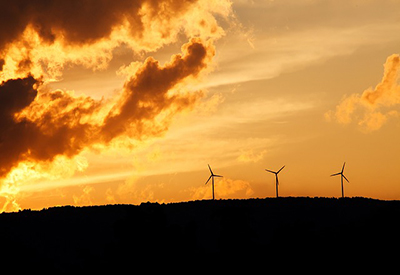
Phasing out traditional coal-fired electricity by 2030 — an important part of the federal government’s vision of a clean-growth economy — will attract new investments in clean power across the country, grow our economy, create middle-class jobs, and improve air quality for the health of Canadians, the government says.

This and other regulatory actions announced last week will put Canada on a path to move from 80% towards 90% non-emitting sources by 2030. Clean electricity will power cars, businesses, and homes across the country. Building a smart, integrated, clean-electricity system, the government says, will deliver reliable and affordable power where it’s needed.

Clean, non-emitting energy is one of the fastest growing energy sectors. In the past decade, wind capacity has increased 20 times and solar capacity 125 times, according to the National Energy Board. 

Canada already ranks fourth in the world in renewable power generation. Hydro is the dominant source of electricity in Canada, accounting for nearly 60% of installed capacity and generation.

This fall, the federal government announced an additional $21.9 billion investment over 11 years for green infrastructure. The government of Canada will use the Canada Infrastructure Bank to finance projects such as commercially viable clean energy and modern electricity systems between provinces and territories. 

“Connecting provinces with a clean and modern electricity system is a nation-building effort that positions us to compete for significant global investments in our power sector and puts more Canadians to work,” says Dominic Barton, Chair of the Advisory Council on Economic Growth.

How we’re generating power now

Five provinces and territories generated the vast majority of their electricity from hydro in 2015, reports the National Energy Board in a new report, Canada’s Renewable Power Landscape — Energy Market Analysis. The share of electricity production from hydro reached 86% in British Columbia (BC), 97% in Manitoba, 95% in Quebec, 95% in Newfoundland and Labrador, and 94% in Yukon.

Four provinces and territories rely on various combinations of nuclear, coal, gas, oil, and renewables. In 2015, the share of renewables in total generation reached

  • 34% in Ontario
  • 28% in New Brunswick
  • 24% in Nova Scotia
  • 38% in Northwest Territories (NWT)

Three provinces and territories relied primarily on fossil fuels for electricity in 2015:

  • Alberta (90% of generation from coal and natural gas)
  • Saskatchewan (83% of generation from coal and natural gas)
  • Nunavut (100% of generation from oil)

Nearly all of the power generated in PEI is from wind, but PEI also relies on power imported from nearby provinces to meet its total demand.

A decade ago, wind, solar, biomass, and other non-hydro renewables comprised just 2% of total Canadian capacity. Growth over the last decade has been very impressive, especially with wind capacity growing 1,900% and solar growing an astounding 12,500%. However, the total share of these technologies in 2015 was just 11% of capacity, and because solar and wind are intermittent non-hydro renewables accounted for just 7% of generation.

Ontario and Nova Scotia have seen the largest gains in renewable power production over the last decade. Renewable power generation in Ontario increased from 23% to 34%. In Nova Scotia, the renewable generation share increased from 12% to 24%.

Find out more. Read Canada’s Renewable Power Landscape – Energy Market Analysis online: www.neb-one.gc.ca/nrg/sttstc/lctrct/rprt/2016cndrnwblpwr/index-eng.html.

 

Related Articles


Latest Articles

  • Guide to the Canadian Electrical Code, Part 1[i], 26th Edition– A Road Map: Section 56

    Guide to the Canadian Electrical Code, Part 1[i], 26th Edition– A Road Map: Section 56

    February 6, 2026 The Code is a comprehensive document. Sometimes it can seem quite daunting to quickly find the information you need. This series of articles provides a guide to help users find their way through this critical document. This is not intended to replace the notes in Appendix B or the explanations of individual Read More…

  • 3D Printing: Inside Lighting’s Next Revolution

    February 5, 2026 While 3D printing in mass production was once a dream, advancements in the technology have moved it more into the mainstream. The technique, which is also referred to as additive manufacturing, has rapidly evolved from a niche prototyping tool into a transformative production method for many sectors, including the lighting industry. As Read More…

  • Microgrids & Power Quality: Designing Resilient, Clean Facility Power

    Microgrids & Power Quality: Designing Resilient, Clean Facility Power

    February 5, 2026 In an era of extreme weather, aging infrastructure, and ever‑rising energy demands, many facility managers are rethinking their relationship with the grid. Microgrids offer a way to take control and operate autonomously when necessary. A microgrid is more than just backup, when designed properly, it becomes a platform for resiliency, efficiency, and Read More…

  • ITC 101: Understanding NEMA Ratings for Electrical Enclosures

    ITC 101: Understanding NEMA Ratings for Electrical Enclosures

    February 5, 2026 Understanding NEMA Ratings for Electrical Enclosures NEMA Ratings are an essential classification system used across North America to define the environmental and mechanical protection provided by electrical enclosures. Developed by the National Electrical Manufacturers Association (NEMA), these ratings help engineers, installers, and specifiers identify the appropriate enclosure type for industrial, commercial, and outdoor Read More…


Changing Scene

  • Lighting What’s Next: Stanpro Celebrates 65 Years

    Lighting What’s Next: Stanpro Celebrates 65 Years

    February 6, 2026 “We didn’t get here by standing still. For 65 years, we’ve shaped how we think, how we design, and what responsibility means,” the company said in a LinkedIn post. “Today, that thinking takes a new form. Not to change who we are, but to express our evolution more clearly. This is Stanpro, Read More…

  • Housing Priorities on Track in New Brunswick, but More Work to do: Hickey

    Housing Priorities on Track in New Brunswick, but More Work to do: Hickey

    February 6, 2026 Efforts to support the creation of new affordable housing and reduce chronic homelessness are on track, but there is still lots of work to do, according to David Hickey, the minister responsible for the New Brunswick Housing Corporation. New data indicates progress has been made on three key government priorities related to Read More…

  • BJ Electric is now Bernie’s Electric Supplies Ltd

    BJ Electric is now Bernie’s Electric Supplies Ltd

    February 6, 2026 BJ Electric has announced the company has rebranded as Bernie’s Electric Supplies Ltd, a nod to their founder. “BJ Electric Supplies is now Bernie’s Electric Supplies—in honor of our founder, Bernard Joseph Thompson, and the values that have guided the company for nearly 50 years. As we grow and evolve, this name Read More…

  • The Government of Canada Introduces the Build Canada Homes Act

    The Government of Canada Introduces the Build Canada Homes Act

    February 6, 2026 The Government of Canada has introduced the Build Canada Homes Act, legislation that will establish Build Canada Homes as a Crown corporation whose mandate will be dedicated to building affordable housing in communities across the country. As Canada’s affordable housing builder, this legislation will equip Build Canada Homes with the necessary tools to Read More…