Having the Right Arc Flash PPE
May 15, 2017
By Jim Pollard
Factors in the selection of arc flash personal protective equipment (PPE) have a significant effect on the worker’s reduction of harm or injuries caused from exposure during an arc flash incident. Effective selection can also help reduce the likelihood of an arc flash from occurring. Applicable standards for electrical safety in the workplace outline generic requirements, but stop short of providing recommendations for selecting the right arc flash PPE based on the latest innovations.
Arc flash PPE can be used when energized work is justified. Applied as a control to mitigate risk, arc flash PPE has been specially designed and appropriately tested in accordance with required Standards. Workers shall pre-use inspect arc flash PPE and maintain the products following proper care and use guidelines to protect the integrity of the arc rating. All arc-rated fabrics shall be cleaned by following the manufacturer’s recommendations.
Guidance on selection
Standards for electrical safety in the workplace include factors in selection of arc flash PPE: fit, coverage, interface, arc ratings, layering, non-melting garments, and clothing worn under and over arc-rated clothing.
Product specific requirements are provided within standards to ensure the arc flash PPE meets a bare minimum level of performance to be considered compliant. However compliant products are not always the right arc flash PPE. This is an issue that will persist as long as industry continues to buy products that are compliant, but not appropriate.
The most common example of this are products manufactured with heavy weight fabrics that are still being sold as single layer garments (i.e., shirts, pants, coveralls) or multi-layer systems (i.e., arc flash suits, hoods) when lighter weight solutions have been available for many years. The common belief was that fabric weight equalled protection, justifying the need for workers to wear products that were uncomfortable and limited their productivity. That is no longer necessary with the availability of engineered arc-rated fabrics that provide significant protection at lower weights.
Other examples of compliant products that are often not appropriate include:
• long coat with leggings style arc flash suits — can compromise worker safety depending on how the products are used (i.e., squatting, kneeling)
• goggles with ski-mask type balaclavas — does not provide sufficient full face protection from flying debris and projectiles
• dark tinted faceshields and suit hood visors — limited visible light makes working very difficult and creates new hazards
• cooling fan type hood ventilation systems — not completely covered with arc-rated fabric, weight adds to worker fatigue, and made with non-durable wiring/switch
Human performance
Decade’s worth of industry statistics has proven that human error is the leading cause of arc flash incidents, not spontaneous equipment failures. The human element, including behaviour and performance, is an ongoing challenge when organizations strive to improve their workplace electrical safety culture. Arc flash PPE can have a significant impact on an electrical worker, even contributing to human error when the right products are not used.
Common issues created by arc flash PPE that can lead to human error include:
• ability to see clearly
• improper colour perception
• heat stress
• ease of movement
Workers continue to struggle with these issues even while the solutions to these problems are available. The electrical safety industry has advanced in leaps and bounds over the past five years. This is most evident with the shift away from dark green lenses and heavy fabric systems to the present day advances in shield technology and functionality.
See clearly
When using an arc-rated faceshield or suit hood, the work task visibility could be dark and even the colours can be washed out or altered. The ability of a worker to see clearly is integral to the completion of a work task, and when their vision is altered the potential for making a mistake can increase. Workers need the right arc flash PPE to see properly, otherwise they neglect to use it or end up lifting their protection, compromising their safety.
Different types of arc flash lenses are available ranging from green to new clear grey products. Faceshield and suit hood products with clear grey lenses provide significant improvements for worker visibility with 100% true colour perception. This is a solution for workers that helps minimize errors and reduces the likelihood of causing an arc flash.
One of the most important recent innovations in arc flash PPE technology is the ability to add lighting solutions. Many work tasks require a worker to partially block their surrounding light sources. Having a lamp located directly above your forehead so it can be centred on the work task is a huge advantage for workers that both makes the task easier and minimizes mistakes.
When a work task requires physical exertion the inside surface of a faceshield or suit hood can fog from increased exhalation, limiting visibility. When work is completed outside in colder temperatures the fogging (condensation) can freeze, making the arc flash PPE useless. Anti-fog coatings are important to reduce fogging. However workers are often not trained on proper care and use of their arc flash PPE, including the requirement to activate the anti-fog coating by exhaling on the inside surface of their lens (do this at room temperature, before going outside). When using an arc flash suit hood, a ventilation system that delivers external air down the inside of the shield window can be very effective at keeping your vision clear on the coldest of days.
Heat stress
Any arc flash PPE older than five years uses an arc-rated fabric that is heavier than necessary. Furthermore, these heavy weight fabrics are still being sold today, continuing to burden workers. It is important to select the right arc flash PPE that has sufficient protection without being so heavy that workers suffer. Ultra-lightweight fabrics help reduce fatigue and can make a positive impact on heat stress management. When workers feel heat stress the symptoms include confusion, dizziness and fatigue. Arc flash PPE is used to mitigate risk and should not increase the likelihood of a worker making a mistake and causing an arc flash.
Consider worker comfort and productivity when selecting the right arc flash PPE for your application. Lightweight fabrics make every movement easier.
A common gap identified during electrical safety audits is the lack of arc flash PPE compliance. The most frequent objections from workers include:
• physical discomfort
• makes the work task harder
• difficult to use
• increases the likelihood of making a mistake
Workers often neglect to use their full protection for these reasons. A heavy weight balaclava is very hot and can contribute to heat stress, therefore workers often “forget” to wear it. A heavy weight arc flash suit will be used less than an ultra-lightweight alternative, even though the frequency of work hasn’t increased.
Workers are more likely to be compliant and use their arc flash PPE when it is the right product for the work task. The design of arc flash PPE must provide a complete protective system and often requires a full suit hood. Workers that need to stand in one spot while completing their work end up re-breathing their exhalation when using a suit hood. Some designs allow workers to lift the front of their hood to breathe fresh air. However, if the worker has not stepped outside the arc flash boundary they are compromising their safety by lifting a critical component of their protection.
Alternatively, hood ventilation systems are available to help circulate air to the workers breathing zone. This fresh flow of air helps workers stay alert and minimizes mistakes caused by heat stress.
Arc flash cooling vests are available and can also assist in keeping a worker comfortable in a hot environment. It is important to follow the manufacturer’s recommendations when using a cooling vest to avoid causing injuries to the worker. Arc flash cooling vests should be constructed using arc-rated materials and non-combustible cooling packs.
Selection without compromising
When the selection process is flawed the risk to the worker can increase. Selecting the right arc flash PPE ensures workers have the best possible protection without compromising their safety. Applicable
Standards for electrical safety in the workplace have prescriptive arc flash PPE requirements however researching the different types of products that are available is the most effective way to select a worker’s protection and ensure the best reduction in overall risk.
Jim Pollard’s goal is to save lives by helping companies be compliant with arc flash and electrical safety. He believes every workplace electrical fatality was preventable. To accomplish this Jim Pollard created his company, Unlimited PPE Inc., to focus on providing specialized solutions for arc flash and shock compliance. He represents Oberon, ESPS Electrical Safety Program Solutions Inc. and PROXXI to create combined solutions compliant with all relevant acts, codes, regulations and applicable best practice standards. As a subject matter expert on arc flash personal protective equipment (PPE) Jim’s experience and technical knowledge has been tapped by technical committees in Canada and the USA, including CSA Z462, ASTM F18.15, CAN/ULC-S801, CSC/IEC/TC78 and ULC Live Working.
For more on Jim’s committee work, speaking experience and trade articles and recommendations, please see his LinkedIn profile: https://ca.linkedin.com/in/jim-pollard-1774181a. Watch for more articles by Jim Pollard in future issues of EIN.
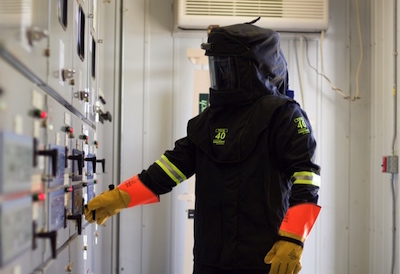
Photo courtesy of The Oberon Company.

![Guide to the Canadian Electrical Code, Part 1[i], 26th Edition– A Road Map: Section 74 — Airport installations](https://electricalindustry.ca/wp-content/uploads/2026/05/EIN-Stock-Guide-Code-Canada-Map-1200-768x403.png)


![Guide to the Canadian Electrical Code, Part 1[i], 26th Edition– A Road Map: Section 74 — Airport installations](https://electricalindustry.ca/wp-content/uploads/2026/05/EIN-Stock-Guide-Code-Canada-Map-1200.png)