Government of Canada Approves Manitoba-Minnesota Transmission Project subject to 28 NEB Conditions
June 20, 2019
Canada’s Minister of Natural Resources recently announced the Governor in Council has approved Manitoba Hydro’s $453 million Manitoba-Minnesota Transmission Project.
The proposed Manitoba–Minnesota Transmission Project will strengthen the overall reliability of Manitoba’s electricity supply, allow Manitoba Hydro to fulfill current export sales agreements, and increase access to markets in the United States, supporting the export sales that keep rates lower for Manitobans. Manitoba Hydro requires federal and provincial approval of the project.
This power project will:
- enhance the competitiveness of Canada’s electricity market,
- support a minimum of 20 percent of construction contracts that involve purchases from Indigenous suppliers, contracts with Indigenous subcontractors, and the employment and training of Indigenous peoples,
- strengthen energy relationship with the United States by increasing Canada’s electricity exports, and
- protect the environment by supporting growth in renewables and reduce GHG emissions by more than 3 million tonnes by displacing production from coal-fired generation and other sources of electricity.
As part of today’s announcement, the government has directed the NEB to amend five project conditions in order to respond to and accommodate concerns raised by Indigenous groups during the Crown consultation process. The modification of NEB conditions is responsive to the guidance provided by the Federal Court of Appeal decision on the Trans Mountain Expansion project.
The government also responded to three suggestions made by the NEB in its Reasons for Decision Report, including through the creation of a terrestrial and cultural studies initiative to support Indigenous-led studies on issues related to the project.
Approving good projects following thorough reviews is part of the government’s plan to create good, middle class jobs, protect the environment, and advance reconciliation with Indigenous peoples.
- The Government’s approval of Manitoba Hydro’s $453 million project is subject to 64 Manitoba licence conditions and 28 National Energy Board (NEB) conditions to ensure the safe construction and operation of the project, environmental protections, and ongoing engagement with Indigenous groups.
-
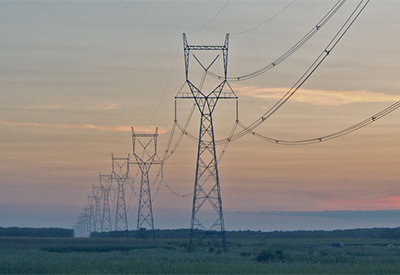
The project will consist of the Dorsey Interprovincial Power Line (IPL) and modifications to two existing transmission lines. The Dorsey IPL is a 213 kilometer, 500 kilovolt power line that would extend from northwest of Winnipeg to the State of Minnesota, crossing the Canada-United States border near Piney, Manitoba.
-
The NEB will now issue a Certificate of Public Convenience and Necessity. Prior to construction, Manitoba Hydro will need to demonstrate to the NEB how it will meet the necessary pre-construction conditions for the project, including ongoing consultations with Indigenous communities.
The project includes construction of a 500-kilovolt AC transmission line in southeastern Manitoba and upgrades to associated stations at Dorsey, Riel, and Glenboro. The proposed route will:
- originate at the Dorsey Converter Station (located near Rosser, northwest of Winnipeg);
- travel south around Winnipeg and pass near the Riel Station (east of the city) along what is known as the Southern Loop corridor;
- continue south to the Manitoba–Minnesota border;
- connect to the Great Northern Transmission Line.
The Great Northern Transmission Line is to be constructed by Minnesota Power. It will terminate at Iron Range Station located northwest of Duluth, Minnesota. Subject to regulatory approvals, the projected in service date is mid-2020. The budget as of the spring of 2017 is estimated at $453 million.
Right-of-way and tower design
The right-of-way required for the transmission line will depend on the design of the tower structures. Predominantly 2 tower types will be utilized and will typically range in height from 40 to 60 metres. Spacing between towers will 400 to 500 metres apart on average.
- Self-supporting steel lattice structures will be used in cultivated crop lands (agricultural areas), to minimize impact on agricultural operations. Right-of-way width will be 80 metres for self supporting structures.
- Guyed steel structures will be used in non-cultivated lands. Right-of-way width will be 100 metres for guyed structures.
Station modifications
For the transmission line to be compatible with the existing system, modifications to both Riel and Dorsey converter stations will be undertaken.
Although distant from the proposed transmission line, modifications to Glenboro Station will also be required, including extending the current switch yard and installing additional equipment. Several towers on existing lines will be relocated to accommodate the station expansion.
Go HERE for more information on the project


![Guide to the Canadian Electrical Code, Part 1[i], 26th Edition– A Road Map: Section 68 — Pools, Tubs, and Spas](https://electricalindustry.ca/wp-content/uploads/2026/05/EIN-Stock-Guide-Code-Canada-Map-1200.png)