How We Should Build Sustainable Homes of the Future
Nov 15, 2020
By Jai Thampi
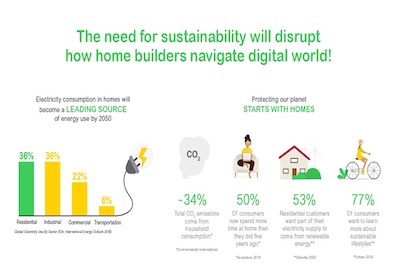
Compared to many other industries, the construction industry has traditionally been slow at technological development.* This is changing rapidly, and more than digitization and emerging technologies, sustainability is going to become one of the dominant disruptive forces to transform the construction industry, and specifically, housing construction, in this century. Clean energy transition will result in green net zero homes of the future that will actively reduce our carbon footprint.
Existing buildings are responsible for approximately 40% of EU energy consumption and 36% of the greenhouse gas emissions, meaning they are the single largest energy consumer in Europe. By contrast, well-sealed, insulated, and energy efficient net zero homes of the future will produce as much renewable energy as they consume. They will be carbon free and the energy bills of their residents will be zero.
We may already be on this path towards net zero, but this journey depends on several factors as we recover from the COVID-19 pandemic and begin the long process of reinventing the global economy with COP 21 guidelines front of mind.
Schneider’s mission is to support house builders through this journey. In front of us is a new electric landscape with reduced energy consumption, and one that is more reliant on renewable energy sources. Here are four key ways in which Schneider can help builders make the most of this opportunity.
1. Accelerate electrification and decarbonization
Electrification is essential to move towards more decarbonization, and from this will come a new set of expectations for the home of the future. Driving sustainability in home building primarily starts with better understanding of the electricity footprint of new homes.
Heating currently represents a massive share of fossil fuel demand, accounting for nearly 40% of total energy consumed in buildings. The structure of ownership and the lifecycle of a building is fragmented and siloed and full of inefficiencies, making it difficult to seal the envelope for our existing housing stock. But new homes can take advantage of electric heating, better insulation and the overall envelope to retain heat, thus limiting the usage of energy.
Yet another upcoming trend for residential electricity consumption is electric vehicles. New homes will have to be designed with electric vehicle charging infrastructure. Typically, two in every five standalone home dwellers who own an EV tend to install a PV system for self-generation. Builders will be expected to consider this a pre-requisite for new net zero homes.
According to the National Association of Homebuilders, homebuyers — especially younger generations who are environmentally aware — are willing to pay more for sustainable features like energy-efficient appliances. This is good news for the industry because sustainable buildings are cheaper to operate. They use less energy and water, and also building owners report that sustainable buildings and smart buildings have a higher asset value close to 7% to 10% of traditional buildings. The market opportunity is already clearly defined.
2. Ensure active energy management
The way energy is managed, monitored, and flows is also changing. A world that is more digitized, decentralized and decarbonized is pushing house builders toward active energy management, in which they will be able to use energy data to develop new strategies to reduce CO2 footprints, improve resiliency and create new cost-reduction opportunities.
Schneider’s home energy management systems can put the power in the hands of the users, so residents can get full visibility and control of their home energy use. Home builders can leverage smart home solutions as the most efficient way to meet their sustainability goals, which is also becoming essential to engaging buyers who are concerned about their personal impact on the planet.
3. Retrofitting will be critical
According to an International Energy Agency report, half the world’s current buildings will still be in use in 2050, and different countries have their own approaches to improving house building sustainability. Two-thirds of the buildings in the world do not fit their respective standards, globally or locally, and they are likely to contribute a substantial amount to carbon emissions over the next 50 years.
Rules and regulations about energy efficiency and consumption can change very quickly. Australia, for instance, has the highest solar penetration in the world and the Australian Energy Market Operator recently stated in a consultation paper that the “forecast minimum net demand could reach zero in South Australia within the next one to three years,” demonstrating the pace at which solar rooftops are growing. Countries like Canada have been actively rolling out smart meters to give residents a better overview on their energy consumption.
The European Union, for instance, has set targets for 2030 for at least 32.5% improvement in energy efficiency and 40% cuts in greenhouse gas emissions. Retrofitting inefficient housing stock will have to play a big part in making this a reality, and home builders need to take this into consideration by designing homes that have the options for easy retrofits in future.
4. Increase recycled materials in all products and packaging
Business growth and sustainability are not at odds. On the contrary, sustainability can drive business growth. Leading house builders do recognize that environmental responsibility can increase their bottom line. If we are to improve energy efficiency and reduce greenhouse gas emissions, we have to tackle the sustainability problem of our built environment not only through renewables and energy management but by the use of recycled materials throughout the supply chain as well.
At Schneider, we will continue to actively contribute to initiatives that drive the low-carbon approach to world economy. Home builders need to be prepared for this long journey towards net zero homes of the future, and Schneider Electric is the ideal partner to help put sustainability first in the post-pandemic era.
For more information, please visit our Home Builders page to find out more.
Jai Thampi, Senior Vice President Strategy & Innovation at Schneider Electric’s Home & Distribution division, is an established thought leader in strategy, digital transformation and corporate innovation in B2C and B2B domains. An international keynote, and twice recipient of the “Most Impactful Smart Cities Leader” global award in 2020 and 2019, Jai also serves as advisor on the board of tech start-ups in Asia.
* Shaping the Future of Construction — report by World Economic Forum, 2016