Post-Modern Estimating Methodologies

February 9, 2023
By Melvin Newman – President, PataBid
How do you estimate a project today? At its core, the function of estimating a construction project is much the same today as it has been throughout human history. Project costs and quantities must still be calculated just like they were when the great pyramids were built. What has changed dramatically is the time given towards creating an estimate. With that in mind, let’s explore post-modern estimating methodologies to streamline and automate the estimating process.
Project timelines are in a never-ending crunch. Schedules are being compressed on all fronts so that owners can maximize the function and return on the projects they commission. This schedule compression has led to numerous alternative contract models such as Design Build, Progressive Design Build, Public Private Partnership (P3) and a host of other unique attempts to minimize the time spent in the front-end of the construction project life cycle. All these forces have had a profound effect on the amount of time given to produce estimates, and the methods used.
Digital estimation processes and automation are the most effective answers to these business challenges today. Regardless of the size of the contractor, the challenges are largely the same. From small single home residential builders up to trans-national multi-billion dollar companies, estimating challenges are consistently prevalent. The only difference is the scale of the projects.
Let’s address some key questions in estimating methodologies:
- How do you know if an opportunity is good?
- How do you perform the takeoff and quantification in less time?
- How do you get supplier pricing input in time, and make sure it’s accurate?
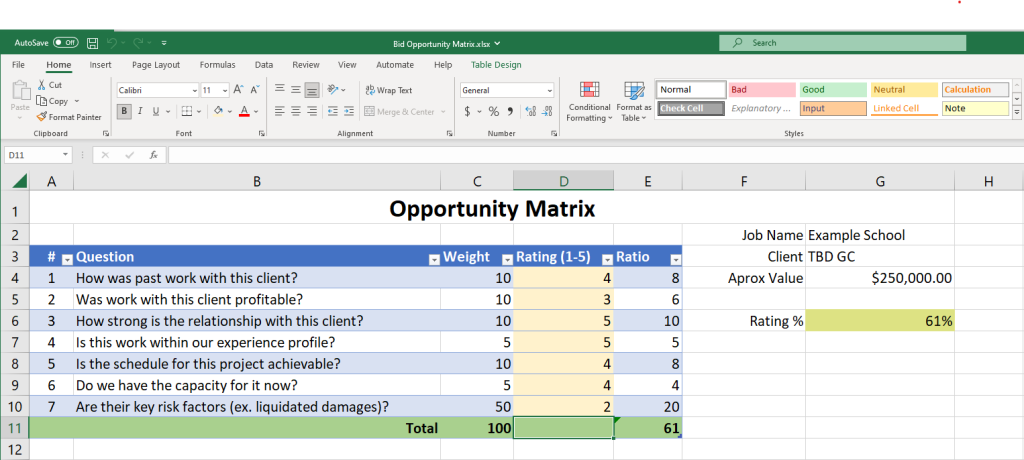
Let’s start with the first question, how do you know if an opportunity is good? This can be one of the most difficult questions to answer, especially for the contractor just starting out. Large established contractors typically have a matrix or series of questions that they go through for each opportunity to grade it against past experience. Building a grading system for incoming opportunities is one of the first things a contractor should do.
The following are some key questions to put in a matrix:
- How was past work with this client on a scale of 1-5?
- Was the work profitable?
- How strong is the relationship with this client on a scale of 1-5?
- What is the schedule for this work? Is it achievable?
- Are there penalties on this project based on the schedule (ex. liquidated damages)?
- How much work is going on now? Is there capacity for this opportunity?
Typically having a matrix of 5 – 10 questions that can quickly be checked off for every new incoming opportunity will help identify key opportunities that can have the best chance of a positive return. It is best to make a template file in Microsoft Excel or Word and keep this file in the folder of every opportunity that comes in. A critical requirement to making this work is to track outgoing bids and keep a log of the success rate of each opportunity along with who it is successful with. Digital estimating software like PataBid Quantify make this process simple by allowing contractors to track who each bid goes out to and how they perform on each one.
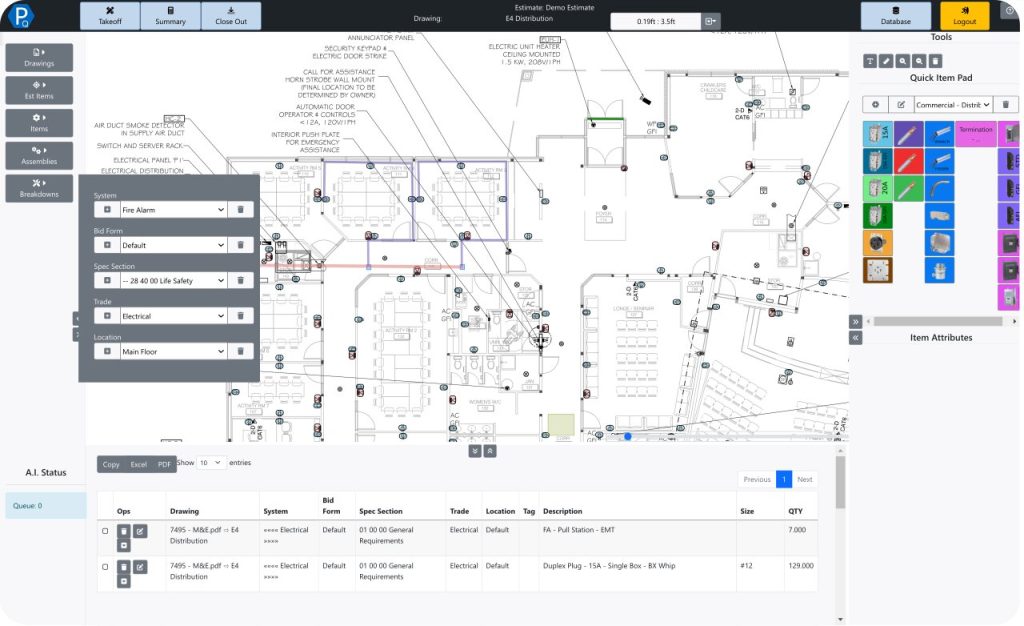
The next question is, how do you perform the takeoff and quantification in less time? Estimates are being demanded from owners within days of receiving the tender documentation. The time crunch to prepare accurate estimates is severe. The only way to accomplish accurate estimating now is through a properly tuned digital estimation platform that automates much of the labour intensive quantification and extension processes.
To start, a properly integrated estimating platform will include a native graphical takeoff process to manage drawings and takeoff. It is key that any takeoff or markup of the drawings be directly linked to the quantities in the estimate. This guarantees accuracy; meaning if it’s marked up on the drawing it is in the estimate! If it is not marked up, it is not in the estimate! This significantly accelerates the takeoff process by combining the drawing markup and quantity summary steps into one single action.
In a fully integrated platform like Quantify, the platform will also immediately attach the labour and material values to this takeoff as it is being done. This means that the drawing markup, quantity summary, labour extension and material extension steps are all combined into one simple step: marking up the drawing. This leads to significant time savings when estimating as well as improved accuracy in the final estimate. Note that this culmination of steps does not account for Machine Learning (ML/AI) implementation.
Estimating platforms like Quantify also have ML/AI integration in the drawing markup stages to automate specific processes. This integration reduces quantity takeoff further, sometimes down to mere minutes to complete.
One of the next major challenging questions in completing an estimate is, how do you get supplier pricing in on time and make sure it’s accurate? Supplier pricing is critical to completing an estimate successfully. Understanding what a supplier has quoted and verifying that it is accurate is another significant risk factor to any contractor completing estimates for a client. A digital estimating process is key here as often supplier pricing is one of the last things to be received by the contractor on the day the estimate is due. Due to the time constraints, it is very difficult to input a supplier’s late pricing and verify its accuracy.
Digital estimating processes are critical to ensuring these quotations are accurately evaluated and nothing is missed. During the early stages of an estimate, it is critical to take a close look at all the packages and quotations that will be required to complete the estimate on the day of closing. This should be one of the first things looked at in a bid package. Once these items have been identified, construct a scope matrix in a spreadsheet that lays out all the expected materials and the suppliers that are expected to quote on them.
Typically it is best to place the scope items vertically down the left side and the suppliers along the top. This creates a matrix where it is easy to put a letter or number in to show what supplier is quoting which items allowing all quotes to be leveled and analyzed quickly.
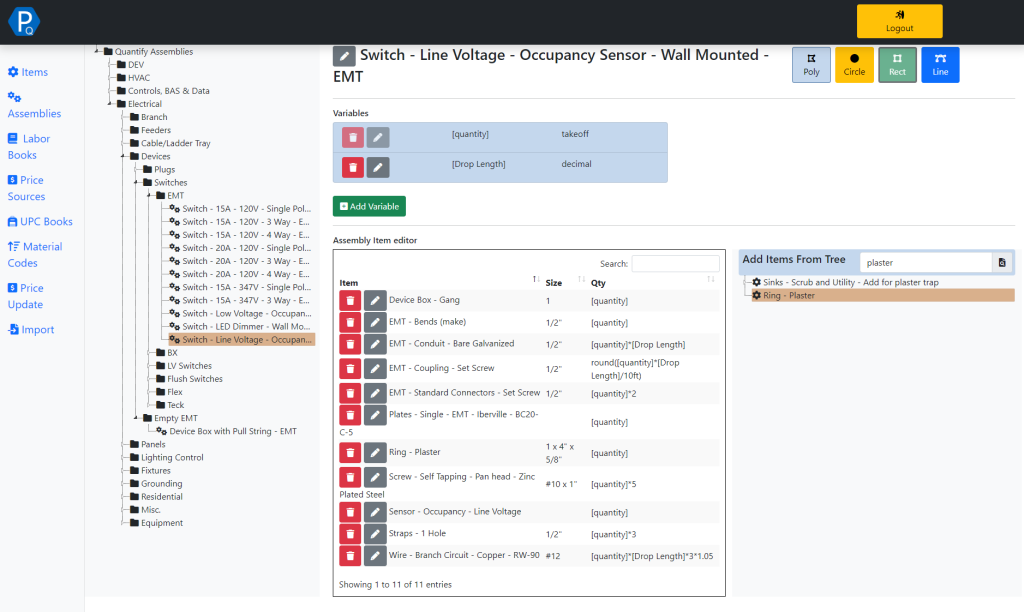
Quotations that require accurate quantities such as lighting and distribution should be taken off as early as possible. These quantities should tie back to the scope matrix so that if something changes, the scope matrix will automatically update. The advantages to using an electrical estimating software platform like PataBid Quantify is that it comes with out of the box pricing tools to ensure accurate pricing on every job, without the extra step of creating a scope matrix.
There are a lot of things to consider when putting together a quotation for a project. One of the riskiest times in a company’s life is when they want to take a step up in the projects they are looking at. This can range from moving from home building into retail mall commercial, or from small commercial tenant fit-ups into larger base building projects. All of the step changes include significant variations in risk while the time constraints to put accurate pricing together continues to get shorter.
It is critical to have proper estimating methodologies and processes in place to handle these step changes and the new opportunities they can bring. Implementing effective estimating processes to address the above key questions for your contracting business will help ensure long term growth and success.
To learn more about Quantify mechanical/electrical estimating software and to access more estimating resources, visit PataBid’s blog, Youtube channel or Instagram page.
This article is the thrid in a series by Melvin Neman.
You can find the first article here: Why Digital Estimating?
Second article: What to Consider When Integrating Digital Estimating into your Business