New Brunswick Posts Draft Regulations for Small Renewable Energy Projects
Renewable Energy Program


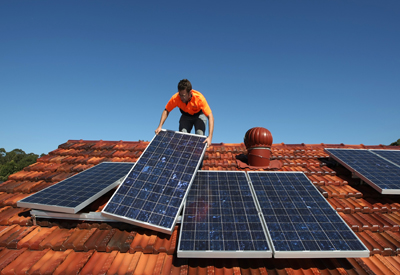
The provincial government has posted for comment draft regulations online for a program that will allow local entities and aboriginal communities to develop renewable energy projects. Deadline for comments: September 30.

The Locally-owned Renewable Energy Projects that are Small Scale (LORESS) program will encourage the creation of new renewable generation to serve the province’s demand for energy. The program will be developed by NB Power once the regulations are completed and will provide economic benefits to local entities such as municipalities, universities, non-profit organizations, associations and co-operatives. In addition, it will prioritize small-scale renewable energy projects for First Nations communities.
“The more renewable energy projects that we can develop, the better off our province will be from an economic and environmental standpoint, ”says Energy and Mines Minister Donald Arseneault.

As per provincial guidelines, the draft regulations will be posted online for 30 days for public feedback. The draft regulations include details on the following:

• First Nations projects

• projects for local entities

• maximum megawatts allowed for each project

• types of renewable generation projects

• partnerships

The program will help the province achieve its commitment to see 40% of its in-province electricity sales come from renewable energy by 2020, as detailed in the Renewable Portfolio Standard.

Find out more: http://www2.gnb.ca/content/gnb/en/departments/energy/news/news_release.2015.09.0818.html

 

Related Articles


Latest Articles

  • Capital Constraints in Owner-Operated Trade Businesses – When Owning the Building Quietly Limits Growth 

    Capital Constraints in Owner-Operated Trade Businesses – When Owning the Building Quietly Limits Growth 

    For many contractor-owned businesses, growth starts to feel harder than it should. The work is there. Customers are steady. Crews are busy. Yet when owners look to expand, invest, or create breathing room, capital often feels tighter than expected. In many cases, the issue is not operations or demand. It is a real estate decision made years… Read More…

  • What 2025 Revealed About Canada’s Electrical Industry

    What 2025 Revealed About Canada’s Electrical Industry

    December 16, 2025 By Carol McGlogan, President & CEO, Electro-Federation Canada The past year required Canada’s electrical industry to adapt to a rapidly changing environment. In 2025, businesses across the value chain navigated shifting trade conditions, evolving policy landscapes, and growing expectations tied to electrification and infrastructure expansion. Trade uncertainty introduced new complexity. Organizations reassessed Read More…

  • Considerations for EV Charging Installation and Site Preparation

    Considerations for EV Charging Installation and Site Preparation

    December 15, 2025 By Blake Marchand As part of our recent discussion with LEDVANCE EVSE Product Manager, Erich Bockley, he emphasized the importance of site preparation Site preparation can be the most complicated part of the project, Bockley emphasized, a lot needs to be considered before the installation work begins. Many public charging applications will Read More…

  • Ontario’s Multi-Family Component Leads Residential Sector Increases in October Building Permits

    Ontario’s Multi-Family Component Leads Residential Sector Increases in October Building Permits

    December 15, 2025 In October, the total value of building permits issued in Canada rose $1.8 billion (+14.9%) to $13.8 billion. The increase in construction intentions was led by the residential sector (+$1.1 billion). An increase was also observed in the non-residential sector (+$702.8 million). On a constant dollar basis (2023=100), the total value of building permits issued in Read More…


Changing Scene