Government of Canada Supports Wind Energy Study in Canada’s Arctic
December 20, 2017
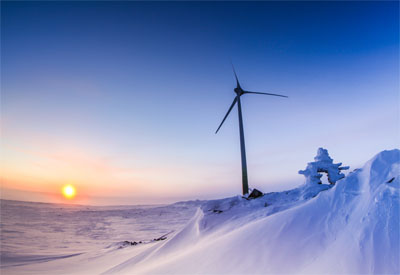
The Government of the Northwest Territories’ Department of Infrastructure is exploring the feasibility of using wind turbines and energy storage devices in the Town of Inuvik thanks in part to an investment of $950,000 from the Canadian Northern Economic Development Agency (CanNor).
Residents and businesses in the Town of Inuvik face high energy costs as they rely heavily on trucked-in petroleum products from southern Canada. To help lower the use of diesel and reduce greenhouse gas (GHS) emissions, the Department of Infrastructure is conducting a study to determine the possibility of adding one or more wind turbines to the town’s electricity grid. CanNor’s investment is assisting with the design, engineering and geotechnical work related to the potential installation of commercial size turbines at High Point, located ten kilometers outside of Inuvik. The Agency’s contribution is also supporting consultation sessions with local stakeholders, including the Mayor and Council, the Gwich’in Tribal Council and the Inuvialuit Regional Corporation.
If this renewable energy source is deemed feasible and is implemented in the future, the wind power generated could displace between 18 to 28 percent of the energy currently produced using diesel. This offset could help save approximately $1.6 million to nearly $3 million in fuel and also reduce GHG emissions by roughly 4,000 to 7,000 tonnes annually.
Reducing the use of fossil fuels in remote communities is a key priority for both the Government of Canada and the Government of the Northwest Territories. Harnessing local and renewable fuel sources such as wind in the Beaufort Delta region of the territory would not only reduce the North’s reliance on imported diesel fuel but also support renewable energy initiatives.
“Our government’s investment in clean technology reflects our commitment to establishing a clean growth and diverse economy, while protecting the planet at the same time. Exploring innovative ways to use renewable energy technologies in Canada’s Arctic fosters energy conservation and efficiency, green infrastructure, healthier communities and job creation for Northerners.”
– The Honourable Navdeep Bains, Minister of Innovation, Science and Economic Development and Minister responsible for CanNor
“I’m very pleased that the Government of Canada is investing in this feasibility study, which could lead to the first large-scale wind turbine above the Arctic Circle in Canada. This investment is a significant contribution to the advancement of clean technology in the North and helps to diversify the northern economy.”
– Michael McLeod, Member of Parliament, Northwest Territories
“Energy drives our economy. Access to share, affordable and environmentally-sustainable sources of energy are essential to the prosperity of the Northwest Territories. A large-scale wind energy project in Inuvik could result in the reduction of millions of litres of diesel fuel year, and help fulfill one of the strategic objectives of our proposed 2030 Energy Strategy.”
– The Honourable Wally Schumann, Minister of Infrastructure, Government of the Northwest Territories
- In addition to CanNor’s commitment of $950,000 over two years (2016-2018), the Government of the Northwest Territories Department of Infrastructure contributed $760,000 bringing the total funding of the project to $1,710,000.
- This project received funding from CanNor’s Strategic Investments in Northern Economic Development (SINED) program.
- One of the strategic objectives in the Government of the Northwest Territories’ 2030 Energy Strategy is to reduce greenhouse gas emissions by 25% in northern communities dependent on diesel. This renewable energy project also aligns with the territories’ Climate Change Strategic Framework scheduled to be released next month.