New Data from FortisBC Reveals the Impact of Making Older Apartments More Sustainable
Nov 21, 2019
FortisBC released emissions and energy use data showing that simple energy efficiency upgrades in older apartment buildings have the potential to reduce carbon emissions in the province by about 200,000 tonnes annually or the equivalent of removing 43,000 gasoline-powered cars off the road. FortisBC estimates there are over 11,000 older rental apartment buildings in B.C. providing affordable housing, but poor performance within these buildings makes them less viable due to the pressure it places on owners’ utility and maintenance costs, community infrastructure and emissions.
“Rental apartments are so important in our communities, and our early research showed almost 80 per cent of apartments in B.C. were built more than 35 years ago to lower efficiency standards than exist today,” said Danielle Wensink, director of conservation and energy management, FortisBC. “Lowering energy use in these buildings is critical. Building owners already face so many maintenance concerns that we worked to simplify what can be a complex and overwhelming process.”
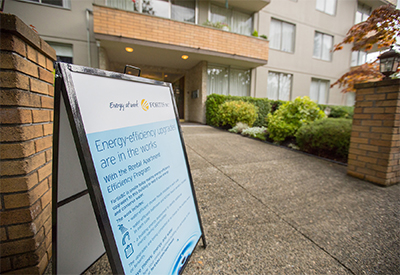
To address this issue, in 2015 FortisBC began its Rental Apartment Program aimed at installing simple energy-saving measures directly into suites and common areas on behalf of owners at no cost. The program also provides owners with a pathway and financial support when upgrading building equipment, such as replacing aging and lesser efficient boiler systems with high-efficiency equivalents to meet space heating and hot water needs. Since that time, more than 800 buildings across the province have received upgrades like energy-efficient taps, faucets and showerheads that reduce water consumption and energy usage. Owners have also received hands-on support to identify and make deeper retrofits such as upgrades to their buildings’ overall heating and mechanical systems.
“The results so far are substantial, and have proved very beneficial for participating owners, especially those who are investing in further upgrades,” said Wensink.
The basic upgrades alone reduce domestic hot water energy use by an average of about 12 per cent per year. As of this year, the water savings reached the equivalent of filling close to 110 Olympic-sized swimming pools or running a garden hose non-stop for over 20 years. It’s also lowered carbon emissions by almost 15,000 tonnes, or the equivalent to the natural gas use of just over 3,200 single-family homes.
LandlordBC, which represents more than 3,300 owners and managers of rental housing in B.C., is a strong proponent of energy efficiency in rental buildings with their members and understands that support is a key element.
With the tremendous potential for energy savings and emission reductions, FortisBC is looking for more ways to help building owners, such as targeting support in the communities with the highest number of rental apartment buildings such as Vancouver, Victoria and Kelowna. It’s also evaluating promising new high-efficiency natural gas equipment.