Builders Could get Twice the Funding from FortisBC to Build Net-Zero Ready Homes
September 15, 2024
FortisBC Energy Inc. and FortisBC Inc. (FortisBC) are doubling the funding available for B.C. builders looking for more affordable ways to build much-needed homes that require less energy for heating, cooling and electricity. FortisBC has worked closely with builders and developers to understand how best to build both fully electric and integrated gas-electric homes to Step 4 and 5, the highest levels of the BC Energy Step Code. The company has revamped its New Home Program1 to better support builders with new construction projects, including $15,000 or more to build to Step 4 and $20,000 or more to meet Step 5, which is a net-zero ready home.
“The province needs new energy-efficient homes to support the growing population as well as meet longer-term climate action goals,” said Danielle Wensink, director of conservation and energy management at FortisBC. “We believe that when builders have options, it can help us work towards these goals collectively while also giving customers a choice in energy options for their homes. Offering rebates on new construction projects gives builders flexibility on how to approach their projects, especially in different climates, while still building higher-efficiency homes.”
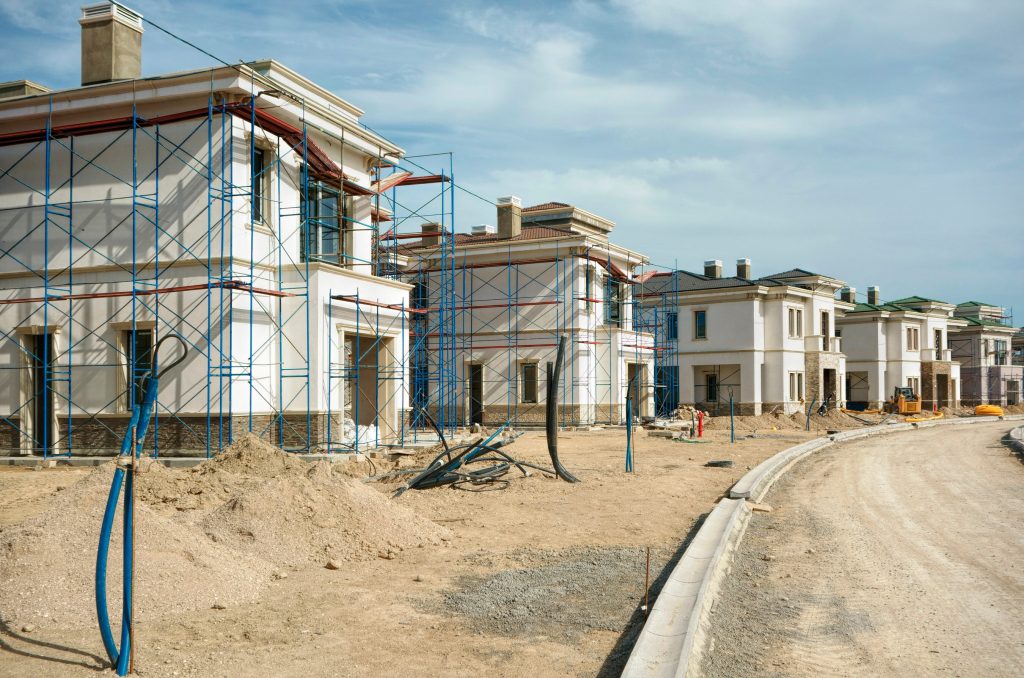
The program was revamped after working with builders across B.C.’s diverse climate zones. The builders provided FortisBC with lessons on the flexibility, support and funding needed to help design and build high-efficiency new homes in more affordable, practical ways, including net-zero ready homes. Each builder worked within the unique requirements of their project and took different approaches to meet higher levels of the BC Energy Step Code. For example, a home in Vancouver prioritized pre-construction planning and modelling software to estimate airtightness and heating requirements to build a gas-attached home to Step 4. In Kimberley, a gas-attached duplex was built to Step 5 in this colder climate by working with an energy advisor and focusing on adding more insulation and high-efficiency windows.
Key to all the projects was a focus on energy-efficiency from the initial design phase. Using what’s known as an integrated design approach, all the stakeholders involved in the construction collaborated to ensure the building elements, from the envelope to the mechanical systems, are working together to lower the energy requirements. The success of this approach was most evident with one of the case study participants, the Wilden Living Lab (WLL) project. Led by The Wilden Group in Kelowna, WLL is a real-world research project where stakeholders from post-secondary schools and industry work together to build a net-zero ready home in way that is both innovative and practical. The research will be used to inform further projects.
“We worked closely with FortisBC and other industry stakeholders right from the onset to explore options to build net-zero ready homes and advance this within the industry,” said Karin Eger-Blenk, CEO and co-chair of The Wilden Group. “By continuing to work together, and taking advantage of increased supports, we believe Step 5 can be the default instead of the exception for new homes in B.C.”
Another key lesson from working with builders was that having access to both the gas and electricity systems provided the most choice and flexibility in achieving the higher levels of the BC Energy Step Code.
“A focus on high-performance design while maintaining access to both energy systems provided builders with the most options in how they design and build new homes,” said Wensink. “We believe this approach helps fill a critical gap for energy-efficient new homes while achieving higher levels of the BC Energy Step Code.”
This desire for choice in new construction is an important consideration for fast-growing communities like Vancouver and Kelowna that are replacing aging single-family homes in older communities with duplexes and other higher-density infill housing like suites and carriage houses. This is seen as one of the ways to meet the need to build more housing stock over the next several years.2 With these buildings qualifying for funding through FortisBC’s New Home Program, it could increase the potential for these to be built to higher efficiency standards, and help reduce demand in areas where the density may result in too much load for the existing electricity system.
FortisBC’s revamped New Home program continues to emphasize a whole-home approach to energy efficiency by supporting builders who incorporate an integrated design approach and work with an energy advisor certified by Natural Resources Canada. At the end of a project, builders could now receive $15,000 for achieving Step 4 or $20,000 for achieving Step 5 of the BC Energy Step Code.
For advice on the energy-efficiency options best suited for a new project, or help with understanding the BC Energy Step Code, or completing your rebate application, contact a FortisBC energy solutions manager or a program qualified energy advisor. Builders and developers looking for more information about FortisBC’s New Home Program rebates can visit fortisbc.com/newhome.




![Guide to the Canadian Electrical Code, Part 1[i], 26th Edition– A Road Map: Section 76 — Temporary Wiring](https://electricalindustry.ca/wp-content/uploads/2026/05/EIN-Stock-Guide-Code-Canada-Map-1200.png)