6 Tactics to Maximize the Purchasing Function: Tactic 1 — Economies of Scale

Barry Olson
This article is the first in a series that will examine six tactics the electrical contractor can use to maximize purchasing power and profitability though procurement.
Whether one has a dedicated purchasing team or relies on project managers to procure materials, awareness of these tactics can help increase profit and efficiency.
One of the first lessons an economics student learns is the principle of economies of scale. Relating to the procurement of material, the concept is easy to grasp: if I buy more of an item, I should get a better price per item. Some items—such as copper wire or other commodity materials—are less inclined to deep manufacturer discounts, but the principle holds true, in general. A distributor is more likely to lower its profit margin on a $1 million order than on a $1,000 order. For a larger electrical contractor, the ability to use economies of scale can be very profitable, yet many of these contractors seem to use this tactic ineffectively. Some of the most common reasons are considered below.
Timing
To take advantage of economies of scale, one must have material to buy. Due to the cyclical nature of business, the timing of material needs is sometimes out of sync. Every job has a schedule with milestones and deliverables that need to be met. Therefore, to take advantage of economies of scale, material delivery schedules must be compared between jobs. These deliveries need not coincide exactly; they just need to be within a specific window of time.
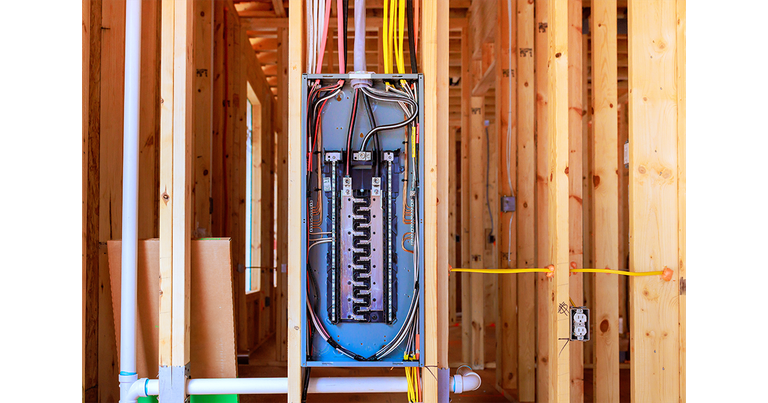
Buying switchgear is a great example. Suppose three jobs are expected to start in the next 180 days, but all have slightly different dates when switchgear is required on-site. After comparing schedules, a six-month window is identified in which most of the deliverables will be needed. Rather than buy each job separately, you would be better off rebidding all three jobs as one package to manufacturers; winner take all.
I have done this many times with great success. One caveat: Ensure you pair up one distributor with one manufacturer, as you need the manufacturer and distributor to act as a team. This way, the distributor does not try to involve more than one manufacturer, and it gives every incentive to go all in with their lowest possible price. The ultimate goal is to create competition between manufacturers to realize the largest potential discounts. This same bundling procedure can be used for pipe, wire and other bulk materials as well.
Poor communication
Often, the larger an electrical contractor grows, the more departmentalized it becomes. Creating departments makes sense from an accounting and human resources standpoint. It is not uncommon to set up a new department specifically for hospital work, mixed-use facilities, or an industrial division so that those with specific skills within an organization can concentrate their efforts. While this offers a large contractor the ability to create a fine-tuned crew of specialists, it also can negatively affect communications. As a department grows, so does its independence within the company. It doesn’t take long before project managers interact solely with others in their departmental group. Encouraging interdepartmental communication is the only real way to combat this condition.
Contractors that charge their project managers with the task of buying out projects usually struggle when incorporating the tactic of economies of scale into the procurement function. In general, project managers are highly focused and mainly concerned with the present. Getting things moving is of the utmost importance, and the material buyout is one of their last priorities, which then becomes a rushed endeavour. Early coordination efforts can make a marked difference in the process. As soon as you land a job, you need to develop a schedule for material deliverables compared to any other projects in hand. Matching material needs gives you a better idea how to bundle projects and take advantage of economies of scale. Often, this function is best suited to a designated individual with exposure to all departments who can quickly determine whether the project can be incorporated into a strategic buyout. Depending on your company’s size, the owner, chief operating officer or purchasing manager may be the best individual for this task.
Takeaway
In today’s ultra competitive environment, even a 1–2% variation in material costs can make a difference. By using the principle of economies of scale whenever possible, one can maximize the power of every dollar spent and realize more profit to the bottom line.
Barry Olson has 25 years of purchasing experience with large union contractors and is currently the director of purchasing for SASCO in Southern California. He holds a Bachelor’s degree in organizational leadership, is nearing completion of a Master’s degree in the same discipline, and plans to continue his studies with a Ph.D. Barry can be contacted at BarryOlson@Outlook.com.
This article has been reprinted with permission of Electrical Contractor Magazine. These articles originally appeared on ECmag.com in 2015. Next in the series: accurate valuation of materials.
Read More Articles on Electrical Industry Canada by this Barry Olson:
6 Tactics to Maximize the Purchasing Function: Tactic 2 — Pricing –
6 Tactics to Maximize the Purchasing Function: Tactic 3 — Time
6 Tactics to Maximize the Purchasing Function: Tactic 4 — Influence
6 Tactics to Maximize the Purchasing Function: Tactic 5 – Know Your Prices
![Guide to the Canadian Electrical Code, Part 1[i], 26th Edition– A Road Map: Section 74 — Airport installations](https://electricalindustry.ca/wp-content/uploads/2026/05/EIN-Stock-Guide-Code-Canada-Map-1200-768x403.png)




![Guide to the Canadian Electrical Code, Part 1[i], 26th Edition– A Road Map: Section 74 — Airport installations](https://electricalindustry.ca/wp-content/uploads/2026/05/EIN-Stock-Guide-Code-Canada-Map-1200.png)