The Importance of Trip-Free Operation and Its Characteristics
Anthony T. Ricciuti
One of the many often desirable characteristics in the specifications and marketing literature for medium voltage circuit breakers is “trip-free.” Unfortunately, there are many misconceptions about this characteristic.
Definitions
For IEEET rated products, there are several related definitions of “trip-free”:
• In the most general definition of “trip-free,” the contacts of the circuit breaker must return tothe open position and remain there when an opening operation follows a closing operation,regardless of whether the closing signal, force,or action is maintained.
• A common variant is called “electrically trip-free.” For a medium voltage circuit breaker tobe considered electrically trip-free, the circuit breaker must be able to receive and respond to an electrical opening signal regardless of whether an electrical closing signal is energized.
• “Mechanically trip-free” operations refer to a mechanical release mechanism that can open the medium voltage circuit breaker regardless of whether any closing release device operated by any means is activated or maintained.Medium voltage circuit breakers can also be hydraulically trip-free or pneumatically trip-free if they contain a hydraulic or pneumatic opening release device, respectively,that are capable of opening the circuit breaker regardless of whether any closing release device operated by any means is activated or maintained.
Any of these variants of trip-free operation may include a trip-free relay, in which its operation alters a closing release circuit, permitting an opening release to operate unimpeded by a closing release operation in any state. For IEC rated products, although the standard recommends that the suitability for trip-free operations should be provided to customers that are specifying medium voltage circuit breakers,no specific definition is provided for this function.
Physical requirements
For IEEE rated products, if a mechanical opening release operation is maintained on a medium voltage circuit breaker, then any closing release operation signal must not result in contact movement that reduces the open gap between the contacts by more than 10%. This characteristic is often confused with the definition of trip-free.However, if any opening release operation isinitiated simultaneously with any closing release operation signal, contact movement up to and including a momentary touching of the main circuit breaker contacts is acceptable before the circuit breaker completes the opening operation.
Additionally, because electrical opening release operation circuits typically employ auxiliary switch contacts internal to the circuit breaker, and therefore the electrical release operation circuit remains open until the main contacts of the circuit breaker have closed, when an electrical opening release operation circuit is maintained, the momentary touching of the main contacts is acceptable before the circuit breaker completes the opening operation.
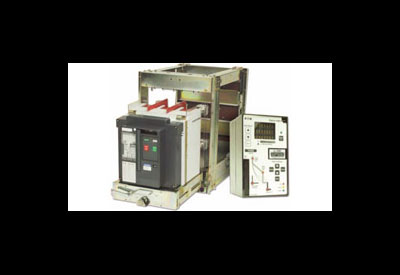
Figure 1: Eaton medium voltage circuit breaker operation

Anthony T. Ricciuti is a Specialist Engineer at Eaton, a power management company with 2014 sales of US$22.6 billion. Anthony has a Bachelor’s degree in Mechanical Engineering and more than 20 years of experience in the design, testing, and analysis of circuit breakers. This article first appeared as an Eaton white paper, www.eaton.com/Eaton/OurCompany/WhitePapers/FeaturedWhitePapers/index.htm.

![Guide to the Canadian Electrical Code, Part 1[i], 26th Edition– A Road Map: Section 74 — Airport installations](https://electricalindustry.ca/wp-content/uploads/2026/05/EIN-Stock-Guide-Code-Canada-Map-1200-768x403.png)





![Guide to the Canadian Electrical Code, Part 1[i], 26th Edition– A Road Map: Section 74 — Airport installations](https://electricalindustry.ca/wp-content/uploads/2026/05/EIN-Stock-Guide-Code-Canada-Map-1200.png)