Avoiding and Resolving Issues with Products That Don’t Dim as Expected
Sept 10, 2018
By Kevin Willmorth
With the right combination of dimmer and solid-state driver for LED products, dimming performance can achieve excellent results from 100% all the way to dark, smoothly and predictably.
However, when the combination is wrong, many undesirable effects may occur. Flickering, flashing, and stumbling as the dimmer is moved are a few of the most annoying issues. Truncated dimming, where dimming runs to a point, then simply stops or cuts off completely, is another issue that might result. Other issues might include manual dimmer control movement, where only a portion of the controller’s action has any effect on dim function, often so touchy that setting any specific dim level consistently is impossible.
Investigating the reasons for these poor performance issues is a necessary evil that requires basic understanding of where issues can arise.
A critical step in resolving dimming issues is with initial product selection. While there are dimmable drivers capable of dimming to dark, this feature is not common. One can expect dimmable drivers to achieve either 0%, 0.5%, 1%, 5%, 10%, or 20% at the lowest setting.
Keep in mind that these values are based on percentage of power to the light source, not perceived dimming levels. Perceived illuminance differs from power level significantly. Dimming power will closely match measured results using a light meter, but will be out of alignment with perceived illuminance. To estimate this effect, find the square root of the dim power level (in %) to realize the perceived illuminance level (in %). For example, the light from a luminaire dimmed to 5% dim power will appear to only be dimmed to 22% of full brightness. To realize a perceived dimmed level of 5% requires a dimmer/driver combination that is capable of reaching below 0.03%.
The message here is that setting and understanding realistic expectations is the first step in avoiding field issues that may not be a product failure at all. Expecting a 10% dimmable driver to dim the light to 10% of full brightness, will produce undesirable results, as the perceived brightness level will be closer to 32%. Select dimmers and luminaires based on perceived dimming performance over simpler power level dimming alone.
Dimming range and response issues can also be caused by a mismatch between the dimming curves built into driver software and dimming controllers. When they work together, the dimmer control will produce a predictable result in luminaire light response. When they are not compatible, or are not aligned, dimming response may not be consistent with control setting over the entire range from full bright to fully dimmed. Unfortunately, the information required to resolve this issue is not published by either dimmer manufacturers or driver producers. The only approach to avoid this possibility is to test the dimmer and driver combination with an example load and observe their combined behaviour.
In application, should luminaires, either singularly or in groups, exhibit strange behaviours, such as flashing, pulsing, flickering, or fluttering when dimmed, there are several potential causes worth investigating.
Read more about causes and solutions in Part 2, which will appear in the September 18 issue of EIN.
Kevin Willmorth has been involved with lighting since 1981. His experience includes electrical system design, lighting design consulting, product design, marketing, business strategy, and editorial writing. His past positions include positions include owner of a lighting design consultancy, VP of Design and Marketing for Kim, Winona, and Visa Lighting, VP and Director of Product Management Renaissance Lighting, and VP of Design – Lighting for Atlandia Design. He currently owns Lumenique, LLC, offering product design, prototype development, testing, and strategic consulting to manufacturers, application design and technology evaluation for building owners, and Tasca, a small industrial task lighting manufacturing firm. He is also Editor for SSL content in all Construction business media publications including Architectural SSL, Architectural Products, NZB, and Illuminate; kwillmorth@lumenique.com; www.lumenique.com
This article was first published online by the Lighting Controls Association: http://lightingcontrolsassociation.org/2018/07/06/avoiding-and-resolving-issues-with-products-that-dont-dim-as-expected/
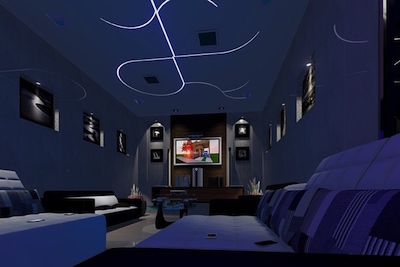
Photo courtesy of Eduardo Silva Barbosa on Pixabay



![Guide to the Canadian Electrical Code, Part 1[i], 26th Edition– A Road Map: Section 74 — Airport installations](https://electricalindustry.ca/wp-content/uploads/2026/05/EIN-Stock-Guide-Code-Canada-Map-1200-768x403.png)