The Cross-Effect of Lighting Conversion
Mar 11, 2019
When the Standard team computes energy savings and quotation evaluations, it often finds it necessary to calculate the cross-effect of lighting, which is the energy study that makes it possible to obtain a precise evaluation of annual savings following a lighting conversion. But what are the factors taken into account when calculating the cross-effects of lighting?
A multitude of cross-effects
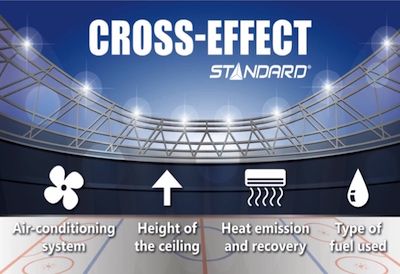
Cross-effects vary according to a number of factors: the building’s insulation, its geographic position, and its ventilation, ceiling height, heat recovery, as well as the building’s purpose and heat source.
A good example of the factoring of cross-effects in the choice of luminaires is the municipal arena. A cooling system freezes the ice of the arena and thus uses a significant amount of energy; at the same time, the lighting system of this facility diffuses heat that must be counteracted by the use of a refrigeration system. With the installation of an efficient lighting system, the municipality can expect a decrease in operating costs; it can also anticipate a reduction of the refrigeration’s energy costs as the unit’s compressors will require less power.
The impacts of cross-effects
To discover the savings associated with a lighting conversion, we need to do more than simply estimate the difference in wattage before and after installation of new luminaries; true savings are often far lower than this figure might lead us to believe. In point of fact, lighting systems produce heat, which contributes to the heating process during winter months, but this heat can be harmful to air conditioning during the summer. This is what we call a cross-effect; it needs to be taken into consideration when evaluating energy savings. For example, a lighting energy savings program will result in a reduction of heat given off by lamps. This causes an increase in heating needs in winter and a reduction of air conditioning needs in summer.
To understand the impact of cross-effects on the modernization or your lighting system, it is important to call upon the assistance of professionals to perform an assessment, a rigorous analysis, and even simulations of change. It is crucial to define exact lighting needs right from the start in order to plan an efficient modernization.
Planning tools
Hydro Québec has implemented a program to support energy efficient projects; its specialists have developed a great tool that takes the cross-effects into account in the lighting industry. For more information, refer to the Cross-Effects of Lighting page on Hydro Québec’s website.
At Standard, we have a dedicated team of people whose job is to calculate energy savings on lighting conversion projects. An energy analysis will evaluate your energy consumption and give you the opportunity to modify your lighting systems. A detailed report of the various key elements required will be provided to guide you in your decision making.
This article was first published online by Standard.