Doing Diversity and Inclusion Right
May 16, 2019
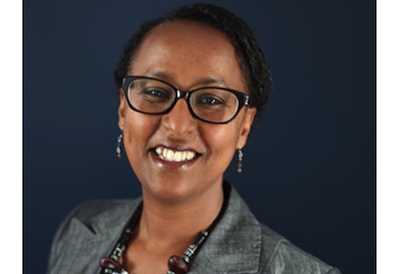
By Merertu Frissa
According to Electricity Human Resources Canada’s 2019 Labour Market Intelligence Study (LMI) Workforce in Motion, the Canadian electricity industry will need to recruit over 20,000 new employees — 20% of the existing workforce — between 2017 and 2022. This includes both expansion demand, reflecting the growth and substantial refurbishment of the system, as well as replacement demand covering retirement and mortality.
With the Canadian population getting more diverse, there are many opportunities for organizations in the sector to adjust their hiring and retaining approaches to meet this most urgent need to address the supply-demand gap.
Here are some recommendations for HR managers, people managers, supervisors and employees in general to doing diversity and inclusion “right”.
Always start with you!
Diversity and inclusion are not about the “other”; you are in it too. It is significant for each one of us to acknowledge how our diverse identities influence the way we perform and interact with others in the workplace. Therefore, be honest with yourself and develop your self-awareness to help understand your own limitations and strengths.
Evaluating why you build an opinion about others, why you feel comfortable interacting with certain people, why you easily share ideas with certain people and not others, why you strongly prefer the view of others, how you communicate your message, and why you have a certain emotional reaction to a situation or a person helps to explore the impact of your behaviour in the workplace. Once you develop self-awareness, it will be easier for you to appreciate differences (not just similarities), take necessary actions to unlearn habits that are counterproductive, develop empathy for others, and build a respectful relationship.
Key questions to ask yourself:
• How is my identity influencing my perceptions, assumptions, biases, actions, and behaviours towards others?
• Are any of these excluding or discouraging any of my colleague or employees?
• Am I making a positive contribution through my actions and behaviour?
Make diversity meaningful for a successful inclusion
Diversity is not about numbers and representations. It is rather about recognizing people’s elements of difference that are influenced by culture, ability, gender, age, sexual orientation, family status, nationality, appearance, educational background, work experience, ethnicity, language, etc. In the workplace, diversity is about noticing the uniqueness of each employee and how that uniqueness is brought to the workplace in a form of varied experiences, perspectives, and ways of knowing.
A deeper understanding of diversity inspires successful inclusion. Inclusion can only be established through the on-going actions and behaviours we demonstrate when we embrace the uniqueness of each and every employee. What makes inclusion meaningful value given to a respectful environment that fully engages employees in the workplace regardless of who they are.
With the heavy competition for occupations the industry is facing, particularly for occupations that are portable in and out of the electricity sector, inclusion should be a deliberate and thoughtful commitment by every organization that aims to recruit and retain the best talent the industry needs. It is critical for employers of the industry to assess their situation to help set their diverse workforce up for success by establishing inclusive environments where everyone feels they contribute and belong.
Key questions to ask yourself as an organization:
• Do employees in my organization feel they are fully engaged in the workplace?
• If yes, what did we do right?
• If no, how can we improve?
• Is our workplace culture well-prepared to welcome diverse employees?
Make diversity and inclusion an everyday conversation
Supporting an environment that frames diversity and inclusion as an everyday conversation allows employees to feel safe sharing their perspectives and challenges, and provides employers with an opportunity to best utilize people’s uniqueness and experiences to achieve organization goals.
A key step to creating a safe environment conducive for this is to openly acknowledge that there are systems that still privilege some and disadvantage others. For instance, in male-dominated industries, women working in remote areas might not have facilities that support their needs. Therefore, it is valuable to always be curious about how others view and experience your workplace. It is also crucial to observe how employees perceive each other, watch out for any negative impacts, and take all necessary steps to address them. Your goal should aim to cultivate an inclusive work environment where everyone feels encouraged to bring their authentic self.
Key questions to ask yourself:
• Have we developed meaningful connections with employees that invite them to come to the organization with what is important to their experience?
• How can we as an organization and individuals help improve employee experiences?
Be accountable to the adoption of inclusive language
The use of appropriate language is one defining element to remove expressions of exclusion that help promote and support inclusion. As such, it is important to avoid terms that could be reinforcing prejudice, stereotypes, and are discriminatory from all our workplace communication — and our personal life. Even when you mean no harm, the language you use could alienate and exclude if you are not careful.
At all times, avoid making distinctions based on physical attributes, including race, age, etc. unless it is necessary. You can instead focus on the ability, knowledge, and capacity of people to refer to them. If you must refer to groups, be aware of the appropriate terms people belonging to the group prefer to be called and be associated with.
When not sure about the right terms to use, ask.
Key questions to ask yourself:
• Who am I excluding through my language?
• Am I using the appropriate term for this group?
• Is my language use and my communication creating an in-group and out-group?
Speak with your actions
The above recommendations are great starting points but not enough. For them to work effectively, they need to be matched with your authentic actions; be intentional and purposeful. For example, you cannot be pushing for diversity and inclusion while your executive team is homogenous. It is critical that organizations take every opportunity to improve on inclusion by modeling behaviour that encourages others to do the same.
To truly succeed in your diversity and inclusion efforts, you must inspire others through your actions, share your experiences and stories, be bold to handle ambiguity and challenge perceptions, champion your diverse team, be authentic, and stay consistent.
Key questions to ask yourself:
• What everyday steps am I taking to show my commitment to diversity and inclusion?
• How am I expressing the diversity and inclusion efforts of the organization to employees?
• Am I being authentic with my everyday actions and behaviours?
Merertu Frissa is EHRC’s Program Manager of Diversity & Inclusion