Considerations for Self Regulating Heating Cables
November 5, 2021
By Ouellet
Canadian winters bring their share of headaches such as heavy snowfall, school and road closures, extreme cold, etc. Snow accumulations can create ice barriers that can lead to water infiltration through the roof, while extreme cold can freeze water pipes which can subsequently crack or simply prevent water from passing through. Self-regulating cables are a versatile solution that can prevent these problematic situations and avoid claims to insurance companies.
There are many applications for self-regulating cables. Thanks to their panoply of installation and control accessories, they can be used in the industrial, commercial and residential sectors. Their biggest advantage is that, depending on the ambient temperature, the self-regulating cable will have a suitable output power. This means that a piece of cable buried in the snow can reach a power of 10 W / ft at this place while at another place where it is in the open, its output power could be less. – say, 5 W / ft. All according to the instructions given by the control accessory.
As mentioned previously, the applications of a self-regulating cable are varied. They can be segmented into 2 distinct categories, namely temperature maintenance (frost prevention) and de-icing of roofs and gutters.
Temperature maintenance / Freeze prevention
Temperature maintenance and freeze prevention can be redefined to maintaining a material in liquid form. Freezing prevention, mainly on water pipes, helps prevent the contents of a pipe from reaching a certain temperature. If a water pipe freezes, the risk of pipe cracks and breakage is greatly increased. In the case of residential use, a broken pipe causes water damage and structural damage. In the case of commercial use, we only have to think of a greenhouse business where a broken pipe could mean significant monetary losses.
In an industrial sector, for example, a food processing plant that has to take a raw material like chocolate, and transport it from one end of the plant to the other. This kind of movement is usually done by pipe. However, the chocolate must be kept at a certain temperature in order to ensure a constant flow inside the pipe and this is where the self-regulating cables come into play. Being located on the pipe, they make it possible to maintain the contents of the pipe at the desired temperature and ensure transport of the fluid material.
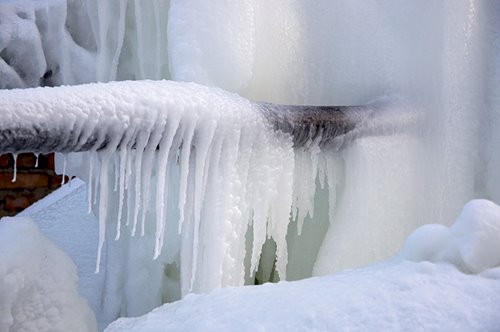
A house or building with this type of icicle hanging from its roof edge can have many problems. First, where does it come from? It is the result of snowmelt and ice accumulated on the roof that froze before reaching the ground. On a commercial building, falling ice cubes can cause injury if they fall on an individual.
In addition, this type of ice barrier can cause water infiltration problems. Ice can cause shingles to lift and water can seep through the roof. The damage bill can be high, because very often we will notice it when water is going to leak from a suspension in the house. At this time, the damage to the roof and the attic insulation can be very significant.
With building insurance costs still on the rise, it’s a good idea to install self-regulating heating cables. These cables will ensure that the water does not freeze on the roof. They will prevent the formation of ice and icicle barriers and create a path for water to flow from the roof to the ground.