CSA Group Lighting Center of Excellence Provides Single Location for Performance and Standards Testing
February 10, 2022
By Blake Marchand
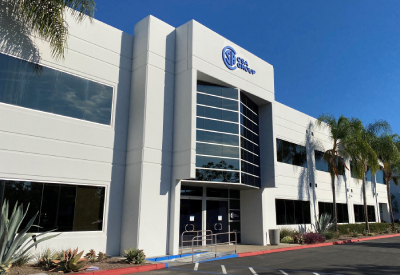
On December 2nd, 2021, CSA Group launched a new Lighting Center of Excellence in Irvine, California to serve North American Lighting Manufacturers. The new facility will provide a comprehensive set of services including OSHA NRTL (Nationally Recognized Testing Laboratory) certification services; energy performance testing, including LM-79; photobiological testing; photometric testing, including horticultural; and acoustic testing, among others.
To gain more insight, we spoke to KC Fletcher who is the Operations Manager of the recently opened Center of Excellence (COE). Fletcher is a world-class technical expert, he previously worked at CSA Group’s Seattle facility where the primary focus was on lighting performance testing.
The COE’s goal is to centralize and enhance CSA Group’s lighting evaluation services, so that manufacturers can get most of what they need through a single facility and a dedicated team of technical experts.
“With our new COE, we’re looking at offering a single location where we can maximize our services related to lighting, as well as maximize the throughput through that lab, which obviously minimizes the turn around time for our customers.”
“That’s the underlying goal of this facility. We have all the right equipment, the right people, the expertise all in one spot. So, we can accept most of the lighting products a manufacturer can make, we can test it and certify it here.”
Supply chain has been a major topic since the start of the pandemic, which is something that doesn’t impact the COE directly, but it has been an issue for some of CSA Group’s customers.
“If our customers have long lead times for certain materials or components, perhaps from overseas or even domestically, that makes their production cycles much longer. That’s why we’re stepping in with the Center of Excellence where we can at least minimize timing required for the testing and certification process.”
Fletcher said they are working under one of three accreditations the Center can offer and are aiming to get the other two in the first part of 2022.
“On the certification side it’s binary, we test the product and it either passes or does not,” he explained, while on the performance side of what the COE lab does, Fletcher said, “there’s a large range of regulatory criteria, whether its Energy Star or NRCan or DLC. They have varying levels of efficiency requirements and other requirements that they put forth. We perform all of those measurements so our customers can not only get their product safety certified, they can also get listed with some of these regulatory bodies.”
“Prior to us opening the COE, you might have had to send samples to a couple of different CSA Group labs. . By being able to maximize our capabilities in this lab, and also minimize our turnaround times, that’s where we see this being very beneficial to the lighting industry in general.”

Fletcher noted that the COE is meant to service all levels of lighting manufacturers from large corporations to smaller operations.
What we’re seeing, at least recently, for example, in the horticulture lighting industry, is there’s a lot of small players that have entered the market. And for a lot of these companies it’s their first exposure to safety certification and performance regulations. CSA Group’s experts can help them through that process, tailoring their program to meet their needs, whether they’re hoping to sell their product across California, North America or internationally.
Stemming from horticulture, which obviously is a damp environment, Fletcher said one of the things they do at the COE is ingress protection testing to give products an IP rating.
“Anything from being a more arid condition to being fully submerged in water or being exposed to dust or chemicals, we can do all that type of testing.”
“Another fun add that we did for this lab is we put in an anechoic chamber,” which Fletcher explained is an anti-echo sound chamber. “Occasionally if you dim a light source, say in your house or office, you might hear a mechanical vibration that creates an acoustic noise. Some jurisdictions, including California, have requirements on the maximum amount of noise that can be emitted by a light source.”
“It’s interesting, we’re not just measuring electrical watts and lumens off of a product, we’re also measuring sound waves.”
Another interesting addition to the lab Fletcher said is a 3-meter diameter sphere, “it’s an integrating sphere, we measure the optical output of the light source.”
The testing device is hollow, and the inside is painted a 98% reflective white, he explained, “you enclose a light source inside a sphere and that becomes a calibratable volume and then you can accurately measure the light output using that type of device.”
They also use a goniometer, which allows them to produce IES files, “it’s a large type-c moving-mirror goniometer. That mirror rotates around the product and reflects to a sensor in a very precise geometrical way and we’re able to measure the angular distribution of the light which is standardized for lighting designers.”
Discussing the industry more broadly, Fletcher said the trend toward solid state lighting LED technology in the horticulture market is interesting for him, in particular he referenced a study being done on photomorphogenesis.
“If you’re growing a food crop, there’s a desire to avoid pesticides and things like that. What they’re finding is that you can manipulate the plant just by changing the light that it’s exposed to. For example, if you add a little more red light towards end of the fruition cycle of a certain plant you might increase a certain vitamin that it produces in the fruit. Or perhaps, certain wavelengths make the plant a little bit more robust against pests and insects, so you don’t have to use the chemicals.”
“With the LED technologies you are able to tune these spectra, so researchers are able to adjust the light as they’re studying it and over the life cycle of the plant, they can dynamically change the spectrum its exposed to.”
From CSA’s perspective, Fletcher said, “we’d go in and test and verify that the manufacturer’s claims on these different channels or tuning methods, that they are outputting the wavelengths as expected.”
“I’m not a biologist,” he noted, “but in terms of scientists wanting to confirm that they’re putting precisely 450 nanometer light, for example, on a plant, we can go in and confirm that.”
Looking at how horticulture lighting has evolved, Fletcher said 6-7 years ago the standard was HPS lamps (high pressure sodium), “It’s much less efficient, it creates a lot more heat, relative to the amount of light it puts out, and it’s a static spectrum so you can only put one colour of light out of it.”
Fletcher added that he’d estimate about half of all horticulture lighting products have tunability on the fixture, “so, its not a secret at this point, but its definitely still a growing part of the industry.”
Visit CSA Group’s Lighting Center of Excellence website to learn more.