A Closer Look at Innovative CleanGen and CleanGrid Solutions from RIC Electronics
April 4, 2023
By Blake Marchand
Based in Burnaby, B.C., RIC Electronics is a company founded in 1981 around power and backup systems. Since then, the company has expanded from three employees to over 50 and has grown into a 30,000 sq. ft. facility.
RIC is distinguished by ingenuity in engineering design and manufacturing of industrial grade battery chargers/rectifiers, DC and AC UPS systems, converters and inverters for the marine, defense, utility, telecom, oil and gas, and mining industries.
CleanGen
In 2019 they began developing clean technologies to replace diesel generation products. We spoke to CTO, Scott McKenzie to gain more insight into their CleanGen generator and CleanGrid utility-scale solutions.
“What drove us into the space was the battery technology,” said McKenzie. Prior to developing CleanGen the company didn’t work much with lithium and were waiting on the traditional lead vendors to come out with a solution they could use, but McKenzie said that despite some promise in 2011-12, nothing was coming. “We realized, particularly for LFP, the answers would not come from the lead manufacturers because you can’t have lithium without having battery monitoring and controls,” he explained.
A key component with Lithium Iron Phosphate (LFP) is the battery monitoring and battery control, which RIC developed in house. Lead wasn’t a suitable solution for this application because it’s too heavy and it doesn’t have the cycle counts of lithium.
“If you don’t have monitoring, which is all electronics driven, then you don’t have a solution. In the end, for lithium to come to the market, it’s someone like us (or Tesla, for example) that does the entire packaging.”
When it comes to moving away from fossil fuels on a regular basis, from transportation down to generators, and even power tools, McKenzie said, “It’s getting down to the work of making useful products that people want to use.”
An important component in the CleanGen product design was making the product familiar. Essentially, it looks and feels exactly as a diesel generator does.
“One of the big things is, you can’t come out with a product that is so far in advance of where people are at mentally.”
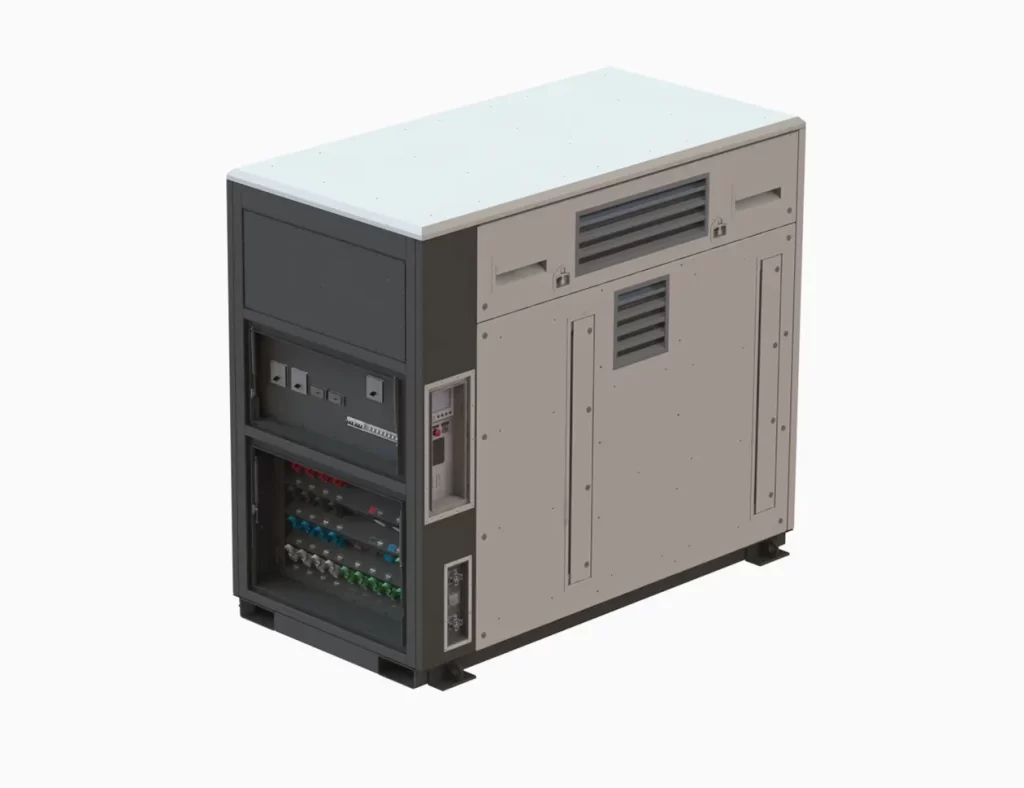
“If you’re too far ahead of the curve, people aren’t ready to accept. If the product is so radically different than what you’re doing day to day, they can’t see themselves using it, it’s too much of a leap. The important part for manufacturers is to put things in front of people that look and feel like the old thing they had with similar run times or product specifications. That’s the root. If you’re not doing that, then you just won’t get acceptance.”
CleanGen is essentially a drop-in replacement for its gas-powered counterpart.
RIC Electronics attended a film and television trade show to gauge the market for their products for that industry in the U.S., McKenzie noted, “As soon as they learned [it was all electric] heads turned.”
“It looks so much like a regular generator, people didn’t know what it was in the beginning.”
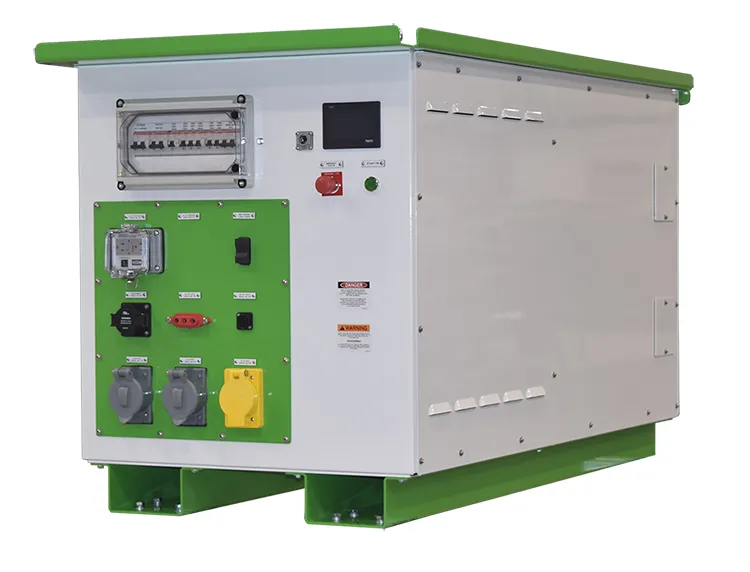
Which was by design. As he mentioned previously, it was important for RIC to develop innovative products that strongly resembled the products they would be replacing.
Another interesting aspect of CleanGen is that it can be charged at EV charging stations. You can also charge without having to disconnect the power.
Another industry that has shown interest in CleanGen is underground mining, “the reason for that is, in underground mining, whenever you have a diesel generator you have to have a scrubber on the engine and a hole providing air down the shaft so that there is fresh air all the time. If you remove diesel generators from underground, it makes the mine-life much easier.”
They are working on some special packaging for those types of applications, suited to that environment. Their mining clients wanted it to be a bit shorter, and then the packaging needs to be durable as well as sealed so that it’s dust proof. They also had to add an air conditioner to it. They are aiming to have that ready in 2023, as well.
Products are sold directly through their internal sales networks, which McKenzie notes they have plans to expand.
CleanGrid
They have orders for their first Clean Grid installations to go in the Yukon, RIC is helping the government achieve some climate targets in the territory. The project is a remote station camp that has a 225 Kw solar field with a Kw/H battery. On site they have multiple 100 Kw diesel generators.
“In the dark of winter, you have no choice but to use diesel, however, their load is very small. For a diesel generator to be effective you want it to run at 85% load capacity. So, when we turn them on in the winter, we’re just charging the batteries.”
Basically, he said, they are turning the site into a Prius, it’s a hybrid solution. “When we turn the diesel on its running at maximum efficiency, then we shut it off and run off batteries for extended periods.” Which ultimately increases efficiency.
“Our system basically becomes their internal grid with solar add, and in the winter, the occasional diesel add. There’s two and half months where there is very little sun, we might capture some solar, so its hybrid through the winter, but 8-9 months of the year they have enough solar to run the entire site.”
The solution reduces fuel consumption by 15%.
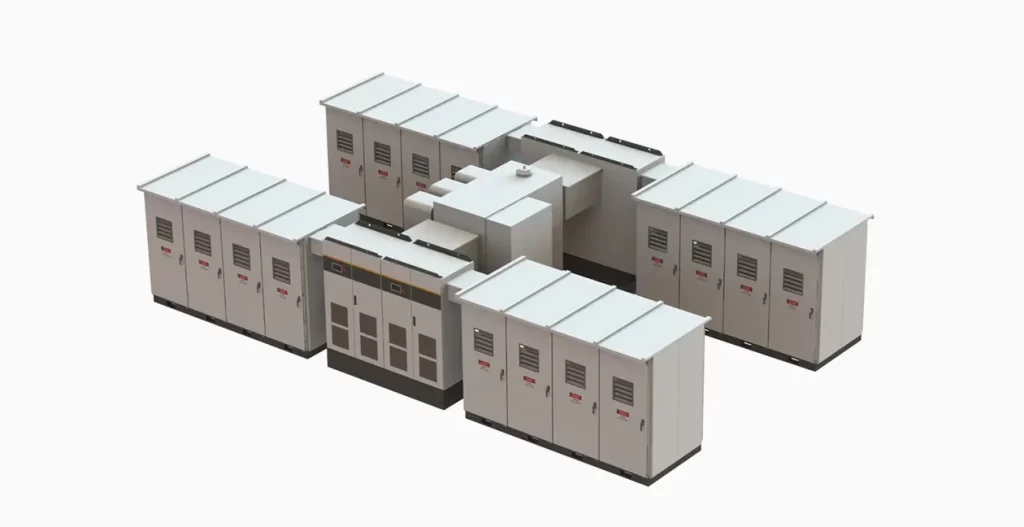
In grid connected applications, GleanGrid supports grid stabilization. It can be used to optimize on/off peak pricing. You can charge the batteries at night when electricity is the cheapest and run it during peak pricing periods. For example, there is a region in Texas that has a one-hour peak period during the day that is 46 cents/KwH and at night it’s -5 cents/KwH.
“What that does for the utilities is it makes their power generation stabilized. Whatever they’re running they can run closer to high efficiency all of the time, because you’re loading them at night and unloading them during the day when the peak is there,” explained McKenzie.
CleanGrid is to support grid stabilization for electricity producers so they can minimize their use of generators and it helps to alleviate stress on the grid during peak consumption times, as well as being used for remote locations that cannot be connected to the grid.
Closing thoughts…
“There are fantastic opportunities ahead. Anyone in the electronics industry has been impacted by electronics supply and microprocessor supply. We were really proactive in buying high volumes last year. We sort of saw it coming, and annoyingly, one of our main processor supplies completely dried up. So, for one of our products we had to switch processors. There were some time delays because you’re redoing circuit boards and redoing your software, just because of supply chain issues. It’s not something you want to do but you have to be quick and agile to keep product moving. The big thing is, we bought several years’ worth of supply, so we’re ready to go.”
Looking ahead, McKenzie is interested in solar, he said RIC is looking at developing products to provide more support to that industry.
![Guide to the Canadian Electrical Code, Part 1[i], 26th Edition– A Road Map: Section 74 — Airport installations](https://electricalindustry.ca/wp-content/uploads/2026/05/EIN-Stock-Guide-Code-Canada-Map-1200-768x403.png)




![Guide to the Canadian Electrical Code, Part 1[i], 26th Edition– A Road Map: Section 74 — Airport installations](https://electricalindustry.ca/wp-content/uploads/2026/05/EIN-Stock-Guide-Code-Canada-Map-1200.png)