Using Control Panels to Optimize Heat Generation
May 16, 2016

Ilan Toledano

The importance of heat management and optimization in industry cannot be undermined. The fact that large industries like food processing, oil and gas, petrochemicals as well as smaller industries depend on efficient heat management to run their production, highlights why there are continued developments in this field. As well as being a critical factor for many industries, efficient heat management is also a challenge.

Heat loss and heat wastage are names given to the mismanagement of or lack of utilization of heat in the industrial process. Heat is typically provided to industries through heaters. These heaters, unlike the boilers that they have replaced, are stacked with technology to offer more advanced control mechanisms and features.

Controlling Heaters

If a person has a small firm, it is feasible to hire a person to take care of the heater and keep its operations under check. On a larger scale, that becomes next to impossible. In these larger industrial situation, heaters are often used for more than one purpose.. Here, there is a wide variety of functions that heaters are involved in. This makes keeping tabs on the performance of these heaters as well as exercising control over them, quite difficult.

Typically, larger industries can make use of temperature controllers alongside the heaters to ensure that the heater is able to maintain the desired temperature (or follow a defined series of temperature changes. The temperature controller will have sensors attached to the vessel where the heater operates. This sensor will keep tabs on the temperature of the vessel. If the temperature falls below the one fed into the controller, it can activate the heater and similarly, if the desired temperature has been reached, it can end the operation of the heater.

Controlling the Controllers

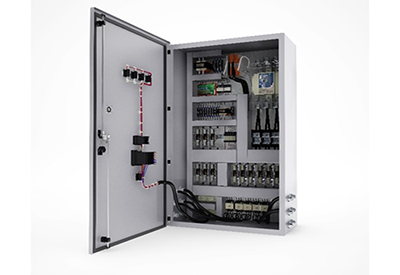
This is where the role of the temperature control panel comes in. The role of the control panel, it needs to be understood, is the most important one in an industrial operation since it is the place from where all the strings are being pulled.

If you put one temperature controller with one heater, this would mean that large firms would have an unmanageable number of controllers to keep track of. This is what the control panel does. The job of the control panels is to bring all kinds of temperature controllers and standalone heaters under one central control system, which can be easily tracked and managed.

Benefits of the Control Panel

There are a number of benefits that control panels give to industries, such as:

  • A centralized approach to the application of their heaters
  • Easy maintenance (only one panel instead of a panel for each heater)
  • Greater coordination (data can be compared from all heaters in a single place)
  • Mechanized, efficient approach

All in all, it can be said that the role of control panels as far as heating is concerned is integral. The panels can come in a variety of terminal boxes and can make the management of several heaters at once a simple task. There are different types of control panels available in the market today and the choice of which heater to choose and which one to pass will largely depend on the task at hand.


Ilan Toledano, is the President of Wattco. With over 20 years of experience in the electric heating industry, Ilan Toledano has been involved in sales and marketing, product development, and expansion of the industrial immersion heaters in the chemical and oil and gas industry for the past 15 years. Mr. Toledano has a B.Comm from Concordia University in Finance and Business Law; www.wattco.com.

Related Articles


Latest Articles

  • Ottawa Day 2026: EFC Members Engage with Parliamentarians on Canada’s Electricity Future

    Ottawa Day 2026: EFC Members Engage with Parliamentarians on Canada’s Electricity Future

    March 16, 2026 By Electro-Federation Canada Following EFC’s recent update on our 2026 Ottawa Day, we are pleased to share photo highlights from two days of engagement on Parliament Hill, where members met with federal decision-makers to discuss the future of Canada’s electricity system. More than 40 EFC member leaders and Government Relations representatives travelled Read More…

  • Industrial Construction Intentions Drive Increase in Non-Residential Sector in January

    Industrial Construction Intentions Drive Increase in Non-Residential Sector in January

    March 13, 2026 In January, the total value of building permits issued in Canada increased $607.0 million (+4.8%) to $13.3 billion. The increase was led by the non-residential sector (+$464.0 million) and supported by the residential sector (+$143.0 million). On a constant dollar basis (2023=100), the total value of building permits issued in January rose 4.3% from the previous month Read More…

  • Multi-Unit Construction Drives Growth in December Residential Construction Investment, 2025 Review

    Multi-Unit Construction Drives Growth in December Residential Construction Investment, 2025 Review

    March 13, 2026 The total value of investment in building construction increased $442.9 million (+1.9%) to $23.7 billion in December. The residential sector grew 2.4%, while the non-residential sector edged up 0.6%. Year over year, investment in building construction grew 12.2% in December. On a constant dollar basis (2023=100), the total value of investment in building construction in December rose 1.7% Read More…

  • 5 Strategic Reasons to Attend the Lumen Exhibition

    5 Strategic Reasons to Attend the Lumen Exhibition

    March 13, 2026 In a market where deadlines are tight and projects are increasingly complex, staying competitive is no longer just about technical skills. It also depends on having the right tools, the right information, and the right partners by your side. The Lumen Exhibition is more than just an event—it’s a strategic lever designed to Read More…


Changing Scene

  • A New Guillevin.com, Designed to Simplify Your Purchasing Experience

    A New Guillevin.com, Designed to Simplify Your Purchasing Experience

    March 16, 2026 Guillevin.com was built as a digital working tool, designed to support the way their customers plan, search for, and purchase products today. The goal is simple: to offer a fast, reliable, and intuitive online platform capable of supporting real-world operations; both on the job site and in the office. A platform built around Read More…

  • Nova Scotia Strengthens Housing Legislation to Accelerate Supply

    Nova Scotia Strengthens Housing Legislation to Accelerate Supply

    March 13, 2026 Amendments to existing legislation will mean more housing, improved efficiency in the sector and better alignment of related agencies. The changes extend the Executive Panel on Housing in the Halifax Regional Municipality and give the Minister of Housing new authority to ensure housing projects aren’t delayed. “We are strengthening how we plan, Read More…

  • Sonepar Company Opens a New Automated Distribution Center in Las Vegas

    Sonepar Company Opens a New Automated Distribution Center in Las Vegas

    March 13, 2026 Codale Electric Supply, a Sonepar company, is transforming electrical distribution with the launch of its central distribution center located just off the Las Vegas Strip, in October 2025. The site features a highly automated setup designed to improve speed, accuracy, and customer convenience. At the heart of the facility is an advanced Read More…

  • BC Introduces Public Sector Construction Projects Procurement Act

    BC Introduces Public Sector Construction Projects Procurement Act

    March 13, 2026 Kiel Giddens, MLA for Prince George-Mackenzie and Critic for Labour, has introduced the Public Sector Construction Projects Procurement Act, legislation aimed at ensuring publicly funded construction contracts are awarded through labour-neutral, merit-based procurement. “Here’s the simple question: if labour shortages are driving cost overruns, why would government limit who can work on public projects?” Read More…