Utilities, Smart Grids, and the Convergence of IT and OT
smart grid funding 400

March 15 2016

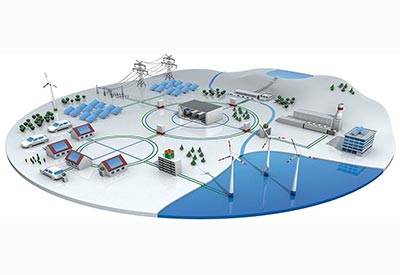
The goal for any utility that invests in smart grid technology is to attain higher efficiency and reliable performance. At the heart of this evolution is the convergence of operations technology (OT) and information technology (IT), which changes every aspect of a utility’s operations.

Understanding the dynamics of OT and IT

In basic terms, OT comprises the grid physical infrastructure assets and applications, and IT is the human interface that enables rapid and informed decision making.
Today, the smart grid is transforming utility operations and pushing IT across its traditional boundary into OT at a remarkable pace. The growth in grid modernization is driving the way utilities are deploying equipment and automation, influenced by these trends:

  • continuous growth in OT deployment
  • continuous implementation of IT to model, monitor, and manage distribution systems
  • an urgent requirement to integrate IT and OT networks

Integrating IT and OT

The convergence of IT and OT means bringing together applications and devices in new ways, and tying together systems that have primarily operated in isolation. Along with growth in numbers of devices and increased functionality, bringing the systems together introduces integration on a new scale.

Addressing the needs of the IT/OT-integrated distribution grid requires advances in communications, adherence to expanded standards, and a focus on architecture and security. Points to consider include:

  • communications and protocols — the IT/OT-integrated world involves a federation of networks that combine private and public infrastructure, and integrate standards-based, open technologies such as IP with existing proprietary legacy solutions. No operating utility can afford to design its communications infrastructure from point zero; however, it’s important to maintain the parameters that support OT in mission-critical applications to ensure reliability, availability, security, and predictable performance.
  • standards — developing interoperability standards plays a key role in supporting grid modernization. National, industrial, and trade groups are all contributing to establishing the definitions and specifications for connecting grid devices. Processes are already in place to close the gaps in current standards.
  • architecture — in addition to addressing the core requirements of reliability, security, and performance, the new smart grid IT/OT architecture must support the integration of existing enterprise systems within the grid modelling, monitoring, and management environment. As with communications infrastructure, no operating utility has the luxury of designing and implementing its architecture from scratch. But industry-proven architectural roadmaps exist to help utilities work through the design process.

Transforming to a smart grid operation

The move to the smart grid is an evolution, not a revolution. The change begins with a simple awareness of the significant influence of IT on operational equipment.
Next is the recognition of a need to create a clear, long-term roadmap for a smarter network. With the roadmap as a guide, an IT/OT-converged approach will allow utility personnel to deploy each grid modernisation application project as a part of a connected whole.

Finally, utility personnel should carefully consider decisions involving network systems. Deployment of an advanced distribution management system (ADMS) will help a utility to succeed in achieving IT/OT technology acceleration.


This article was first published as a Schneider Electric insight; www.schneider-electric.ca/en/.
Related Articles


Latest Articles

  • Ottawa Day 2026: EFC Members Engage with Parliamentarians on Canada’s Electricity Future

    Ottawa Day 2026: EFC Members Engage with Parliamentarians on Canada’s Electricity Future

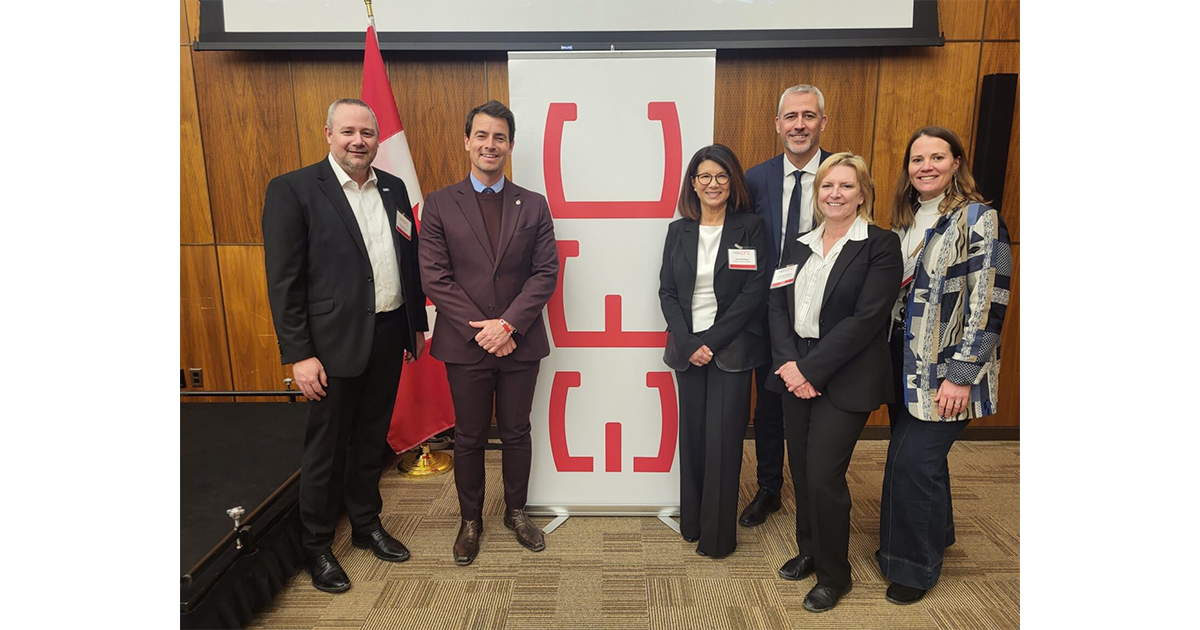
    March 16, 2026 By Electro-Federation Canada Following EFC’s recent update on our 2026 Ottawa Day, we are pleased to share photo highlights from two days of engagement on Parliament Hill, where members met with federal decision-makers to discuss the future of Canada’s electricity system. More than 40 EFC member leaders and Government Relations representatives travelled Read More…

  • Industrial Construction Intentions Drive Increase in Non-Residential Sector in January

    Industrial Construction Intentions Drive Increase in Non-Residential Sector in January

    March 13, 2026 In January, the total value of building permits issued in Canada increased $607.0 million (+4.8%) to $13.3 billion. The increase was led by the non-residential sector (+$464.0 million) and supported by the residential sector (+$143.0 million). On a constant dollar basis (2023=100), the total value of building permits issued in January rose 4.3% from the previous month Read More…

  • Multi-Unit Construction Drives Growth in December Residential Construction Investment, 2025 Review

    Multi-Unit Construction Drives Growth in December Residential Construction Investment, 2025 Review

    March 13, 2026 The total value of investment in building construction increased $442.9 million (+1.9%) to $23.7 billion in December. The residential sector grew 2.4%, while the non-residential sector edged up 0.6%. Year over year, investment in building construction grew 12.2% in December. On a constant dollar basis (2023=100), the total value of investment in building construction in December rose 1.7% Read More…

  • 5 Strategic Reasons to Attend the Lumen Exhibition

    5 Strategic Reasons to Attend the Lumen Exhibition

    March 13, 2026 In a market where deadlines are tight and projects are increasingly complex, staying competitive is no longer just about technical skills. It also depends on having the right tools, the right information, and the right partners by your side. The Lumen Exhibition is more than just an event—it’s a strategic lever designed to Read More…


Changing Scene

  • Blackstone Announces Agreement to Acquire Arlington Industries

    Blackstone Announces Agreement to Acquire Arlington Industries

    March 20, 2026 Blackstone and Arlington Industries announced that funds managed by Blackstone Energy Transition Partners have entered into a definitive agreement to acquire Arlington. Founded in 1949, Arlington designs and manufactures a range of electrical products such as fittings, enclosures and other components. The company’s innovative solutions are used across commercial, industrial and data Read More…

  • A New Guillevin.com, Designed to Simplify Your Purchasing Experience

    A New Guillevin.com, Designed to Simplify Your Purchasing Experience

    March 16, 2026 Guillevin.com was built as a digital working tool, designed to support the way their customers plan, search for, and purchase products today. The goal is simple: to offer a fast, reliable, and intuitive online platform capable of supporting real-world operations; both on the job site and in the office. A platform built around Read More…

  • Nova Scotia Strengthens Housing Legislation to Accelerate Supply

    Nova Scotia Strengthens Housing Legislation to Accelerate Supply

    March 13, 2026 Amendments to existing legislation will mean more housing, improved efficiency in the sector and better alignment of related agencies. The changes extend the Executive Panel on Housing in the Halifax Regional Municipality and give the Minister of Housing new authority to ensure housing projects aren’t delayed. “We are strengthening how we plan, Read More…

  • BC Introduces Public Sector Construction Projects Procurement Act

    BC Introduces Public Sector Construction Projects Procurement Act

    March 13, 2026 Kiel Giddens, MLA for Prince George-Mackenzie and Critic for Labour, has introduced the Public Sector Construction Projects Procurement Act, legislation aimed at ensuring publicly funded construction contracts are awarded through labour-neutral, merit-based procurement. “Here’s the simple question: if labour shortages are driving cost overruns, why would government limit who can work on public projects?” Read More…