Acting on Climate Change: Solutions from Canadian Scholars

Climate Change


In fall 2014, UN General Secretary Ban Ki-moon exhorted all countries to raise the ambitions of their climate change policies to avoid a global temperature increase of more than 2oC during this century. Since the Rio+20 Conference, he has repeatedly called for a greater contribution of science to resolve environmental problems. Responding to this call, 30 Canadian universities created a collective initiative called Sustainable Canada Dialogues (SCD).

The resulting group, which mobilizes over 60 researchers from every province, has built a consensus around a plan of sustainability solutions to help Canada successfully achieve transition to a low-carbon society. This network representing crosscutting disciplines ranging from engineering and sciences to social sciences, wishes to encourage public debate on climate policy in view of the upcoming Federal election and the December 2015 climate summit in Paris.

In its report, Acting on Climate Change: Solutions from Canadian Scholars, the group identifies 10 policy orientations that could allow Canada to immediately transition towards a low carbon economy and a number of actions could be immediately implemented. Two stand out: 

• a price on carbon throughout Canada. It is not very different than taxes on cigarettes. Cleaning up carbon pollution, as the U.S. now calls it, needs to be paid by those who cause it.
• ensure electric connections between the provinces that produce hydro-electricity and those that do not. Such interconnection would allow Canada to have 100% carbon free electricity and could become the backbone of our transition to a low carbon sustainable society.

In parallel, says the group, it is essential that the government support stricter standards for energy use and appropriate urban design that will offer Canadians a high quality of life environment with minimal green-house gas production.

Because renewable energy resources are plentiful, the group believes Canada could reach 100% reliance on low carbon electricity by 2035. This would makes it possible to adopt a long-term target of at least 80% reduction in emissions by the middle of the century, consistent with Canada’s international climate mitigation responsibility. In the short term, the group thinks Canada could adopt a 2025 target of 26-28% GES reductions relative to 2005 levels.

Financing change

If no mitigating action is taken, says the group, doing nothing will pose its own costs. Many studies have shown that the cost of adapting to climate change will soar. This means that climate change mitigation could be done at “no-net cost” if Canada acts rapidly.

Shifting to a low carbon society can propel the Canadian economy into the future, says the group, making it more competitive and more sustainable. This means that some economic sectors will shrink while others expand. But overall, the economic, environmental and social gains will exceed the losses. The sectors more likely to benefit from the transition are those that are proactively trying to adjust. This is why it is important to move now and not to wait until this change is imposed on us from the outside, says the group. Just like businesses, the governments that are the forefront of issues are the most likely to succeed.

Finally, Canada is currently renewing much of the infrastructure built in the 1960s and 1970s. Incorporating mitigation strategies into this infrastructure will be much less costly that correcting the errors in 10 or 15 years. An analogy is the state of California making sure its infrastructure (buildings, bridges) are prepared for earthquakes. One of the most cost efficient mitigation strategies involves incorporating climate change mitigation into the design and reparation of existing and new infrastructure. In this way the cost of mitigation is folded into current infrastructure budgets.

Learn more about Sustainable Canada Dialogues http://www.sustainablecanadadialogues.ca/en/scd. Read the report Acting on Climate Change: Solutions from Canadian Scholars: http://biology.mcgill.ca/unesco/EN_Fullreport.pdf.

 

Related Articles


Latest Articles

  • Powering Canada’s Electricity Future Requires a Skilled Workforce: EHRC Welcomes Federal Strategy

    Powering Canada’s Electricity Future Requires a Skilled Workforce: EHRC Welcomes Federal Strategy

    May 21, 2026 Electricity Human Resources Canada (EHRC) welcomes the Government of Canada’s release of Powering Canada Strong: A National Strategy for an Electrified Canadian Economy, recognizing it as a critical milestone in advancing a sustainable, reliable and competitive energy future. As Canada sets an ambitious goal to double its electricity supply by 2050, EHRC underscores Read More…

  • Multi-Unit Component Weighs on Residential Investment in February 2026 Building Construction

    Multi-Unit Component Weighs on Residential Investment in February 2026 Building Construction

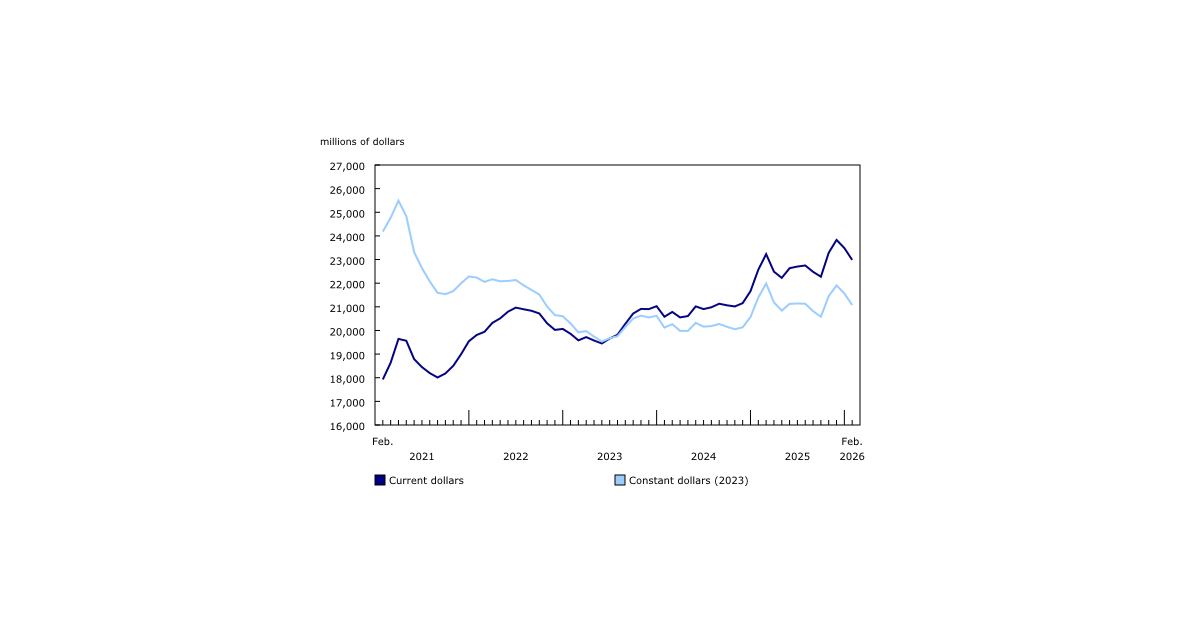
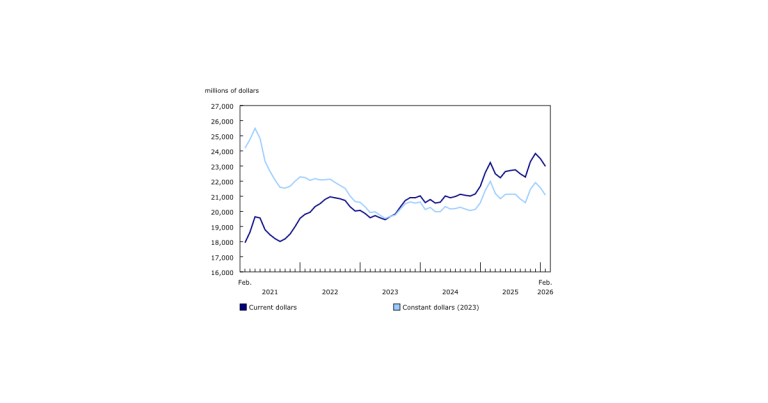
    May 21, 2026 The total value of investment in building construction decreased $503.2 million (-2.1%) to $23.0 billion in February, driven by a decline in the residential sector (-3.3%). Meanwhile, the non-residential sector edged up 0.7%, mitigating the decrease. Year over year, investment in building construction grew 1.8% in February. On a constant dollar basis (2023=100), the total value Read More…

  • Institutional Construction Intentions Lead Growth in Non-Residential Sector, March Building Permits

    Institutional Construction Intentions Lead Growth in Non-Residential Sector, March Building Permits

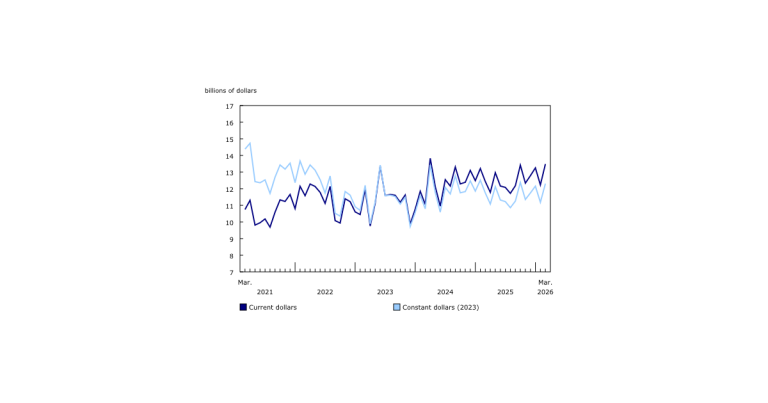
    May 21, 2026 In March, the total value of building permits issued in Canada increased $1.3 billion (+10.3%) to $13.5 billion. The increase in construction intentions was led by the non-residential sector (+$1.5 billion) and tempered by the residential sector (-$270.6 million). On a constant dollar basis (2023=100), the total value of building permits issued in March rose 10.1% from Read More…

  • ECAO Emerging Contractor Training Grant

    ECAO Emerging Contractor Training Grant

    May 21, 2026 Invest in Your Team’s Future — Up to $1,500 in Training Credits Available The ECAO Emerging Contractor Training Grant is designed to support electrical contractors with smaller workforces in Ontario by removing financial barriers to professional development. This initiative provides up to $1,500 in training credits per contractor to encourage skills development, safety improvements, and workforce Read More…


Changing Scene

  • Nedco Opens New Kelowna Branch

    Nedco Opens New Kelowna Branch

    May 21, 2026 In a recent announcement from Nedco, the company celebrated the Grand Opening of the new Kelowna branch on Friday, May 8, 2026. Nedco invited attendees to explore the new 11,000 sq. ft. facility designed to conveniently serve Okanagan customers. The tour of the new facility took place from 11:00 AM to 2:00 Read More…

  • Leviton Canada Partners with NRG INTENSI‑T Inc. to Strengthen the Presence of Lighting Controls in the Quebec Region

    Leviton Canada Partners with NRG INTENSI‑T Inc. to Strengthen the Presence of Lighting Controls in the Quebec Region

    May 21, 2026 Leviton Canada is proud to announce its partnership with NRG INTENSI-T Inc., who will now represent Leviton’s Lighting Controls product line throughout the Quebec region, effective May 1, 2026. This new partnership reflects Leviton’s commitment to strengthening its lighting controls presence in Quebec through experienced, market-focused representation. With deep regional knowledge, an Read More…

  • Mac’s II Agencies Expands ABB Partnership into UPS Solutions

    Mac’s II Agencies Expands ABB Partnership into UPS Solutions

    May 21, 2026 As demand increases for resilient, always-on power for commercial, industrial, and mission-critical environments, Mac’s II Agencies is strengthening its Power Quality portfolio with ABB systems engineered for diverse conditions. With a broad range of sizes and configurations available, engineers, contractors, and end users can specify power backup and protection solutions with continued confidence, backed Read More…

  • EFC Conference Returns to Halifax with Focus on Industry Disruption and Growth

    EFC Conference Returns to Halifax with Focus on Industry Disruption and Growth

    May 20, 2026 Electro-Federation Canada (EFC) will bring together the electrical industry for its 2026 Annual Industry Conference, taking place June 2-4 at the Halifax Convention Centre. Under the theme “WaveMakers: Where Disruption Meets Direction,” the event will focus on the forces reshaping Canada’s electrical supply chain, including electrification, infrastructure investment, digital transformation, and evolving Read More…