PIR vs. Microwave Motion Sensors: Which Is Right for Your Lighting Project?

March 26, 2026
By CSC LED
When planning an energy-efficient lighting project, choosing the right motion sensor is crucial. A question we hear often when selecting motion sensors for a job is: “Should I use a microwave or passive infrared (PIR) motion sensor for my project?”
The short answer is, it depends. There’s no one-size-fits-all solution; your choice should be guided by site conditions and performance requirements. In this article, we’ll break down the differences between PIR and microwave motion sensors so that you can make the most informed decision.
What Is a PIR Sensor and When Should You Use One?
Passive Infrared (PIR) sensors are a reliable, cost-effective solution for basic motion detection. These sensors detect infrared radiation, essentially heat, within their field of view. When there’s a sudden temperature change between detection zones, the sensor interprets it as movement and activates the luminaire.
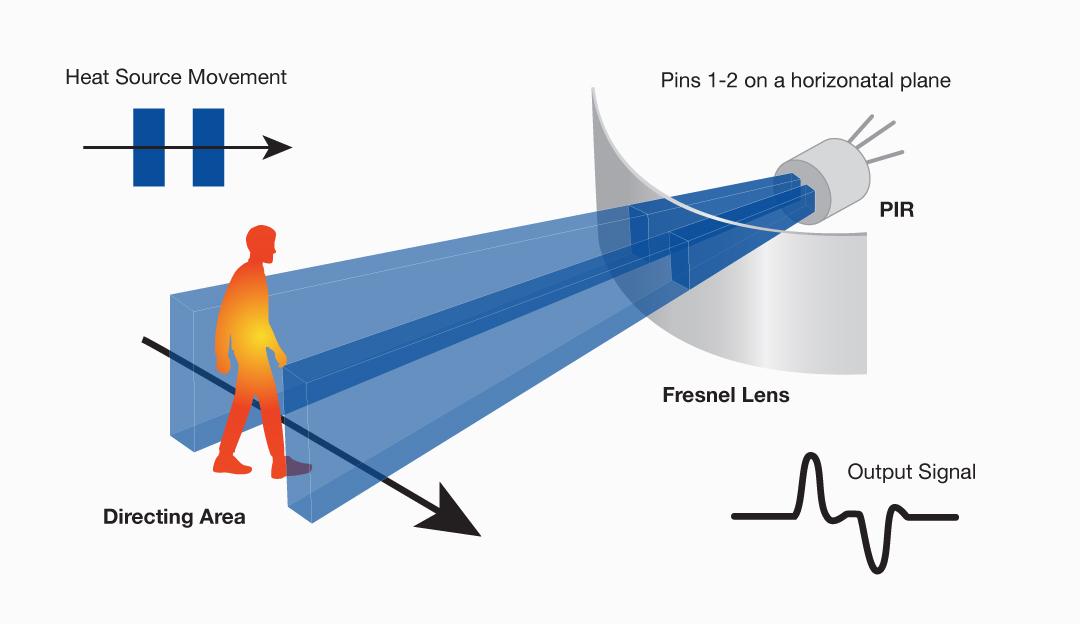
Key Features of PIR Sensors:
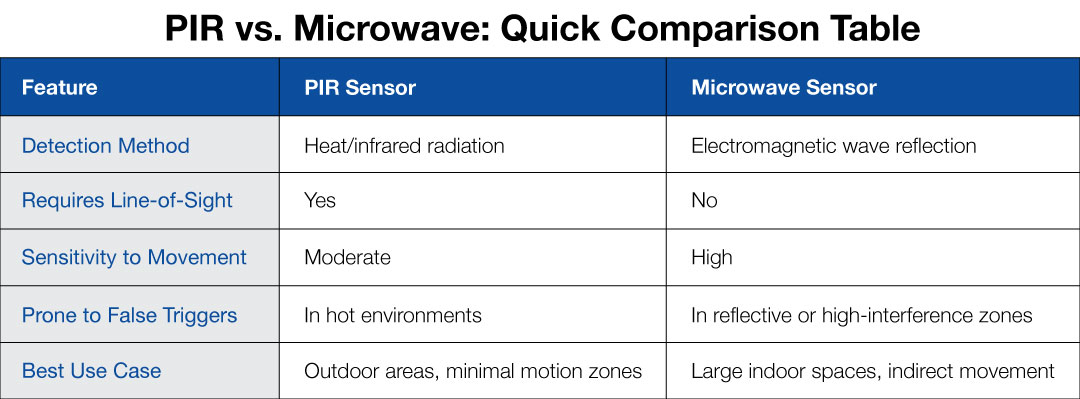
- Line-of-sight detection: PIR sensors only detect movement in areas they can “see.”
- Great for: outdoor areas or warehouses, where both vehicle and foot traffic will be present.
- Low false trigger rate: Will not activate unless heat signatures are detected.
- Energy-efficient: Triggers only when heat-emitting motion is detected.
Considerations:
- PIR sensors may not detect non-heat-based motion (e.g., a rolling object).
- High ambient temperatures (e.g., near HVAC vents or heaters) may cause false activations.
Explore our PIR Motion Sensor for more details and specifications.
What Is a Microwave Sensor and When Should You Use One?
Microwave motion sensors detect movement by emitting high-frequency electromagnetic waves and analyzing how those waves reflect back to the sensor. If the reflected signal changes, the sensor recognizes this as motion.
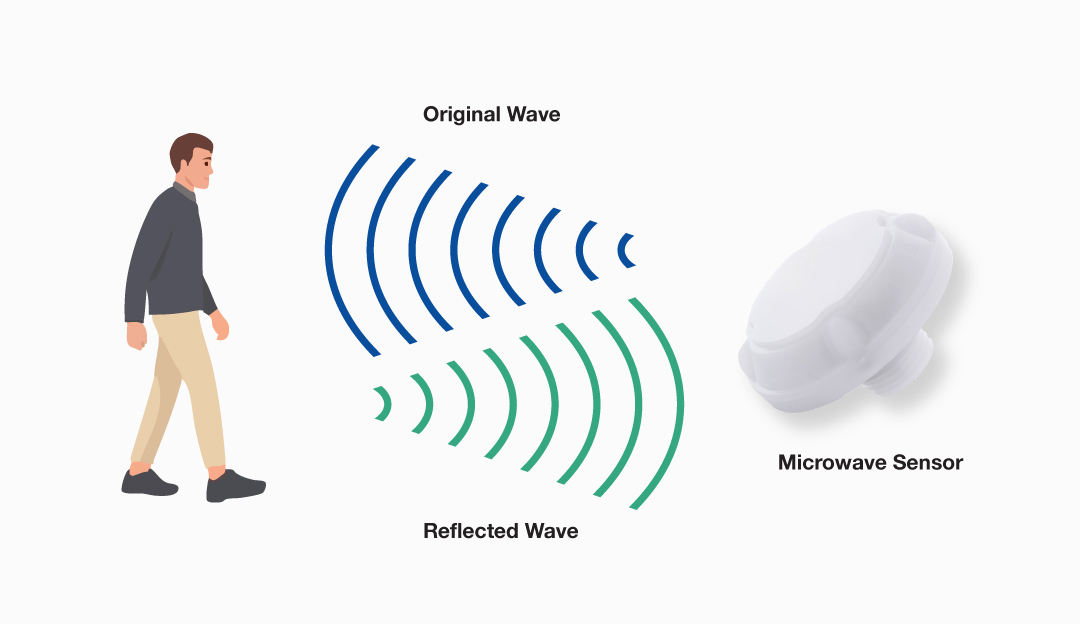
Key Features of Microwave Sensors:
- No line-of-sight needed: Can detect motion through thin walls or non-metallic objects.
- Ideal for large indoor spaces: Perfect for warehouses, garages, and stairwells.
- Continuous detection: Stays on as long as movement is present in the coverage area.
Considerations:
- More sensitive: Prone to false triggers from fans, machinery, or reflective surfaces.
- Electronic interference: Other devices emitting similar frequencies may occasionally disrupt performance.
Check out our Microwave Motion Sensor for full product details.
Sensor Fine-Tuning for Optimal Performance
No matter which sensor you choose, CSC LED’s motion sensors can be easily configured to match your exact needs. Using either remote controls or DIP switches, you can customize:
- Sensitivity
- Detection range
- Standby dimming
- Time delay before shut-off (hold time)
This ensures a tailored lighting experience that helps you maximize energy savings without compromising on functionality.
Why Motion Sensors Matter for Energy Efficiency
Incorporating motion sensors into your lighting design not only enhances automation and safety but also significantly reduces energy consumption. Whether you’re retrofitting a commercial building or designing a new outdoor lighting system, CSC LED motion sensors offer reliable, low-maintenance solutions with minimal upfront cost and long-term savings.
Learn more about our full range of sensor products and how they can support your next lighting project.
![Guide to the Canadian Electrical Code, Part 1[i], 26th Edition– A Road Map: Section 74 — Airport installations](https://electricalindustry.ca/wp-content/uploads/2026/05/EIN-Stock-Guide-Code-Canada-Map-1200-768x403.png)




![Guide to the Canadian Electrical Code, Part 1[i], 26th Edition– A Road Map: Section 74 — Airport installations](https://electricalindustry.ca/wp-content/uploads/2026/05/EIN-Stock-Guide-Code-Canada-Map-1200.png)