The Importance of Trip-Free Operation and Its Characteristics
Trip-free circuit breakers


Anthony T. Ricciuti

One of the many often desirable characteristics in the specifications and marketing literature for medium voltage circuit breakers is “trip-free.” Unfortunately, there are many misconceptions about this characteristic.
Definitions

For IEEET rated products, there are several related definitions of “trip-free”:

•    In the most general definition of “trip-free,” the contacts of the circuit breaker must return tothe open position and remain there when an opening operation follows a closing operation,regardless of whether the closing signal, force,or action is maintained.

•    A common variant is called “electrically trip-free.” For a medium voltage circuit breaker tobe considered electrically trip-free, the circuit breaker must be able to receive and respond to an electrical opening signal regardless of whether an electrical closing signal is energized.

•    “Mechanically trip-free” operations refer to a mechanical release mechanism that can open the medium voltage circuit breaker regardless of whether any closing release device operated by any means is activated or maintained.Medium voltage circuit breakers can also be hydraulically trip-free or pneumatically trip-free if they contain a hydraulic or pneumatic opening release device, respectively,that are capable of opening the circuit breaker regardless of whether any closing release device operated by any means is activated or maintained.

Any of these variants of trip-free operation may include a trip-free relay, in which its operation alters a closing release circuit, permitting an opening release to operate unimpeded by a closing release operation in any state. For IEC rated products, although the standard recommends that the suitability for trip-free operations should be provided to customers that are specifying medium voltage circuit breakers,no specific definition is provided for this function.

Physical requirements

For IEEE rated products, if a mechanical opening release operation is maintained on a medium voltage circuit breaker, then any closing release operation signal must not result in contact movement that reduces the open gap between the contacts by more than 10%. This characteristic is often confused with the definition of trip-free.However, if any opening release operation isinitiated simultaneously with any closing release operation signal, contact movement up to and including a momentary touching of the main circuit breaker contacts is acceptable before the circuit breaker completes the opening operation.

Additionally, because electrical opening release operation circuits typically employ auxiliary switch contacts internal to the circuit breaker, and therefore the electrical release operation circuit remains open until the main contacts of the circuit breaker have closed, when an electrical opening release operation circuit is maintained, the momentary touching of the main contacts is acceptable before the circuit breaker completes the opening operation.

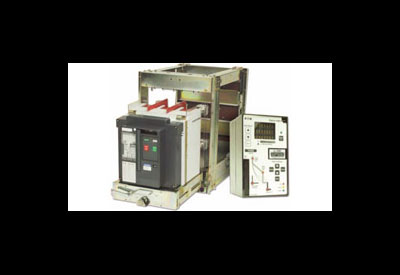
Figure 1: Eaton medium voltage circuit breaker operation

Eaton Circuit breaker


Anthony T. Ricciuti is a Specialist Engineer at Eaton, a power management company with 2014 sales of US$22.6 billion. Anthony has a Bachelor’s degree in Mechanical Engineering and more than 20 years of experience in the design, testing, and analysis of circuit breakers. This article first appeared as an Eaton white paper, www.eaton.com/Eaton/OurCompany/WhitePapers/FeaturedWhitePapers/index.htm.
Related Articles


Latest Articles

  • Ottawa Day 2026: EFC Members Engage with Parliamentarians on Canada’s Electricity Future

    Ottawa Day 2026: EFC Members Engage with Parliamentarians on Canada’s Electricity Future

    March 16, 2026 By Electro-Federation Canada Following EFC’s recent update on our 2026 Ottawa Day, we are pleased to share photo highlights from two days of engagement on Parliament Hill, where members met with federal decision-makers to discuss the future of Canada’s electricity system. More than 40 EFC member leaders and Government Relations representatives travelled Read More…

  • Industrial Construction Intentions Drive Increase in Non-Residential Sector in January

    Industrial Construction Intentions Drive Increase in Non-Residential Sector in January

    March 13, 2026 In January, the total value of building permits issued in Canada increased $607.0 million (+4.8%) to $13.3 billion. The increase was led by the non-residential sector (+$464.0 million) and supported by the residential sector (+$143.0 million). On a constant dollar basis (2023=100), the total value of building permits issued in January rose 4.3% from the previous month Read More…

  • Multi-Unit Construction Drives Growth in December Residential Construction Investment, 2025 Review

    Multi-Unit Construction Drives Growth in December Residential Construction Investment, 2025 Review

    March 13, 2026 The total value of investment in building construction increased $442.9 million (+1.9%) to $23.7 billion in December. The residential sector grew 2.4%, while the non-residential sector edged up 0.6%. Year over year, investment in building construction grew 12.2% in December. On a constant dollar basis (2023=100), the total value of investment in building construction in December rose 1.7% Read More…

  • 5 Strategic Reasons to Attend the Lumen Exhibition

    5 Strategic Reasons to Attend the Lumen Exhibition

    March 13, 2026 In a market where deadlines are tight and projects are increasingly complex, staying competitive is no longer just about technical skills. It also depends on having the right tools, the right information, and the right partners by your side. The Lumen Exhibition is more than just an event—it’s a strategic lever designed to Read More…


Changing Scene

  • A New Guillevin.com, Designed to Simplify Your Purchasing Experience

    A New Guillevin.com, Designed to Simplify Your Purchasing Experience

    March 16, 2026 Guillevin.com was built as a digital working tool, designed to support the way their customers plan, search for, and purchase products today. The goal is simple: to offer a fast, reliable, and intuitive online platform capable of supporting real-world operations; both on the job site and in the office. A platform built around Read More…

  • Nova Scotia Strengthens Housing Legislation to Accelerate Supply

    Nova Scotia Strengthens Housing Legislation to Accelerate Supply

    March 13, 2026 Amendments to existing legislation will mean more housing, improved efficiency in the sector and better alignment of related agencies. The changes extend the Executive Panel on Housing in the Halifax Regional Municipality and give the Minister of Housing new authority to ensure housing projects aren’t delayed. “We are strengthening how we plan, Read More…

  • Sonepar Company Opens a New Automated Distribution Center in Las Vegas

    Sonepar Company Opens a New Automated Distribution Center in Las Vegas

    March 13, 2026 Codale Electric Supply, a Sonepar company, is transforming electrical distribution with the launch of its central distribution center located just off the Las Vegas Strip, in October 2025. The site features a highly automated setup designed to improve speed, accuracy, and customer convenience. At the heart of the facility is an advanced Read More…

  • BC Introduces Public Sector Construction Projects Procurement Act

    BC Introduces Public Sector Construction Projects Procurement Act

    March 13, 2026 Kiel Giddens, MLA for Prince George-Mackenzie and Critic for Labour, has introduced the Public Sector Construction Projects Procurement Act, legislation aimed at ensuring publicly funded construction contracts are awarded through labour-neutral, merit-based procurement. “Here’s the simple question: if labour shortages are driving cost overruns, why would government limit who can work on public projects?” Read More…