PRIMED Wave Energy Project on Nootka Island receives $1million grant
March 15, 2023
University of Victoria’s Pacific Regional Institute for Marine Energy Discovery (PRIMED) has received one of 10 million-dollar grants under the 2022 TD Ready Challenge for their solution designed to assist people and communities disproportionately affected by climate change and the transition to a low-carbon economy, TD Bank Group (TD) announced this week. PRIMED is the only recipient from British Columbia.
About PRIMED
PRIMED is working towards the development of a first of its kind renewable energy microgrid incorporating a wave energy device at Yuquot on Nootka Island, a National Historic site and traditional home of the Mowachaht/Muchalaht First Nation (MMFN), located off the west coast of Vancouver Island. The project will be at the cutting edge of renewable energy system development, support the Nation to achieve their long-held dream of re-occupying Yuquot after being forcibly relocated decades ago, and contribute to reconciliation.
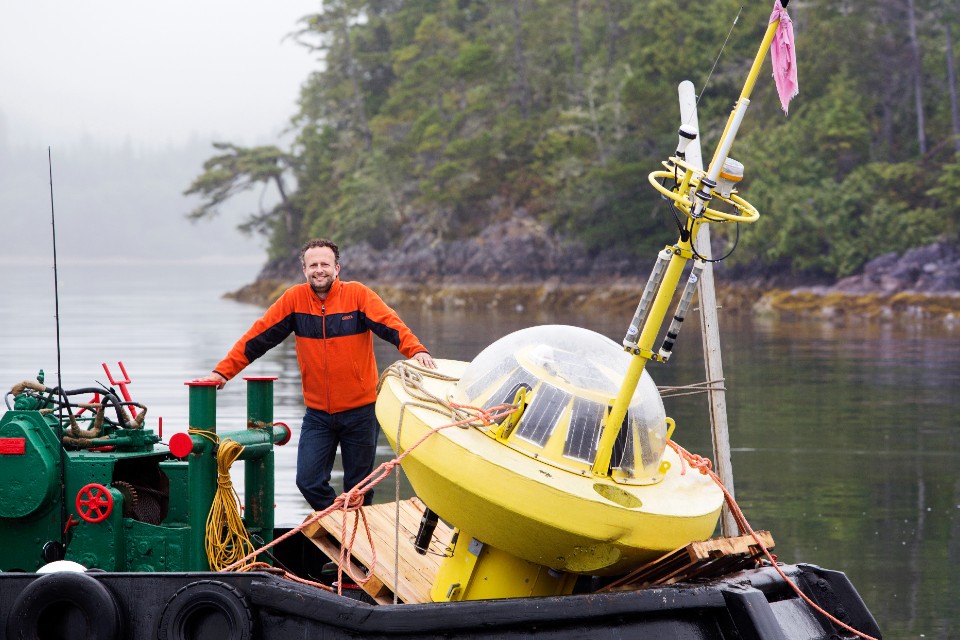
“This is such an exciting, pure and wonderful example of an Indigenous-led, community-based resurgence through clean energy. The idea of reinvigorating a community and helping them return to their traditional lands is powerful. You can’t undo history, but you can change the future and this project represents a symbolic changing of course where all of us are working together to support the Nation to go back to their rightful home in Yuquot.”
— Brad Buckham, Chair, UVic Mechanical Engineering and Co-Director, PRIMED.
Technological Solutions to Support Self-Determination on Nootka Island
Yuquot is located on a world-class wave energy supply and the Nation is highly motivated to pursue clean energy solutions that improve quality of life, facilitate economic development and support self-determination. As keepers of the land, they want to demonstrate technological solutions that achieve these goals while also lessening negative impacts on the environment, thus setting a positive, sustainable example that the rest of society can follow.
“It is the wish and dream of every single MMFN person that I know, and I know most of them, to return there and to live there and to go back to a way of life there that was going on for thousands of years. This clean energy generation project is kind of step two in the re-occupation of Yuquot.”
— Roger Dunlop, MMFN Lands Resources and Fisheries Manager.
Re-occupying Yuquot and Breaking Diesel Dependency
Located on Nootka Island, Yuquot is the center of the universe for the Mowachaht/Muchalaht people, who have long stewarded the sea and lands around it. Yuquot is said to be the ‘birthplace’ of modern British Columbia. In 1778, Captain James Cook landed at Yuquot and made the first sustained European contact with Indigenous peoples in Western Canada which led to a series of harms that have reverberated through the generations. In the 1950s, the MMFN were forced to leave by the federal government to locations that were easier to service, with most of the surviving population moved to unfamiliar urban centres on Vancouver Island.
Since then, the MMFN have long aspired to return home to Yuquot. However, a planned return necessitates creating an electricity supply for the community. The emissions of diesel generators, both in terms of pollution and noise, are an affront to cultural priorities, and they are intent on implementing renewable energy alternatives that are clean and self-sustaining.
“When you’re trying to create dramatic change and change energy habits, this is a way to technologically throw cold water on people and snap them to attention,” says Buckham. “If you can make an innovative, first of its kind wave energy system functional in Yuoqut that means that it can succeed anywhere.”
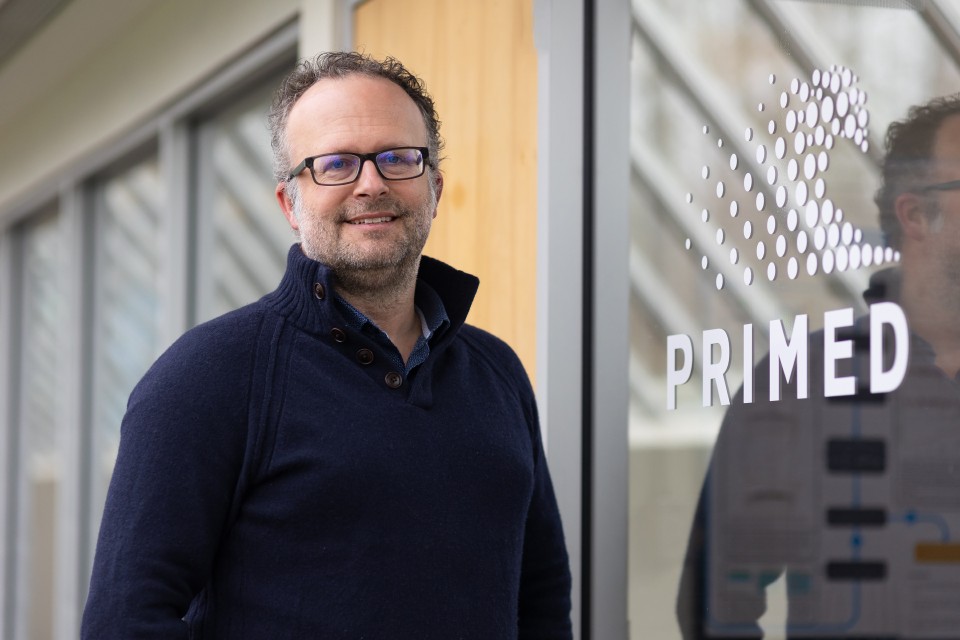
PRIMED’s goal is to be the connective tissue between small, remote and coastal communities and marine renewable energy (MRE) project developers, providing second party assessment of MRE devices and helping Indigenous communities identify potential technologies for their energy projects.
“The Mowachaht/Muchalaht First Nation is refusing to take the easy way out by continuing to rely on diesel fuels. They are willing partners demonstrating leadership by embracing an entirely new microgrid system of clean, renewable energy that has the potential to be a model of how wave energy is harnessed in small coastal communities here in Canada and around the world.”
— Brad Buckham
Established in 2017, PRIMED is a marine energy commercialization centre at UVic focused on helping off-grid remote Indigenous communities and technology developers plan first-of-a-kind marine energy demonstration projects on the BC Coast. PRIMED operates within the Institute for Integrated Energy Systems (IESVic) at the University of Victoria, which provides leadership in the study of critical energy issues, human dimensions of energy, education and training, and works closely with industry, not-for-profits, and government.
This is the second time UVic has been awarded a TD Ready Challenge grant. In 2019, UVic mechanical engineering-led Victoria Hand Project, an initiative that provides 3-D printed prosthetic hands to amputees around the world, also received the prestigious $1 million award.