PIR vs. Microwave Motion Sensors: Which Is Right for Your Lighting Project?

March 26, 2026

By CSC LED

When planning an energy-efficient lighting project, choosing the right motion sensor is crucial. A question we hear often when selecting motion sensors for a job is: “Should I use a microwave or passive infrared (PIR) motion sensor for my project?”

The short answer is, it depends. There’s no one-size-fits-all solution; your choice should be guided by site conditions and performance requirements. In this article, we’ll break down the differences between PIR and microwave motion sensors so that you can make the most informed decision.

What Is a PIR Sensor and When Should You Use One?

Passive Infrared (PIR) sensors are a reliable, cost-effective solution for basic motion detection. These sensors detect infrared radiation, essentially heat, within their field of view. When there’s a sudden temperature change between detection zones, the sensor interprets it as movement and activates the luminaire.
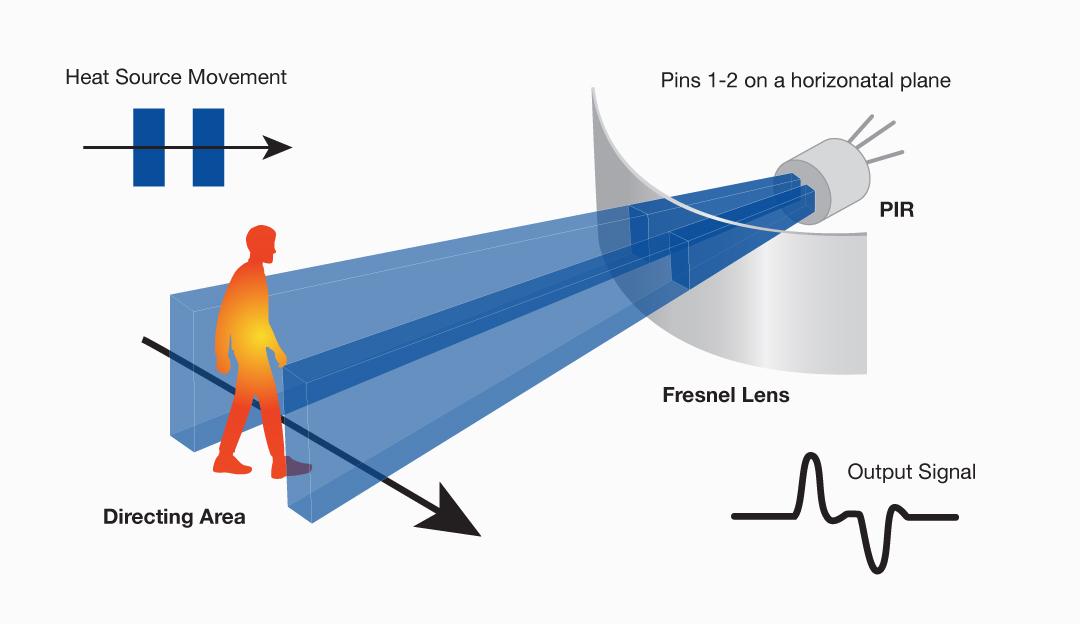
Microwave, PIR
Key Features of PIR Sensors:
  • Line-of-sight detection: PIR sensors only detect movement in areas they can “see.”
  • Great for: outdoor areas or warehouses, where both vehicle and foot traffic will be present.
  • Low false trigger rate: Will not activate unless heat signatures are detected.
  • Energy-efficient: Triggers only when heat-emitting motion is detected.
Considerations:
  • PIR sensors may not detect non-heat-based motion (e.g., a rolling object).
  • High ambient temperatures (e.g., near HVAC vents or heaters) may cause false activations.

Explore our PIR Motion Sensor for more details and specifications.


What Is a Microwave Sensor and When Should You Use One?

Microwave motion sensors detect movement by emitting high-frequency electromagnetic waves and analyzing how those waves reflect back to the sensor. If the reflected signal changes, the sensor recognizes this as motion.
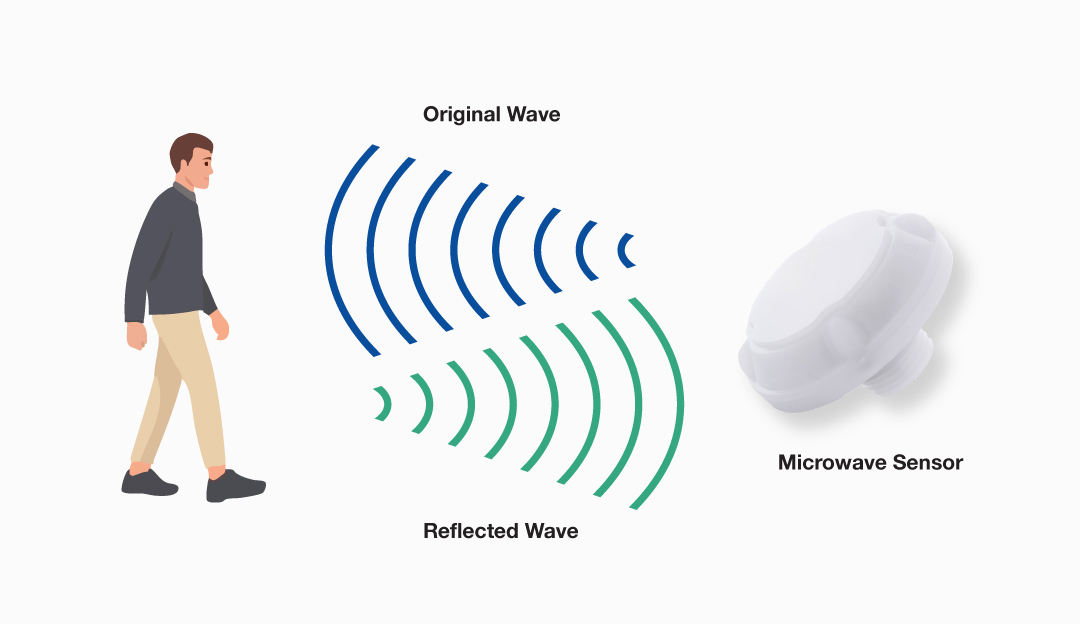
Microwave Image
Key Features of Microwave Sensors:
  • No line-of-sight needed: Can detect motion through thin walls or non-metallic objects.
  • Ideal for large indoor spaces: Perfect for warehouses, garages, and stairwells.
  • Continuous detection: Stays on as long as movement is present in the coverage area.
Considerations:
  • More sensitive: Prone to false triggers from fans, machinery, or reflective surfaces.
  • Electronic interference: Other devices emitting similar frequencies may occasionally disrupt performance.

Check out our Microwave Motion Sensor for full product details.
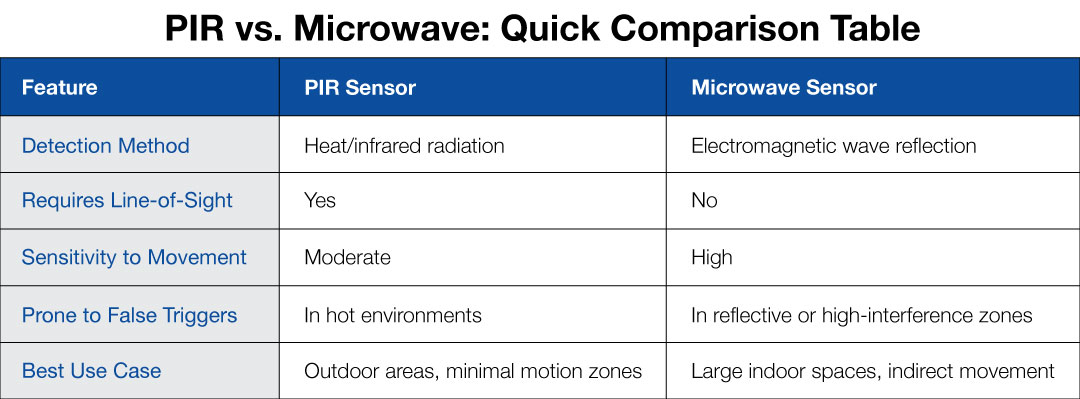
Graph

Sensor Fine-Tuning for Optimal Performance

No matter which sensor you choose, CSC LED’s motion sensors can be easily configured to match your exact needs. Using either remote controls or DIP switches, you can customize:

  • Sensitivity
  • Detection range
  • Standby dimming
  • Time delay before shut-off (hold time)

This ensures a tailored lighting experience that helps you maximize energy savings without compromising on functionality.

Why Motion Sensors Matter for Energy Efficiency

Incorporating motion sensors into your lighting design not only enhances automation and safety but also significantly reduces energy consumption. Whether you’re retrofitting a commercial building or designing a new outdoor lighting system, CSC LED motion sensors offer reliable, low-maintenance solutions with minimal upfront cost and long-term savings.

Learn more about our full range of sensor products and how they can support your next lighting project.

Need help choosing the right sensor?

Source

Related Articles


Latest Articles

  • Powering Canada’s Electricity Future Requires a Skilled Workforce: EHRC Welcomes Federal Strategy

    Powering Canada’s Electricity Future Requires a Skilled Workforce: EHRC Welcomes Federal Strategy

    May 21, 2026 Electricity Human Resources Canada (EHRC) welcomes the Government of Canada’s release of Powering Canada Strong: A National Strategy for an Electrified Canadian Economy, recognizing it as a critical milestone in advancing a sustainable, reliable and competitive energy future. As Canada sets an ambitious goal to double its electricity supply by 2050, EHRC underscores Read More…

  • Multi-Unit Component Weighs on Residential Investment in February 2026 Building Construction

    Multi-Unit Component Weighs on Residential Investment in February 2026 Building Construction

    May 21, 2026 The total value of investment in building construction decreased $503.2 million (-2.1%) to $23.0 billion in February, driven by a decline in the residential sector (-3.3%). Meanwhile, the non-residential sector edged up 0.7%, mitigating the decrease. Year over year, investment in building construction grew 1.8% in February. On a constant dollar basis (2023=100), the total value Read More…

  • Institutional Construction Intentions Lead Growth in Non-Residential Sector, March Building Permits

    Institutional Construction Intentions Lead Growth in Non-Residential Sector, March Building Permits

    May 21, 2026 In March, the total value of building permits issued in Canada increased $1.3 billion (+10.3%) to $13.5 billion. The increase in construction intentions was led by the non-residential sector (+$1.5 billion) and tempered by the residential sector (-$270.6 million). On a constant dollar basis (2023=100), the total value of building permits issued in March rose 10.1% from Read More…

  • ECAO Emerging Contractor Training Grant

    ECAO Emerging Contractor Training Grant

    May 21, 2026 Invest in Your Team’s Future — Up to $1,500 in Training Credits Available The ECAO Emerging Contractor Training Grant is designed to support electrical contractors with smaller workforces in Ontario by removing financial barriers to professional development. This initiative provides up to $1,500 in training credits per contractor to encourage skills development, safety improvements, and workforce Read More…


Changing Scene

  • Nedco Opens New Kelowna Branch

    Nedco Opens New Kelowna Branch

    May 21, 2026 In a recent announcement from Nedco, the company celebrated the Grand Opening of the new Kelowna branch on Friday, May 8, 2026. Nedco invited attendees to explore the new 11,000 sq. ft. facility designed to conveniently serve Okanagan customers. The tour of the new facility took place from 11:00 AM to 2:00 Read More…

  • Leviton Canada Partners with NRG INTENSI‑T Inc. to Strengthen the Presence of Lighting Controls in the Quebec Region

    Leviton Canada Partners with NRG INTENSI‑T Inc. to Strengthen the Presence of Lighting Controls in the Quebec Region

    May 21, 2026 Leviton Canada is proud to announce its partnership with NRG INTENSI-T Inc., who will now represent Leviton’s Lighting Controls product line throughout the Quebec region, effective May 1, 2026. This new partnership reflects Leviton’s commitment to strengthening its lighting controls presence in Quebec through experienced, market-focused representation. With deep regional knowledge, an Read More…

  • Mac’s II Agencies Expands ABB Partnership into UPS Solutions

    Mac’s II Agencies Expands ABB Partnership into UPS Solutions

    May 21, 2026 As demand increases for resilient, always-on power for commercial, industrial, and mission-critical environments, Mac’s II Agencies is strengthening its Power Quality portfolio with ABB systems engineered for diverse conditions. With a broad range of sizes and configurations available, engineers, contractors, and end users can specify power backup and protection solutions with continued confidence, backed Read More…

  • EFC Conference Returns to Halifax with Focus on Industry Disruption and Growth

    EFC Conference Returns to Halifax with Focus on Industry Disruption and Growth

    May 20, 2026 Electro-Federation Canada (EFC) will bring together the electrical industry for its 2026 Annual Industry Conference, taking place June 2-4 at the Halifax Convention Centre. Under the theme “WaveMakers: Where Disruption Meets Direction,” the event will focus on the forces reshaping Canada’s electrical supply chain, including electrification, infrastructure investment, digital transformation, and evolving Read More…