CEA and LONMARK Introduce Two New Home & Building Automation Standards
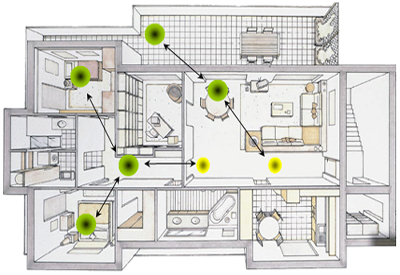
The Consumer Electronics Association (CEA)® and LonMark International recently announced two new standards available for home and building automation. These standards provide multiple parties – including users, developers, vendors, integrators and specifiers of open building control systems – a mechanism to develop and deliver a higher level of device-to-device interoperability using any open control networking communication platform.
“Our intent is to offer to the market a very proven, well adopted approach to solving the Internet of Things (IoT) interoperability issue,” said Ron Bernstein, chief ambassador for LonMark International. “These profiles can be de-coupled from the core ANSI/CEA-709.1 control network protocol and be implemented on any transport, providing a unique opportunity for other standards development bodies to jumpstart their interoperability efforts.”
Added Bernstein, “The process of taking the LonMark documents through the CEA standards process proved to be exceptionally efficient. With the help of key CEA staff and committee members, we are very pleased with the process and with the initial outpour of interest.”
Standard Specifications:
• CEA-709.5 Implementation Guidelines defines the application layer requirements for interoperable devices and how they share key information, status and data across an open control network. Typically deployed on an ANSI/CEA-709.1 LonWorks® protocol network, these application elements define how to interact with disparate devices from multiple vendors in the same system. This significantly improves the system installation time and integration of typical home and building systems by defining units, range and resolution, configuration, and enumeration requirements along with device self-documentation information within the standard. The new standard now enables other transports the option of adopting a common application layer element description library.
• CEA-709.6 Application Elements built upon the .5 Implementation Guidelines by providing a catalog of more than 100 common device profiles, with more than 380 specific implementation options. These profiles define the mandatory and optional design requirements for standard data variables, standard configuration properties, enumeration types and standard interface file requirements. This extensive library of device profiles includes definitions for a broad collection of devices for HVAC, Lighting, Security, Access, Metering, Energy Management, Fire and Smoke Control, Gateways, Commercial and Industrial I/O, Gas Detection, Generators, Room Automation, Renewable Energy, Utility, Automated Food Service, Semiconductor Fabrication, Transportation, Home Appliances and others.
“LonMark’s member community has helped build standards over the last 22 years,” said Dave Wilson, vice president, technology & standards, CEA. “Given that level of dedication and contribution to the sector, we wanted to ensure that taking the LonMark documents through the CEA standards process would be exceptionally efficient. As the initial outpouring of interest indicates, the process worked quite well.”
These new standards were developed in task groups with topic experts contributing to a final consensus for each device profile. A complete testing and certification program offered by LonMark International ensures compliance to the standards. CEA is the natural home of these standards for the U.S. market, with many new profiles and standards updates planned for the future.