NEMA Publishes EV Charging Network Interoperability Standard
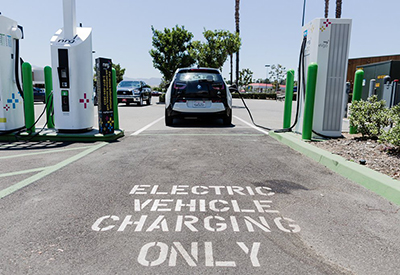
Nema Evs Charging

Dec 31 2015

The National Electrical Manufacturers Association’s NEMA EVSE 1.2-2015 EV Charging Network Interoperability Standard Part 2: A Contactless RFID Credential for Authentication (UR Interface) describes a protocol for authenticating electric vehicle (EV) charging service requests using contactless proximity radio frequency identification (RFID)–type credentials. Authentication provides assurance to the EV charging network that the EV driver is the correct authorized party incurring a financial or other obligation for the services to be rendered. The protocol also gives EV drivers confidence that transactions have not been authenticated using forged or fraudulent credentials.

This new standard was developed by the NEMA Electric Vehicle Supply Equipment/Systems committee, and is part of a suite of standards addressing a new service intended to reduce the drivers’ “range anxiety” by allowing their EVs to be charged by EV supply equipment of a different charging network than with their own.

NEMA represents nearly 400 electrical, medical imaging, and radiation therapy manufacturers. Our combined industries account for more than 400,000 American jobs and more than 7,000 facilities across the U.S. Domestic production exceeds $117 billion per year. Our industry is at the forefront on electrical safety, reliability, resilience, efficiency, and energy security.

NEMA EVSE 1.2-2015 may be purchased in hard copy for $158 or downloaded at no cost on the NEMA website.



Related Articles


Latest Articles

  • Capital Constraints in Owner-Operated Trade Businesses – When Owning the Building Quietly Limits Growth 

    Capital Constraints in Owner-Operated Trade Businesses – When Owning the Building Quietly Limits Growth 

    For many contractor-owned businesses, growth starts to feel harder than it should. The work is there. Customers are steady. Crews are busy. Yet when owners look to expand, invest, or create breathing room, capital often feels tighter than expected. In many cases, the issue is not operations or demand. It is a real estate decision made years… Read More…

  • What 2025 Revealed About Canada’s Electrical Industry

    What 2025 Revealed About Canada’s Electrical Industry

    December 16, 2025 By Carol McGlogan, President & CEO, Electro-Federation Canada The past year required Canada’s electrical industry to adapt to a rapidly changing environment. In 2025, businesses across the value chain navigated shifting trade conditions, evolving policy landscapes, and growing expectations tied to electrification and infrastructure expansion. Trade uncertainty introduced new complexity. Organizations reassessed Read More…

  • Considerations for EV Charging Installation and Site Preparation

    Considerations for EV Charging Installation and Site Preparation

    December 15, 2025 By Blake Marchand As part of our recent discussion with LEDVANCE EVSE Product Manager, Erich Bockley, he emphasized the importance of site preparation Site preparation can be the most complicated part of the project, Bockley emphasized, a lot needs to be considered before the installation work begins. Many public charging applications will Read More…

  • Ontario’s Multi-Family Component Leads Residential Sector Increases in October Building Permits

    Ontario’s Multi-Family Component Leads Residential Sector Increases in October Building Permits

    December 15, 2025 In October, the total value of building permits issued in Canada rose $1.8 billion (+14.9%) to $13.8 billion. The increase in construction intentions was led by the residential sector (+$1.1 billion). An increase was also observed in the non-residential sector (+$702.8 million). On a constant dollar basis (2023=100), the total value of building permits issued in Read More…


Changing Scene