Scientists Map BC’s Wave Energy Potential

Scientists Map BC’s Wave Energy Potential
 May 21, 2017

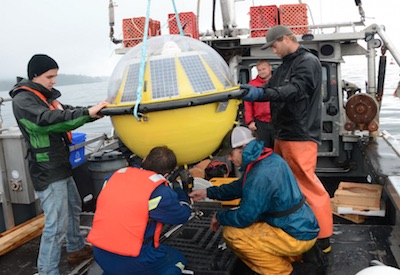
Global wave energy inventories have shown that Vancouver Island’s west coast is one of the most energetic wave climates in the world, and researchers with the University of Victoria’s West Coast Wave Initiative have now mapped the true potential of its wave energy.

Among the findings: integrating a 500 MW wave energy farm could reduce Vancouver Island’s dependency on annual electrical transmission from the Lower Mainland by up to 11%, and reduce peak winter demand by up to 15%.

In response to international attention on Vancouver Island, the West Coast Wave Initiative at the University of Victoria was mandated to develop a “wave-to-wire” numerical modelling effort to understand the feasibility, impacts, and possible structure of future wave energy conversion opportunities in Canada. The resulting report, Wave Energy: A Primer For British Columbia, provides an overview of the spatial and temporal distribution of the gross wave resource, and the methods utilized to characterize the resource. The report presents an objective vision of both the opportunities and challenges for a future wave energy industry in Canada.

Via the gross resource assessment process, researchers have identified multiple locations on Vancouver Island’s west coast that would be suitable for future wave energy development. For example, Amphitrite Bank provides a very attractive opportunity for wave energy conversion with mean energy transport values of 34.5 kW/m only 7 km from shore. This compares favourably against the leading international wave energy development sites in Europe. The wave energy resource varies dramatically over the year. 

The greatest challenge to the future development of wave energy is undoubtedly the cost per unit of energy, says the report. Wave energy costs need to be significantly reduced to compete for market share against other renewables. But the scale of the technological challenge is no greater than that which faced wind and solar energy up until the last few years, and both are now enjoying rapid and ongoing cost declines. With similar government support for research and incentives for deployment, there is no reason why wave energy cannot attain similar success. If anything, wave energy may achieve even greater triumphs, given how much more dependable a resource it is.

Policy recommendations made by the report include:

  • investigating the international market place for marine energy and determine how BC might leverage its natural competitive advantage, in terms of resource scale and diversity, to be a significant player
  • developing the necessary infrastructure to allow BC and Canadian companies to test, operate and maintain WECs and ancillary technologies in BC, rather than losing them to international markets
  • developing relevant legislation to support the nascent wave energy industry when it matures to deployment. This includes access to priority locations, streamlining of permitting and co-operation of electrical utilities
  • providing seed capital to help develop and manufacture WEC technologies designed for the Canadian wave climate
  • continuing financial support for academic research efforts to help better understand and accelerate the pace of development in the marine energy sector

Download Wave Energy: A Primer For British Columbia: http://pics.uvic.ca/sites/default/files/uploads/publications/WaveEnergy Primer WEB 03_31_2017a_0.pdf.

Find out more about the West Coast Wave Initiative: www.uvic.ca/research/projects/wcwi/  

Photo source: Wave Energy: A Primer For British Columbia.

Related Articles


Latest Articles

  • Resilient but Not Ready: Affordability, Trade and Workforce Barriers Limit Alberta’s Retrofit Supply Chain

    Resilient but Not Ready: Affordability, Trade and Workforce Barriers Limit Alberta’s Retrofit Supply Chain

    July 30, 2026 Alberta’s building retrofit sector is ready to scale and could generate $5.8 billion in GDP and support 24,000 jobs with $2.5 billion in annual investment — but only if governments, utilities, and industry align on a clear, coordinated strategy. Resilient but Not Ready shows that while Alberta’s retrofit supply chain is adaptable and… Read More…

  • Lighting 101: How to Choose the Right LED Replacement

    Lighting 101: How to Choose the Right LED Replacement

    July 30, 2026 By EB Horsman & Son Not all LED replacements are created equal. Whether you’re replacing a single light fixture in your home or upgrading lighting throughout your building, choosing an equivalent LED replacement isn’t always as simple as matching the wattage or colour temperature. Many homeowners, contractors, facility managers, and property managers… Read More…

  • Lighting an Industrial Facility: Designing for Safety, Productivity & Performance

    Lighting an Industrial Facility: Designing for Safety, Productivity & Performance

    July 30, 2026 By CSC LED When planning an industrial facility, lighting is often discussed by fixture type—high bays, wall packs, flood lights, emergency lighting, and so on. In reality, successful lighting design starts by understanding how each space is used. Every area of an industrial property has different visual requirements. A parking lot prioritizes… Read More…

  • Gescan Milwaukee Tent Events

    Gescan Milwaukee Tent Events

    July 30, 2026 Take advantage of exclusive event‑day pricing, live hands‑on demos with Milwaukee Specialists, and explore new and featured solutions across power tools, lighting, safety, batteries, and accessories. Enjoy food, giveaways, and prize draws happening at the branch for ONE DAY ONLY! BONUS ITEMS: Visit one of Gescan’s participating locations starting at 7:00 am, don’t… Read More…


Changing Scene

  • Copper Thefts on Bell’s Network Surge 78% at the Mid-Year Mark

    Copper Thefts on Bell’s Network Surge 78% at the Mid-Year Mark

    July 30, 2026 Copper theft continues to rise across Canada, with serious consequences for communities and the critical services they rely on. In the first half of 2026, Bell has seen a surge in theft and vandalism targeting telecommunications infrastructure, causing service outages that can disrupt Internet, TV and phone services — and, most importantly,… Read More…

  • Electrozad Launches Enhanced Digital Solutions with Improved eCommerce Website and New Mobile App

    Electrozad Launches Enhanced Digital Solutions with Improved eCommerce Website and New Mobile App

    July 30, 2026 Electrozad, a Sonepar company, is proud to announce the launch of its newly enhanced eCommerce website and new mobile app, marking a significant milestone in the Electrozad’s digital evolution and commitment to delivering the best customer experience. The digital platforms are now available to customers across Southwestern Ontario, making it easier and… Read More…

  • Seacliff Electric Introduce New Regional Manager for Calgary Operations

    Seacliff Electric Introduce New Regional Manager for Calgary Operations

    July 20, 2026 Seacliff Electric are pleased to announce that Joe Niosi has accepted the position of Regional Manager for their Calgary operations. “Joe has been an important member of our team and brings extensive experience in the electrical construction industry, project execution, leadership, and team development. Through his time as our Service & Special… Read More…

  • Electrical Safety Authority Welcomes Federal Action on Copper Theft, Citing Deadly Risks to Public and Workers

    Electrical Safety Authority Welcomes Federal Action on Copper Theft, Citing Deadly Risks to Public and Workers

    July 20, 2026 New sentencing provisions recognize serious public safety consequences of crimes targeting electrical infrastructure. The Electrical Safety Authority (ESA) welcomes the federal government’s implementation of provisions within the Bail and Sentencing Reform Act (Bill C-14) that strengthen consequences for crimes that damage or interfere with essential infrastructure, including copper theft. Copper theft is a growing challenge… Read More…