ESA Signs Leadership Accord on Diversity, Equity & Inclusion
ESA Web

June 2, 2021

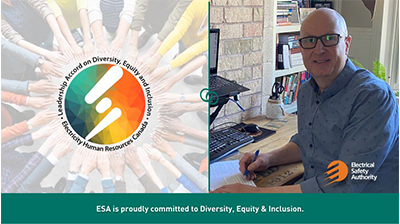
“David Collie, ESA’s President & CEO, signs the new Leadership Accord, proudly committed to wider Diversity, Equity & Inclusion (DEI) scope to include all underrepresented groups as a part of ESA’s Corporate Organizational Excellence Strategy and very comprehensive DEI program,” said ESA via LinkedIn. “The new Leadership Accord is an extension of the Electricity Sector Gender Accord previously signed by ESA in 2017. Together, we can make the world more equitable, diverse, and inclusive.”

The Leadership Accord on Diversity, Equity and Inclusion is a public commitment by Canadian employers, educators, unions, associations, and governments to promote workforce diversity within their organizations. Developed and launched by EHRC in 2017, the Accord proposes united action to:

  • Expand the breadth and depth of the skilled workforce;
  • ensure that under-represented groups are informed of the opportunities available in the sector of their choice;
  • and, once employed, are fully supported and provided with equal opportunities to grow and develop to their full potential.
  • The Accord provides a real opportunity for all stakeholders to actively engage in building a workforce that is truly representative of Canada’s people.

Canada’s electricity workforce includes much less representation of women, Indigenous people, racialized people, persons with disabilities, LGBQ+, gender diverse people and newcomers to Canada than present in our overall population. The barriers they face that limit advancement within their careers, including discrimination in hiring, lack of support and mentorship once hired, or a non-inclusive behaviour and workplace culture. Integrating under-represented groups into the workplace requires more than just opening the doors to them: there must be a paradigm shift involving focused attention and intentional effort. Few of us reach our goals without the support of others. Prioritizing under-represented groups takes leadership and commitment from industry, educators, and policymakers—as well as individual ownership to ensure our workforce becomes truly reflective of the society we live in.


Source

Related Articles


Latest Articles

  • What 2025 Revealed About Canada’s Electrical Industry

    What 2025 Revealed About Canada’s Electrical Industry

    December 16, 2025 By Carol McGlogan, President & CEO, Electro-Federation Canada The past year required Canada’s electrical industry to adapt to a rapidly changing environment. In 2025, businesses across the value chain navigated shifting trade conditions, evolving policy landscapes, and growing expectations tied to electrification and infrastructure expansion. Trade uncertainty introduced new complexity. Organizations reassessed… Read More…

  • Considerations for EV Charging Installation and Site Preparation

    Considerations for EV Charging Installation and Site Preparation

    December 15, 2025 By Blake Marchand As part of our recent discussion with LEDVANCE EVSE Product Manager, Erich Bockley, he emphasized the importance of site preparation Site preparation can be the most complicated part of the project, Bockley emphasized, a lot needs to be considered before the installation work begins. Many public charging applications will… Read More…

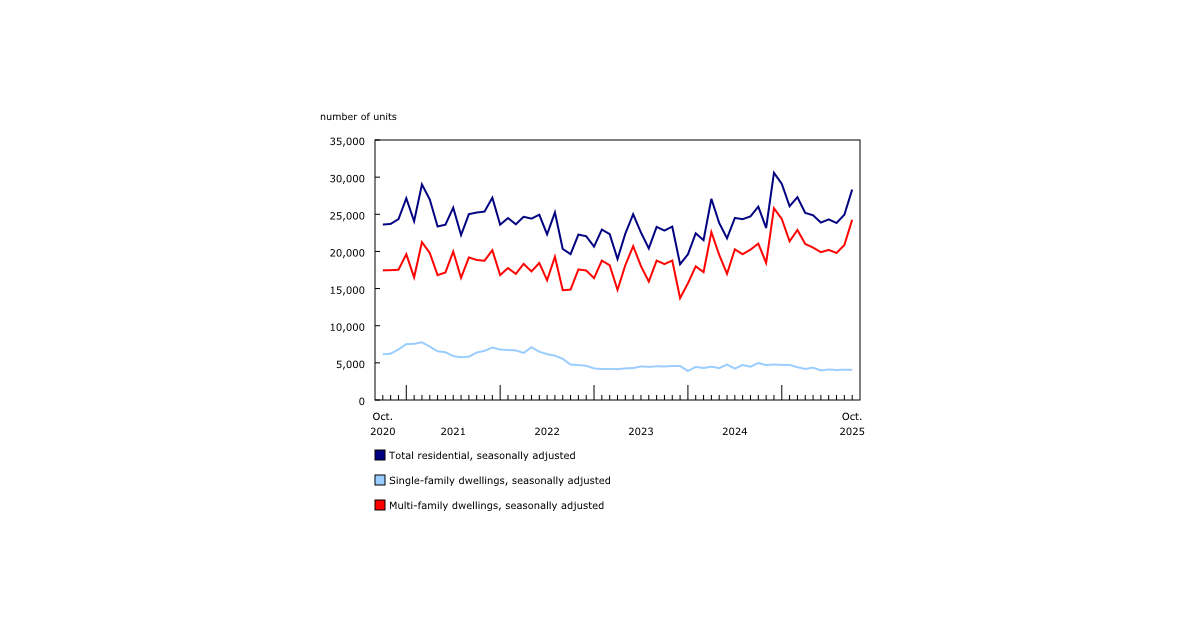
  • Ontario’s Multi-Family Component Leads Residential Sector Increases in October Building Permits

    Ontario’s Multi-Family Component Leads Residential Sector Increases in October Building Permits

    December 15, 2025 In October, the total value of building permits issued in Canada rose $1.8 billion (+14.9%) to $13.8 billion. The increase in construction intentions was led by the residential sector (+$1.1 billion). An increase was also observed in the non-residential sector (+$702.8 million). On a constant dollar basis (2023=100), the total value of building permits issued in… Read More…

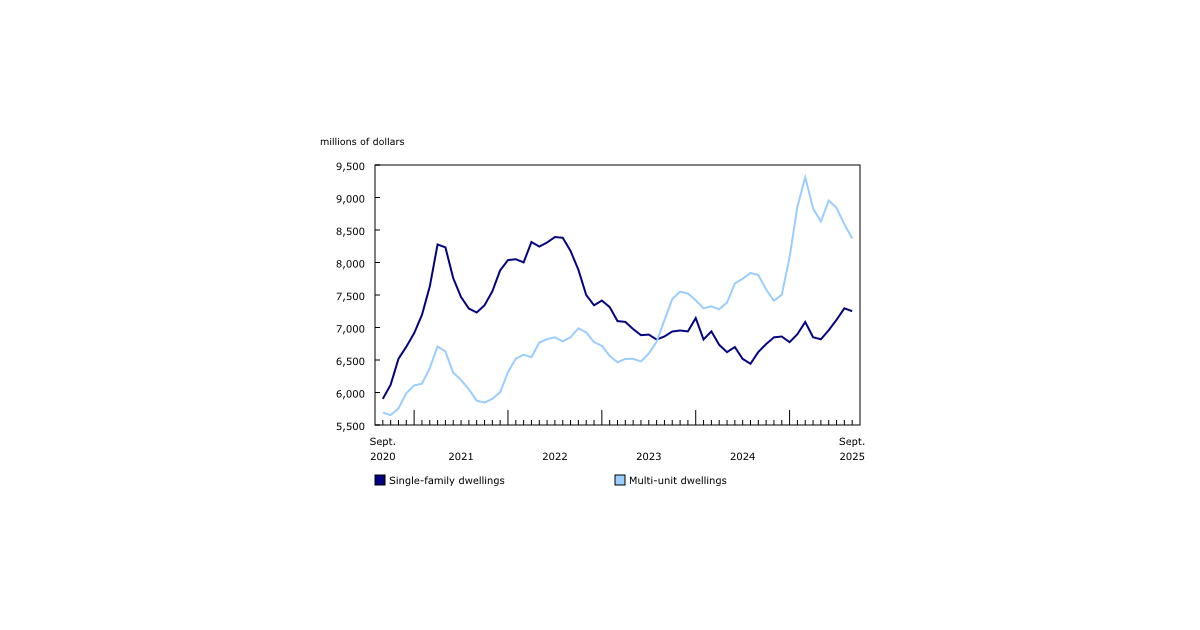
  • Residential Investment in Building Construction Declines in September

    Residential Investment in Building Construction Declines in September

    December 15, 2025 Overall, investment in building construction decreased 1.1% to $22.4 billion in September. Investment in the residential sector declined 1.7%, while that in the non-residential sector was virtually unchanged. Year over year, investment in building construction grew 6.0% in September. On a constant dollar basis (2023=100), the total value of investment in building construction in September decreased 1.4%… Read More…


Changing Scene