Nova Scotia and British Columbia Collaborate on Tidal Energy
Tidal Power


A renewed partnership between Nova Scotia and British Columbia will advance Canada’s marine renewable energy industry.

A memorandum of understanding, signed by representatives from both provinces, outlines key priorities, including partnering on research and technology development, and sharing information and best practices in regulation and permitting.

“To advance Canada’s position as a leader in marine renewable energy, we need a co-ordinated approach — one that unites our country from coast to coast,” said Energy Minister Michel Samson. “Nova Scotia’s partnership with B.C. will do just that, providing access to more information and helping build our national expertise in marine renewable energy to maximize the opportunity for Canada.”

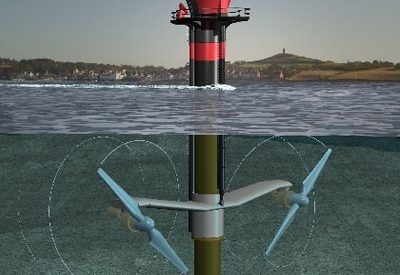
The memorandum represents a commitment from both provinces to further develop the tidal resource in the Bay of Fundy and wave-generated energy on British Columbia’s west coast.

B.C. companies and universities are actively involved in Nova Scotia marine renewable energy research including a study that will look at the impact of turbulent marine environments on tidal technology. More information can be found here http://novascotia.ca/news/release/?id=20150720002

 

Related Articles


Latest Articles

  • Capital Constraints in Owner-Operated Trade Businesses – When Owning the Building Quietly Limits Growth 

    Capital Constraints in Owner-Operated Trade Businesses – When Owning the Building Quietly Limits Growth 

    For many contractor-owned businesses, growth starts to feel harder than it should. The work is there. Customers are steady. Crews are busy. Yet when owners look to expand, invest, or create breathing room, capital often feels tighter than expected. In many cases, the issue is not operations or demand. It is a real estate decision made years… Read More…

  • What 2025 Revealed About Canada’s Electrical Industry

    What 2025 Revealed About Canada’s Electrical Industry

    December 16, 2025 By Carol McGlogan, President & CEO, Electro-Federation Canada The past year required Canada’s electrical industry to adapt to a rapidly changing environment. In 2025, businesses across the value chain navigated shifting trade conditions, evolving policy landscapes, and growing expectations tied to electrification and infrastructure expansion. Trade uncertainty introduced new complexity. Organizations reassessed Read More…

  • Considerations for EV Charging Installation and Site Preparation

    Considerations for EV Charging Installation and Site Preparation

    December 15, 2025 By Blake Marchand As part of our recent discussion with LEDVANCE EVSE Product Manager, Erich Bockley, he emphasized the importance of site preparation Site preparation can be the most complicated part of the project, Bockley emphasized, a lot needs to be considered before the installation work begins. Many public charging applications will Read More…

  • Ontario’s Multi-Family Component Leads Residential Sector Increases in October Building Permits

    Ontario’s Multi-Family Component Leads Residential Sector Increases in October Building Permits

    December 15, 2025 In October, the total value of building permits issued in Canada rose $1.8 billion (+14.9%) to $13.8 billion. The increase in construction intentions was led by the residential sector (+$1.1 billion). An increase was also observed in the non-residential sector (+$702.8 million). On a constant dollar basis (2023=100), the total value of building permits issued in Read More…


Changing Scene