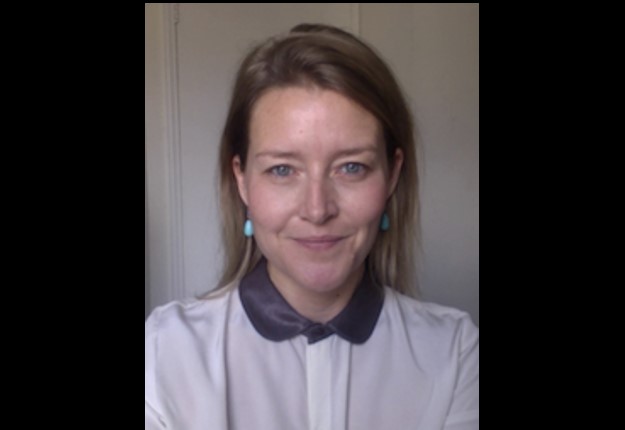
Women in Renewable Energy (WiRE)’s Jennifer Taylor
March 2 2016
Jennifer Taylor is completing her PhD at the University of Toronto, focusing on the production of knowledge in renewable energy transitions, specifically focusing on interesting controversies such as the wind turbine health studies. She also teaches a course in environmental impact assessment and carries out research for Toronto Renewable Energy Cooperative. Prior to that, she worked in offshore wind at Trillium Power and the Community Power Fund. A favourite quote: “If you always do what you what interests you, at least one person is pleased” — Katherine Hepburn
1. General info: current place of work and a bit about what you do
Right now I’m finishing a PhD in human geography at U of T. My research is focused on the production of knowledge in renewable energy transitions. Specifically, I look at different techno-scientific controversies that have been triggered by Ontario’s adoption of renewable energy, like the debates over the health effects of wind turbine noise and the technical feasibility of a large-scale renewable transition. I’m also teaching a course in environmental impact assessment and do some contract research for the TREC Renewable Energy Cooperative.
After I finished my Masters, I worked for a Toronto-based offshore wind company called Trillium Power. I was a ‘special projects manager,’ which basically meant I did everything from writing our website content to managing the public consultation process (from the developer’s side) to meeting with prospective investors. When a moratorium was placed on offshore projects, the company was forced to close. Following this, and before beginning my PhD, I worked for the Community Power Fund, which at the time was managing the Ontario Power Authority’s Community Energy Partnerships Program.*
School and other training: I have a bachelor’s degree in forest conservation from Lakehead University and a Master’s degree in Environmental Studies from York University. In between my Bachelor’s and Master’s I completed a graduate diploma in environmental impact assessment at Concordia University.
2. Why did you join WiRE?
I thought it was a fantastic idea. Any woman who has worked in the energy industry is familiar with the gender imbalance that plagues it. I think it’s been really valuable for us to come together and support each other. We’re bringing long overdue recognition to women’s contributions to the industry and encouraging more women to pursue a career in sustainable energy. I’m on the academic sub-committee and we communicate WiRE’s events to universities and colleges in southern Ontario, award bursaries to students to attend renewable energy conferences, and develop other networking and professional development activities for students and recent grads. I’ve also spent quite a bit of time as a volunteer at our trade show booth, talking to prospective members and the wider renewable community about WiRE and what we have to offer.
3. What made you interested in renewable energy?
When I was starting my Master’s, and looking for a topic that related to climate change, my supervisor at the time convinced me to become involved in renewables, which were just starting to take off in Ontario. I quickly realized that bringing fundamental change to the energy system was one of the most effective, and seemingly doable, means of fighting climate change.
4. Do you have any advice for women who want to enter the RE field?
Network and be persistent. It can be difficult to get your foot in the door, but because the industry is still young and dynamic, new opportunities are arising all the time.
5. What challenges have you faced in the field, and what actions have you taken to overcome them?
The general instability of the sector, the uncertainty and delays that have come with working with emerging technologies and new development models.
6. What are you proudest of in your professional life?
It would probably my ability to be adaptable in this industry, to participate in different capacities. It’s also been very satisfying to explore some of the issues I faced in the industry, particularly the issue of wind power opposition, in my studies – to link experience with academic inquiry.
7. What’s your favourite innovation in renewable energy so far and/or what are you looking forward to the most in this field?
The trend toward micro-systems and micro-grids, which I see real as the real challenge to the old way of generating power.
* On January 1, 2015, the Ontario Power Authority (OPA) merged with the Independent Electricity System Operator to create a new organization that combines the OPA and IESO mandates, including the Community Energy Partnerships Program.
This profile was first published as a blog post by Women in Renewable Energy (WiRE). The organization forges partnerships with a spectrum of renewable energy industry associations, other related networking groups for professional women from across the energy sector, and academic providers. Find out more about WiRE: www.womeninrenewableenergy.ca/home/.