Illuminating the Canadian Museum of History
Lightmotion


Jan 8, 2018

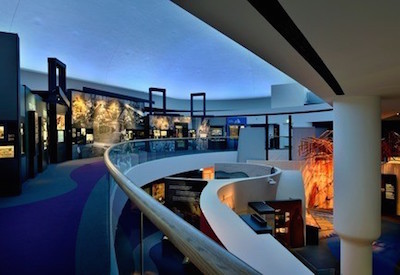
After two years of work, Lightemotion has added another noteworthy project to its list with the lighting design for Gatineau’s Canadian Museum of History. The museum welcomes over 1.2 million visitors each year to its celebrated complex in the heart of the National Capital Region, making it the country’s most-visited museum. With roots stretching back to 1856, it is one of Canada’s oldest public institutions and a respected centre of museological excellence, sharing its expertise in history, archaeology, ethnology and cultural studies both within Canada and abroad.


For Lightemotion’s President, François Roupinian, designing the lighting for this type of museum is an exciting challenge: “The light should act as a magic wand, directing the viewer’s attention to key areas.” Through a skillful combination of museum and architectural lighting, Lightemotion has highlighted the work of architect Douglas Cardinal while showcasing the museum’s history.

Success is in the details

To accomplish such a feat with a maximum spectrum of effects, the team used over 40 kinds of light fixtures. From theatrical floodlights to gobo projectors and miniature LED heads for subtly illuminating even the smallest details of the displays, all equipment used was carefully studied and adjusted in order to create a unique path of light.

According to François Roupinian, “Flexibility is important for creating the right lighting.” Nothing was left to chance, with features including interchangeable lenses, zoom, anti-glare accessories, an integrated potentiometer to adjust the lighting level for conservation needs and ambience, and the option to add colour filters. For this purpose, the lighting manufacturers were chosen with particular care so that a wide range of choices would be available to ensure colour consistency.

A technical challenge

Beyond the myriad fixtures required, this type of project comes with its own set of challenges. The first is using LED technology to recreate the warmth and subtlety of halogen, as LEDs are often too bright for the more subtle needs of a museum. Another important element to take into account was that certain fragile artifacts are sensitive to heat. When fine-tuning the lighting, Lightemotion worked closely with the museum’s conservation team to provide consistent and suitable lighting, carrying out tests that included thermal models to ensure optimal conservation conditions for the artifacts.

The museum’s unifying element

The Canadian Museum of History’s emblematic dome acts as a visual reference point throughout most of the museum pathway. As the dome is an immense structure where it is impossible to install lighting, the team had to use a special approach: “We wanted to use this constraint as an advantage. That’s where we got the idea to use the dome to create light with indirect lighting. We wanted to make it the centrepiece of the museum’s ecosystem.” After many colour tests, the team was able to create their desired effect: a timeless tone for a comfortable atmosphere where visitors feel as if they have stepped into the museum’s very own world.
As explained by François Roupinian, “The light ultimately needs to tell a story. The visitors shouldn’t have to be aware of the technical feats behind the scenes. The lighting should create a complete sensory experience.”

Lightemotion is a lighting design consultant with offices in Montreal and Toronto, and award-winning local and international projects. Lightemotion’s project portfolio spans across many diverse project types from cultural, hospitality, retail, corporate, government, transportation and academic to landscape and master planning; www.lightemotion.ca

Photo credit: Gordon King

Related Articles


Latest Articles

  • Ottawa Day 2026: EFC Members Engage with Parliamentarians on Canada’s Electricity Future

    Ottawa Day 2026: EFC Members Engage with Parliamentarians on Canada’s Electricity Future

    March 16, 2026 By Electro-Federation Canada Following EFC’s recent update on our 2026 Ottawa Day, we are pleased to share photo highlights from two days of engagement on Parliament Hill, where members met with federal decision-makers to discuss the future of Canada’s electricity system. More than 40 EFC member leaders and Government Relations representatives travelled Read More…

  • Industrial Construction Intentions Drive Increase in Non-Residential Sector in January

    Industrial Construction Intentions Drive Increase in Non-Residential Sector in January

    March 13, 2026 In January, the total value of building permits issued in Canada increased $607.0 million (+4.8%) to $13.3 billion. The increase was led by the non-residential sector (+$464.0 million) and supported by the residential sector (+$143.0 million). On a constant dollar basis (2023=100), the total value of building permits issued in January rose 4.3% from the previous month Read More…

  • Multi-Unit Construction Drives Growth in December Residential Construction Investment, 2025 Review

    Multi-Unit Construction Drives Growth in December Residential Construction Investment, 2025 Review

    March 13, 2026 The total value of investment in building construction increased $442.9 million (+1.9%) to $23.7 billion in December. The residential sector grew 2.4%, while the non-residential sector edged up 0.6%. Year over year, investment in building construction grew 12.2% in December. On a constant dollar basis (2023=100), the total value of investment in building construction in December rose 1.7% Read More…

  • 5 Strategic Reasons to Attend the Lumen Exhibition

    5 Strategic Reasons to Attend the Lumen Exhibition

    March 13, 2026 In a market where deadlines are tight and projects are increasingly complex, staying competitive is no longer just about technical skills. It also depends on having the right tools, the right information, and the right partners by your side. The Lumen Exhibition is more than just an event—it’s a strategic lever designed to Read More…


Changing Scene

  • Blackstone Announces Agreement to Acquire Arlington Industries

    Blackstone Announces Agreement to Acquire Arlington Industries

    March 20, 2026 Blackstone and Arlington Industries announced that funds managed by Blackstone Energy Transition Partners have entered into a definitive agreement to acquire Arlington. Founded in 1949, Arlington designs and manufactures a range of electrical products such as fittings, enclosures and other components. The company’s innovative solutions are used across commercial, industrial and data Read More…

  • A New Guillevin.com, Designed to Simplify Your Purchasing Experience

    A New Guillevin.com, Designed to Simplify Your Purchasing Experience

    March 16, 2026 Guillevin.com was built as a digital working tool, designed to support the way their customers plan, search for, and purchase products today. The goal is simple: to offer a fast, reliable, and intuitive online platform capable of supporting real-world operations; both on the job site and in the office. A platform built around Read More…

  • Nova Scotia Strengthens Housing Legislation to Accelerate Supply

    Nova Scotia Strengthens Housing Legislation to Accelerate Supply

    March 13, 2026 Amendments to existing legislation will mean more housing, improved efficiency in the sector and better alignment of related agencies. The changes extend the Executive Panel on Housing in the Halifax Regional Municipality and give the Minister of Housing new authority to ensure housing projects aren’t delayed. “We are strengthening how we plan, Read More…

  • BC Introduces Public Sector Construction Projects Procurement Act

    BC Introduces Public Sector Construction Projects Procurement Act

    March 13, 2026 Kiel Giddens, MLA for Prince George-Mackenzie and Critic for Labour, has introduced the Public Sector Construction Projects Procurement Act, legislation aimed at ensuring publicly funded construction contracts are awarded through labour-neutral, merit-based procurement. “Here’s the simple question: if labour shortages are driving cost overruns, why would government limit who can work on public projects?” Read More…