Residential Construction Investment Continues to Decrease in September
December 5, 2021
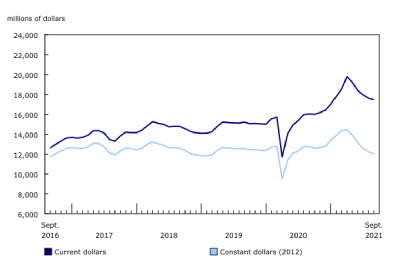
Investment in building construction declined 0.7% to $17.5 billion in September, continuing a downward trend that started in May. A decrease in the residential sector was partially offset by a small increase in the non-residential sector.
On a constant dollar basis (2012=100), investment in building construction decreased 1.5% to $12.0 billion.
Residential construction investment continues to decrease
Residential construction investment decreased 1.6% in September, with Quebec accounting for most of the decline. However, the investment in this component was 21.6% higher than the pre-pandemic value in February 2020.
Investment in single family homes edged down 0.6% to $7.0 billion, with declines reported in eight provinces. Conversely, Nova Scotia continued to show strength in this sector (+13.3%), with its fourth increase in five months.
Multi-unit construction investment decreased in seven provinces, down 2.9% nationally to $5.8 billion. The difference in value between multi-unit and single-unit investment had been narrowing for the past few years, but a noticeable gap has opened up since the onset of the COVID-19 pandemic.
Non-residential investment up across all components
Commercial investment grew by 1.8% to $2.6 billion in September, with Ontario and Quebec leading the way. Office building construction projects in Toronto and Ottawa led to gains in Ontario, following three consecutive monthly declines.
Investment in the institutional component rose 2.9% to $1.3 billion, with a 7.9% increase in Quebec. Strength in that province largely stemmed from educational building projects in the cities of Montréal and Laval.
Industrial construction investment edged up 0.1% to $824 million, with gains reported in five provinces. Saskatchewan showed the largest monthly percentage increase (+11.5%), reflecting investment in utility and agricultural buildings.
Overall, non-residential construction investment rose 1.8% to $4.8 billion. Despite eight increases since the beginning of the year, non-residential investment was 6.3% lower than pre-pandemic values.
Residential sector is behind the quarterly decrease
Total investment in building construction decreased 7.5% to $53.0 billion in the third quarter, following substantial growth over the previous four quarters.
Residential construction decreased 10.5% compared with the second quarter, with declines in both single- and multi-unit investment. All provinces posted declines, with the largest in Ontario and Quebec.
Non-residential investment increased 1.8% to $14.1 billion, the third consecutive quarterly increase. Institutional building construction in Ontario and Quebec led the way, partly reflecting increased investment in educational buildings.
Go HERE for more information