Microgrids & Power Quality: Designing Resilient, Clean Facility Power

February 5, 2026
In an era of extreme weather, aging infrastructure, and ever‑rising energy demands, many facility managers are rethinking their relationship with the grid. Microgrids offer a way to take control and operate autonomously when necessary. A microgrid is more than just backup, when designed properly, it becomes a platform for resiliency, efficiency, and sustainability.
One of the most critical and underappreciated design challenges in microgrids is power quality. As more non-linear loads are introduced the risk of poor power quality increases. Non-linear loads add harmonic distortion onto the system which if left untreated may reduce reliability.

What Microgrids Bring to the Table
A microgrid is a small-scale power network that utilizes local energy production and controls to power communities, data centers, hospitals, etc. Microgrids can operate in grid‑connected or behind‑the‑meter (BTM) mode. BTM means the microgrid sits on the customer’s side of the utility meter, this allows them to control how and when it uses grid power or even disconnect (island) from it entirely and use local resources. Microgrids provide a facility flexibility to supply its own power during grid disruptions or off set cost during peak hours.
Key benefits of microgrids:
- Resiliency & reliability: Continue serving loads during grid outages or disturbances.
- Energy cost optimization: Use storage or controllable generation to peak shave and shift usage to when power is most cost effective.
- Environmental / emissions benefits: Integrate renewables and reduce greenhouse gas emissions.
But poor power quality may be hurting your microgrid and devices.
Why Power Quality Is a Critical Concern in Microgrids
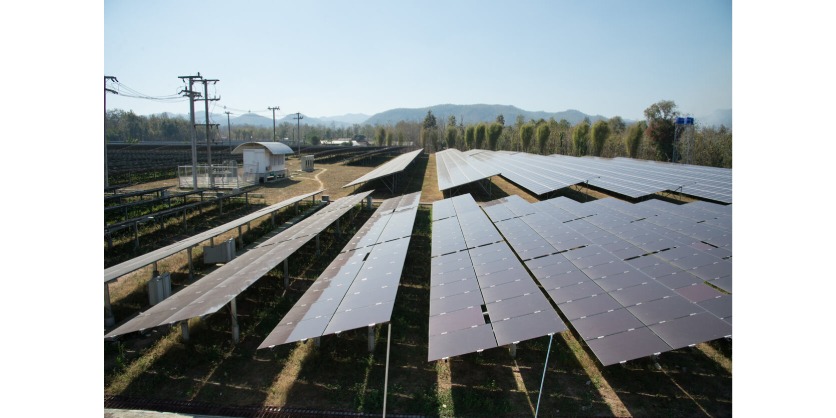
Power quality issues are becoming more prevalent as we add power electronics to facilities. Power electronics are not only sensitive to disturbances but may also be the cause of power quality issues.
Harmonic distortion: Non-linear loads create harmonic currents which are cumulative and may result in device failure. When current harmonics are high, they create voltage harmonics which may disrupt operations. IEEE 519 provides limits for both current and voltage harmonic distortion at the point of common coupling (PCC).
Designing Microgrids for Strong Power Quality
Below are key design strategies and components to integrate power quality thinking into microgrids:
1. Transformer
- Incorporate K-rated transformers to tolerate excess heating caused by harmonic currents. It is important to note that k-rated transformers do not treat harmonics.
- Apply harmonic mitigating transformers (HMTs) that use zig‑zag secondary connections to cancel triplen harmonics and treat common three‑phase harmonics. Advanced designs can pair two phase‑shifted HMTs to cancel out the most common harmonics.
- Specify bi‑directional transformers when integrating PV, wind, or battery storage. These are required by code in many cases and are designed to limit inrush currents when energized in reverse.
2. Reactors, PHF & AHF
- Incorporate reactors as a simple, low‑cost solution that add static impedance to limit voltage transients and may reduce harmonic distortion. Use them at the point of use, installed in series with the VFD. They are most effective on systems with light non‑linear loads, typically 30HP or less.
- Use passive harmonic filters (PHFs) when you need tuned filtering for loads with little variation. Like reactors, they are installed in series with a VFD. Because they are statically tuned devices designed to filter harmonic currents they are best suited for systems in the 30HP to 75HP range with predictable harmonic profiles.
- Active Harmonic Filters (AHF) monitor a systems harmonic distortion and inject offsetting current to cancel out the distortion. Apply them as a system‑wide approach when multiple VFDs or larger loads are present (more than 4 VFDs or over 75HP). Install them at the point of common coupling (PCC) to monitor distortion continuously and inject offsetting currents, ensuring compliance with IEEE 519.
It’s important to note that there is no one size fits all approach to power quality and above are rough guidelines for best practices. A single system may use a combination of solutions to improve power quality.
3. Monitoring Power Quality
Continuous monitoring of power quality is essential for a reliable microgrid. Using metering and monitoring systems allows operators to:
- Track voltage, current, and harmonic levels in real time.
- Identify issues before they cause outages or equipment damage.
This proactive approach keeps the microgrid stable during both grid-connected and islanded operation.
HPS: Enabling Clean, Resilient Microgrids
At HPS, they deliver more than just components, they provide an integrated approach to power quality for microgrids. Their solutions include:
Transformers designed to either ride through or treat harmonic distortion. They also offer solar duty units for bi-directional applications to help minimize inrush currents.
Reactors for cost‑effective VFD protection, they are made to reduce nuisance tripping and lower harmonic currents.
Passive Harmonic Filters (PHFs) for applications with steady, predictable harmonic profiles and less than 4 VFDs.
Active Harmonic Filters (AHFs) for dynamic, system‑wide harmonic correction when load profiles change frequently or larger systems with many VFDs.
Engineering and application support to select the right combination of solutions and optimize for efficiency and reliability for a power quality conscious microgrid.
Together, these solutions help achieve cleaner power, lower losses, and a more resilient and sustainable operation.
Conclusion
Microgrids are foundational building blocks of modern, resilient infrastructure and a rapidly expanding segment of the energy market. In North America, microgrid adoption is projected to grow rapidly in sectors such as data centers, EV charging infrastructure, and commercial or industrial campuses that prefer DC power. These microgrids can expose sensitive loads to harmonic distortion. By using the right mix of solutions, you can deliver resilience, sustainability, and clean power.
Talk to HPS early in your project. They will help you find a PQ solution for your microgrid that performs reliably today and is ready for tomorrow.
![Guide to the Canadian Electrical Code, Part 1[i], 26th Edition– A Road Map: Section 74 — Airport installations](https://electricalindustry.ca/wp-content/uploads/2026/05/EIN-Stock-Guide-Code-Canada-Map-1200-768x403.png)





![Guide to the Canadian Electrical Code, Part 1[i], 26th Edition– A Road Map: Section 74 — Airport installations](https://electricalindustry.ca/wp-content/uploads/2026/05/EIN-Stock-Guide-Code-Canada-Map-1200.png)