The Importance of Trip-Free Operation and Its Characteristics
Trip-free circuit breakers


Anthony T. Ricciuti

One of the many often desirable characteristics in the specifications and marketing literature for medium voltage circuit breakers is “trip-free.” Unfortunately, there are many misconceptions about this characteristic.
Definitions

For IEEET rated products, there are several related definitions of “trip-free”:

•    In the most general definition of “trip-free,” the contacts of the circuit breaker must return tothe open position and remain there when an opening operation follows a closing operation,regardless of whether the closing signal, force,or action is maintained.

•    A common variant is called “electrically trip-free.” For a medium voltage circuit breaker tobe considered electrically trip-free, the circuit breaker must be able to receive and respond to an electrical opening signal regardless of whether an electrical closing signal is energized.

•    “Mechanically trip-free” operations refer to a mechanical release mechanism that can open the medium voltage circuit breaker regardless of whether any closing release device operated by any means is activated or maintained.Medium voltage circuit breakers can also be hydraulically trip-free or pneumatically trip-free if they contain a hydraulic or pneumatic opening release device, respectively,that are capable of opening the circuit breaker regardless of whether any closing release device operated by any means is activated or maintained.

Any of these variants of trip-free operation may include a trip-free relay, in which its operation alters a closing release circuit, permitting an opening release to operate unimpeded by a closing release operation in any state. For IEC rated products, although the standard recommends that the suitability for trip-free operations should be provided to customers that are specifying medium voltage circuit breakers,no specific definition is provided for this function.

Physical requirements

For IEEE rated products, if a mechanical opening release operation is maintained on a medium voltage circuit breaker, then any closing release operation signal must not result in contact movement that reduces the open gap between the contacts by more than 10%. This characteristic is often confused with the definition of trip-free.However, if any opening release operation isinitiated simultaneously with any closing release operation signal, contact movement up to and including a momentary touching of the main circuit breaker contacts is acceptable before the circuit breaker completes the opening operation.

Additionally, because electrical opening release operation circuits typically employ auxiliary switch contacts internal to the circuit breaker, and therefore the electrical release operation circuit remains open until the main contacts of the circuit breaker have closed, when an electrical opening release operation circuit is maintained, the momentary touching of the main contacts is acceptable before the circuit breaker completes the opening operation.

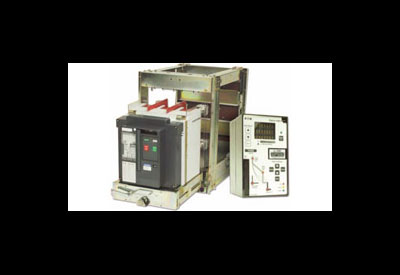
Figure 1: Eaton medium voltage circuit breaker operation

Eaton Circuit breaker


Anthony T. Ricciuti is a Specialist Engineer at Eaton, a power management company with 2014 sales of US$22.6 billion. Anthony has a Bachelor’s degree in Mechanical Engineering and more than 20 years of experience in the design, testing, and analysis of circuit breakers. This article first appeared as an Eaton white paper, www.eaton.com/Eaton/OurCompany/WhitePapers/FeaturedWhitePapers/index.htm.

Related Articles


Latest Articles

  • The Role of Lighting in the AI-Powered Home

    The Role of Lighting in the AI-Powered Home

    January 14, 2026 Elizabeth Parks, President and CMO of Parks Associates, joins Derek Richardson, Founder and CEO of Deako, for a wide-ranging conversation on how lighting is becoming a core layer of the intelligent home. The discussion explores how Deako’s plug-and-play lighting approach is removing long-standing barriers to adoption by simplifying installation, reducing costs, and Read More…

  • What Canada’s Lighting Pulse Means for Contractors and Plant Buyers in 2026

    What Canada’s Lighting Pulse Means for Contractors and Plant Buyers in 2026

    January 14, 2025 By John Kerr From the ground, many contractors and plant teams are experiencing the same thing: jobs are there, but they are smaller, more price‑sensitive, and slower to release compared to past years. The Canadian Pulse of Lighting confirms that impression and offers some clear signals about how contractors and plant electrical Read More…

  • Guide to the Canadian Electrical Code, Part 1 – 26th Edition[i] – A Road Map: Section 54

    Guide to the Canadian Electrical Code, Part 1 – 26th Edition[i] – A Road Map: Section 54

    January 12, 2026 By Bill Burr The Code is a comprehensive document. Sometimes it can seem quite daunting to quickly find the information you need. This series of articles provides a guide to help users find their way through this critical document. This is not intended to replace the notes in Appendix B or the Read More…

  • Tom Penton & Magic Lite: Forty Years of Leadership in Canadian Lighting

    Tom Penton & Magic Lite: Forty Years of Leadership in Canadian Lighting

    January 12, 2026 By John Kerr Sales has always been at the core of Magic Lite’s story, because it was at the core of who its founder Tom Penton was. He genuinely loved sales, loved being independent, and consistently gravitated to roles where he could take personal responsibility for results and build his own customer Read More…


Changing Scene

  • Hammond Manufacturing Expands to Western Canada

    Hammond Manufacturing Expands to Western Canada

    January 13, 2026 Hammond Manufacturing have announced that they are opening a new distribution facility in the Southeast of Calgary, Alberta. The new facility includes over 50,000 sq ft of warehouse space. “This addition will better serve our customers in Western Canada and stock volume and larger products to ensure our distributors have an improve stock Read More…

  • ABB Chosen to Supply Technology for BC Ferries’ New Major Vessels

    ABB Chosen to Supply Technology for BC Ferries’ New Major Vessels

    January 12, 2026 ABB will supply a complete package of power, propulsion and control technology for four new double-ended passenger and car ferries operated by British Columbia Ferry Services (BC Ferries). One of the largest ferry operators in the world, BC Ferries provides year-round vehicle and passenger service on 25 routes to 47 terminals, carrying Read More…

  • Federal Government Invests in Four Ontario Steel Companies

    Federal Government Invests in Four Ontario Steel Companies

    January 12, 2026 Through targeted investments, the Government of Canada is committed to providing support to help businesses in all sectors, including steel and automotive, to respond, adapt and compete amid shifting market conditions. Evan Solomon, Minister of Artificial Intelligence and Digital Innovation and Minister responsible for the Federal Economic Development Agency for Southern Ontario Read More…

  • Craftsman V20 150W Power Inverter Recalled Due to Fire Hazard

    Craftsman V20 150W Power Inverter Recalled Due to Fire Hazard

    January 12, 2026 This recall involves the Craftsman V20 150W Power Inverter (Model number: CMCB1150B). The product has a rectangular prism shape with dimensions of 8.13 x 7.62 x 11.68 cm. It is red and black and weighs 320 grams. It has three charging ports for Type-C, Type-A, and AC connections. It contains an LED Read More…