BC Hydro Completes Two New Substations on Vancouver Island
June 30, 2016
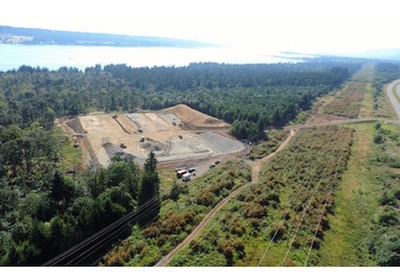
BC Hydro’s new $28.5 million South Wellington substation will serve the Nanaimo and Ladysmith areas. The new $32 million Buckley Bay substation, shown here in the early days of construction, will serve the growing needs of the Comox Valley.
Both projects were competed on budget and created economic opportunities for local businesses and jobs for Island workers.
“Substations are an important part of the electrical system and we must invest in them to ensure we can provide reliable power to communities,” says Chris O’Riley, Deputy CEO, BC Hydro. “On Vancouver Island, we need to take special care to ensure our facilities are seismically safe. We’re investing about $2 billion over the next 10 years on Vancouver Island alone to upgrade our system.”
Vancouver Island contractors were involved in the construction of both of the new substations. There are about 400 Vancouver Island companies currently helping BC Hydro with capital project work across the province.
Over the next 10 years, BC Hydro capital projects on Vancouver Island are expected to generate a total combined GDP of $930 million. These capital projects will create 9,300 person-years of employment.
“BC Hydro’s focus of assuring a safe and reliable power system on Vancouver Island during this decade has provided benefits to the Island beyond that important objective,” says Greg Baynton, CEO of the Vancouver Island Construction Association (VICA). “The construction of the main elements of these two substations were completed by VICA member contractors and that provided additional benefits to the local construction industry and the communities they live and work in.”
Examples of other capital projects on Vancouver Island currently underway or nearing completion include:
- John Hart generating station replacement project in Campbell River (about $1 billion)
- upgrade of the Horsey substation in Victoria ($48 million)
- upgrade of the George Tripp substation in Saanich ($47 million)
- construction of the new Campbell River substation ($29.8 million)
BC Hydro owns and operates more than 300 substations in B.C. Substations receive high voltage power from transmission lines and transform that power to a lower voltage so it can be distributed to homes and businesses.