Case Study: Temporary Power for Large Scale Residential Construction
Temporary Power

Ever wonder how large construction projects with sales offices and show suites get power when there is only a generator or temporary power established on the construction site?TheBC Safety Authority (BCSA) pays close attention to these types of installations, since fire alarms, sprinklers, and other building code safety systems are not up and running during the construction phase of the project.

Recently, a BCSA safety officer conducted an assessment of a large multi-family residential site under construction. Working collaboratively with electrical contractors, other trades, safety officials, utilities, and building departments to reach safety solutions is an important part of a BCSA safety officer’s role.

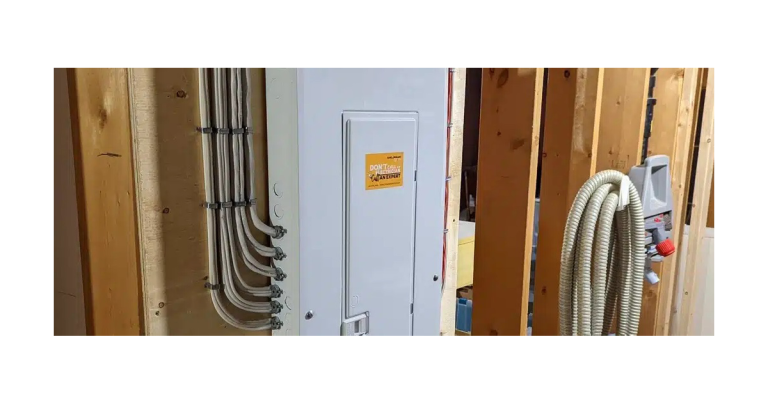
During the inspection, several significant hazards were found.Most notably, townhouses had been energized using the temporary construction service, creating a risk of overload to the service. Had these dwellings become occupied, this could have resulted in a serious fire and shock hazard.

An additional hazard was created by the power cable used to provide power from the temporary distribution system to the townhouses, which was not installed with the necessary mechanical protection.Construction sites typically have heavy machinery operating and it is imperative that the power cables be installed in a manner that protects them from mechanical damage.A break in the armoured cable can result in either a fire (if combustible material is near by) or a shock hazard if the bonding provisions have been compromised.

Addressing the hazards
The safety officer first documented his findings in a certificate of inspection and contacted the electrical contractor to develop a plan to rectify the identified non-compliances.The contractor submitted an application for a variance, as required by the Safety Standards Act, to energize the show rooms and sales offices.The variance included a request to energize a specific portion of the site, and outlined the wiring method used to provide power to this area of the site, and the signage required at strategic locations on the site, including mark ups on the site’s safety plans.The safety officer granted the variance and the electrical contractor completed the installation and the obligations outlined in the variance.

To reduce the safety hazards on the site, branch circuits inside each dwelling had all unnecessary circuit conductors disconnected from circuit breakers. The heavy loads such as space heating, furnaces, dryers, ranges were also disconnected.The safety officer then informed BC Hydro and the electrical contractor that a “hold connection” be placed on the permanent installation permit.This ensures that when the permanent installation is ready for power, the necessary work is completed to transfer and disconnect the temporary power in the showrooms to remove the risk of a possible back feed.

When dealing with sites that have both permanent and temporary electrical systems, closely review your electrical code, specifically the stating that interconnection of temporary power installations and permanent installations shall not be interconnected unless by special permission.

This article was first published online by the BC Safety Authority, http://safetyauthority.ca.
 

Related Articles


Latest Articles

  • ESA Provides an Update on its New Self-Serve Licensing Platform

    ESA Provides an Update on its New Self-Serve Licensing Platform

    March 27, 2026 In October 2025 Electrical Safety Authority (ESA) officially launched its new self-serve licensing platform, a modern system designed to transform how Master Electricians (MEs) and Licensed Electrical Contractors (LECs) manage their licensing needs. The platform replaces paper-based processes and provides a centralized, web-based experience for renewing and applying for licences, paying fees Read More…

  • BC Updates to Solar and Battery Rebate Program Come into Effect April/June 2026

    BC Updates to Solar and Battery Rebate Program Come into Effect April/June 2026

    March 27, 2026 Starting April 1, 2026, our battery rebate offer is changing. The offer will include: Applications submitted before April 1, 2026, will be reviewed under the current rebate amounts. New requirement for working with contractors Beginning June 1, 2026, solar and battery installations must be completed by a Home Performance Contractor Network (HPCN) member to Read More…

  • CSA Report: Online Sales of Unapproved Consumer Electrical Products in Canada

    CSA Report: Online Sales of Unapproved Consumer Electrical Products in Canada

    March 27, 2026 Canadian electrical regulators have identified that the online sales of unapproved consumer electrical products are of a serious concern, and with the growing number of online marketplaces globally there is likely a higher volume of unapproved, or non-compliant, consumer electrical products available for purchase to Canadian consumers. In 2025, Canadian Standards Association Read More…

  • Tackling Unsafe Electrical Products Sold Online: Key Outcomes from the National Workshop Agreement 

    Tackling Unsafe Electrical Products Sold Online: Key Outcomes from the National Workshop Agreement 

    March 27, 2026 By Electro-Federation Canada The rapid growth of e-commerce has transformed how Canadians purchase electrical products, but it has also introduced new safety risks. EFC members have been raising concerns for several years about the increasing availability of unsafe and unapproved electrical products sold online, often without clear evidence of certification or compliance with Canadian requirements. To Read More…


Changing Scene

  • Skills Ontario Supports Critical Skilled Trades Investment in the 2026 Ontario Budget

    Skills Ontario Supports Critical Skilled Trades Investment in the 2026 Ontario Budget

    March 27, 2026 — Skills Ontario welcomes the 2026 Ontario Budget: A Plan to Protect Ontario, released today by the Ontario Government and Minister of Finance Peter Bethlenfalvy, and applauds the continued commitment to investing in skilled trades, technologies, and workforce development. Skills Ontario was pleased to see the government maintain and strengthen its support Read More…

  • Toronto Hydro Launches New Pilot Program to Help Multiplex Builders Energize

    Toronto Hydro Launches New Pilot Program to Help Multiplex Builders Energize

    April 27, 2026 Toronto Hydro is launching a trailblazing customer pilot project designed to help local builders electrify multiplex housing without complex service upgrades. Through Toronto Hydro’s Multiplex PowerPlay, up to six multiplex projects can qualify to receive funding toward a smart energy load management system. Smart load management systems continuously monitor total building energy Read More…

  • Gescan and George Gordon Developments Strengthen Community Impact in Saskatchewan

    Gescan and George Gordon Developments Strengthen Community Impact in Saskatchewan

    March 25, 2026 Gescan, a Sonepar Company, is proud to highlight its continued commitment to supporting communities across Saskatchewan through their meaningful alliance with George Gordon Developments Ltd. (GGDL). With a strong focus on community development, workforce participation and inclusive growth, Gescan is working closely with GGDL to create training, employment and business opportunities for Saskatchewan residents. These efforts are particularly focused on supporting individuals Read More…

  • Electric Avenue Launches Incentive Program for EV Charging Installers

    Electric Avenue Launches Incentive Program for EV Charging Installers

    March 23, 2026 Halifax-based EV charging solutions provider Electric Avenue has announced the official launch of its new Contractor Incentive Program, a first-of-its-kind initiative in the EV charging industry, built exclusively for contractors who have completed the company’s Installer Certification course. The program rewards certified installers for every verified and networked installation they complete, offering cash Read More…