NETCO’s Virtual Reality Motor Control Training Launches After Successful Completion of Train-the-Trainer
January 20, 2025
By Krystie Johnston
The National Electrical Trade Council (NETCO), a collaboration between the International Brotherhood of Electrical Workers (IBEW) Canada and the Canadian Electrical Contractors Association (CECA), has taken a major step in standardizing electrical training across Canada with the launch of its VR Motor Control Training. This innovative program is the first to standardize motor control training for IBEW electrical apprentices nationwide.
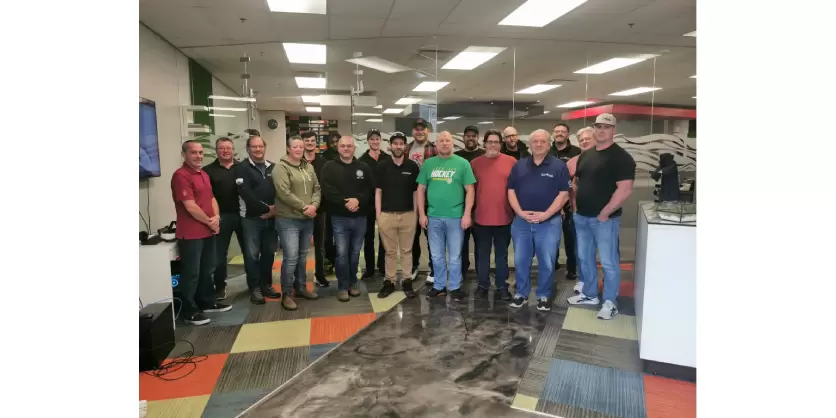
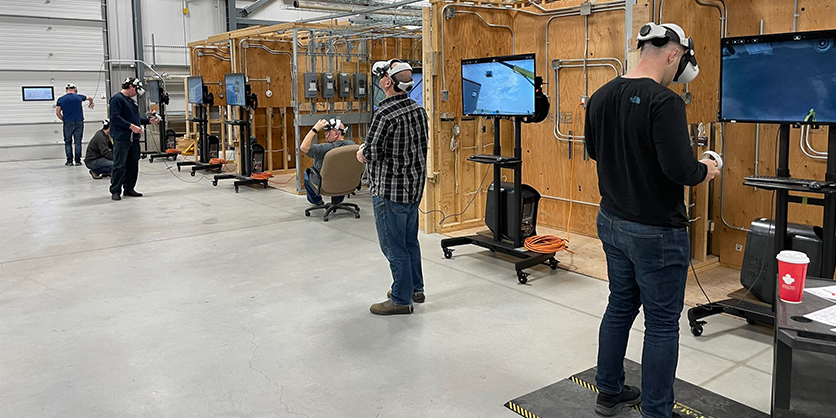
Building on the success of their Hoisting, Rigging, and Moving VR Training Program developed in partnership with NORCAT and funded by the Ontario Skills Development Fund, NETCO has now introduced its second VR program. With the completion of the Train-the-Trainer sessions, this new training is now available across Ontario at NETCO-affiliated IBEW Canada training centers. Executive Director Chris Swick expects approximately 100 apprentices to have completed the VR Motor Control Training by March 31, 2025, with a broader rollout to follow across Canada.
NETCO’s AR-VR Motor Control Training Program
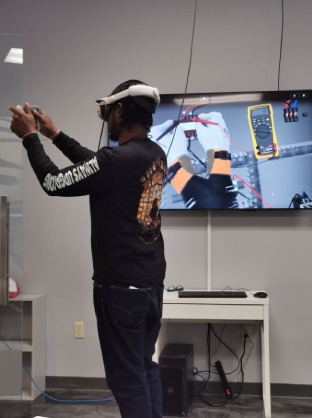
Swick emphasizes that this program addresses one of the most challenging courses in electrical trade education, ensuring consistent, high-standard outcomes for all apprentices. He explains, “The Motor Control course we developed with NORCAT covers everything taught in trade school and more. VR technology allows us to create expansive, risk-free environments for apprentices to practice complex tasks they might not encounter during their apprenticeships.”
The program consists of seven motor control labs, with the final lab simulating a conveyor system. Apprentices can perform tasks virtually that they would typically only experience on the job, reducing risk while providing comprehensive training. Swick highlights the program’s ability to close training gaps, ensuring apprentices gain a full range of skills regardless of their location or work setting. He explains how apprentices trained in different environments often face skill gaps: residential-trained apprentices might struggle with industrial tasks and vice versa. “As electricians, they should be familiar with all aspects of the trade,” he adds.
During the Train-the-Trainer sessions, even the most skeptical participants were impressed by the VR Motor Control Program’s realism. The VR models, scanned in 4K resolution, offer exceptional detail. Swick describes, “You can see the mechanisms inside a glass relay, with every tiny part clearly visible, making the virtual experience almost indistinguishable from real life.”
The tools and equipment in the VR environment were made possible through collaboration with EATON Canada, which allowed NORCAT to scan their products for the training. Denise Miller, NETCO’s Marketing and Communications Coordinator, highlights how EATON’s support elevated the realism, saying, “When EATON representatives saw the VR tools at the Moncton MEET Show, they were extremely impressed. The detail is remarkable.”
A Uniform Training Experience
To ensure consistent national standards, NORCAT not only developed the VR component but also created comprehensive curriculum packages, including instructor guides, PowerPoints, labs, and activities. The lesson plans and VR components align perfectly, providing a robust learning experience beyond just putting on a headset.
NETCO’s VR Motor Control Training helps bridge these gaps by providing a uniform training experience. Swick notes that the virtual environment prepares apprentices for hands-on work by building confidence and familiarity with tasks before they engage with real equipment. “We are a physical, hands-on trade,” he emphasizes, “but VR can get apprentices 80% of the way there before they touch real materials, reducing waste and material costs.”
The VR approach offers significant financial benefits by minimizing consumable material waste. Swick explains that common issues like over-tightening components can be virtually practiced without the cost of replacing damaged parts. Additionally, the repetition possible in VR ensures apprentices feel confident when transitioning to physical equipment.
NETCO’s VR initiatives have garnered international attention. NORCAT’s Certi-Fire VR Training Program won the 2023 VR Awards for Education and Training Solution of the Year, and NETCO’s Hoisting, Rigging, and Moving course was nominated for the same award in 2024 at the AIXR VR awards in Rotterdam. While NETCO did not win, they were recognized with the AIXR XR Accolade for Safety and Compliance Training! This recognition highlights NETCO’s and NORCAT’s commitment to innovation and excellence in workplace safety, hazard identification, and regulatory compliance through VR tools.
Building on Strong Partnerships: Better Together
The VR Motor Control Training was developed under a tight timeline due to Skills Development Fund requirements, but thanks to strong collaboration with IBEW Local Union Training Centers, this made rapid deployment possible. Training centers across Ontario, including London, Ottawa, and Hamilton, have begun implementing the program, with enthusiastic feedback. Miller praises the evolving quality of NORCAT’s work, saying, “Each new release improves on the last, and this program has exceeded all expectations.”
Looking ahead, NETCO and NORCAT are already working on a third VR Training Program focusing on Instrumentation, with more details to be announced as development progresses.
More Information
More Articles with NETCO
NETCO 2025 Save the Date
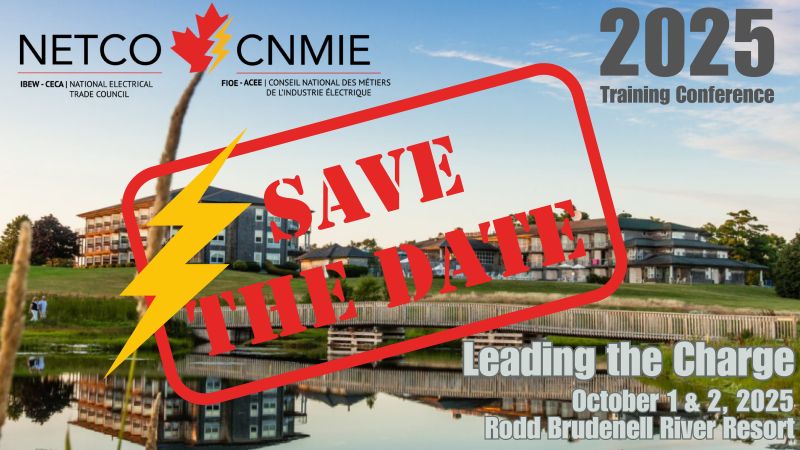
The 2025 NETCO training conference will take place on October 1st & 2nd, 2025 at the “Rodd Brudenell River Resort” in Cardigan, PEI. More details from NETCO to follow. Read More
The Implementation of Innovative VR Training at IBEW Training Centres with George Kardaras of Local 586
The National Electrical Trade Council (NETCO), supported by International Brotherhood of Electrical Workers (IBEW) and Canadian Electrical Contractor Association (CECA), has been developing state of the art virtual reality training courses over the past couple years with the support of the Ontario and Canadian governments… Read More
Taking a Closer Look at NETCO’s OASIS Program and EV Installer Training
NETCO (National Electrical Trade Council) is an alliance of IBEW (International Brotherhood of Electrical Workers) and CECA (Canadian Electrical Contractor Association), their primary mandate is to promote national standards in electrical training. We spoke to Chris Swick, Executive Director and Denise Miller, NETCO’s Communications and Marketing Manager to learn more… Read More
How NETCO is Innovating in Skill Trades Training with Virtual Reality
NETCO (National Electrical Trade Council) is an alliance of IBEW (International Brotherhood of Electrical Workers) and CECA (Canadian Electrical Contractor Association), their primary mandate is to promote national standards in electrical training. Earlier this year, the Ontario government announced $13 million in funding for training programs across the province. Read More