OPTA vs PLCs: Why Finder’s Programmable Logic Relay Is the Right-Sized Solution

November 16, 2025

by Brandon Armstrong
Mac’s II Agencies Sales Manager, Industrial
If you’ve ever been stuck choosing between a simple relay and a full-blown PLC, you know the frustration. Relays feel too limited. PLCs? Too expensive, too complex, and loaded with features you’ll never use. What you really need is something in between.
That’s exactly where the Finder OPTA Programmable Logic Relay (PLR) shines — the right-sized, cost-smart solution for automation.
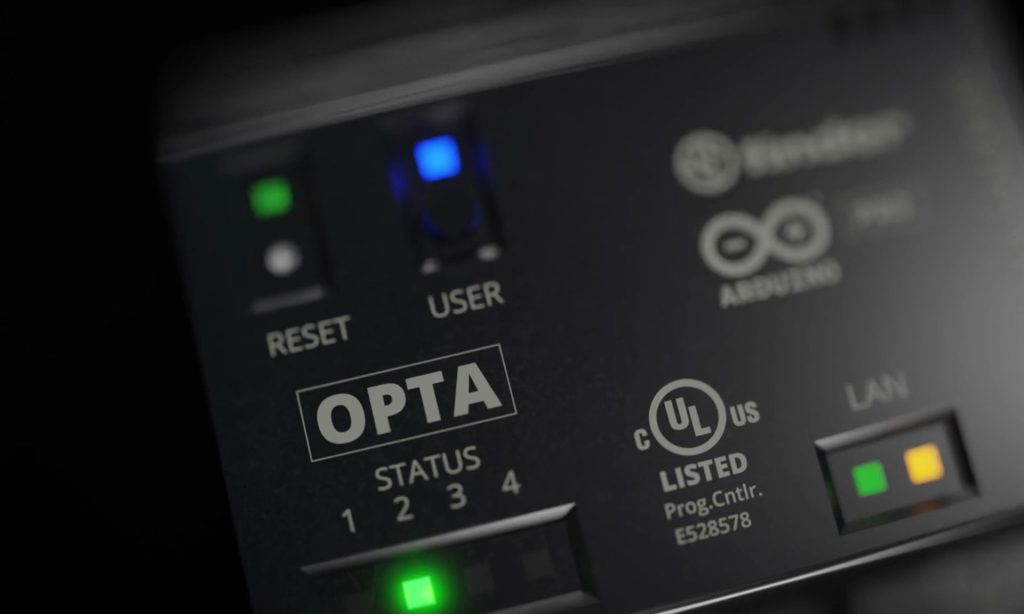
Why Traditional PLCs Can Be Overkill
PLCs are powerful tools, but for many projects, they’re simply more than you need:
- Pricey hardware and software that can strain budgets.
- Licensed programming environments that take time (and training) to master.
- An overload of unused features, leaving you paying for functions your project doesn’t require.
For applications that don’t demand a rocket launcher, Finder’s OPTA provides the balance: enough intelligence to handle modern automation, without the excess baggage.
Who’s Behind OPTA: Finder’s Legacy of Innovation
Finder has been designing relays and control solutions since 1954. Their Italian-made products are known worldwide for reliability and innovation. By teaming up with Arduino Pro, Finder combined decades of industrial expertise with the flexibility of open-source programming. The result? A device that feels approachable for makers and efficient for professionals, all while carrying CE and UL certifications for industrial-grade applications.
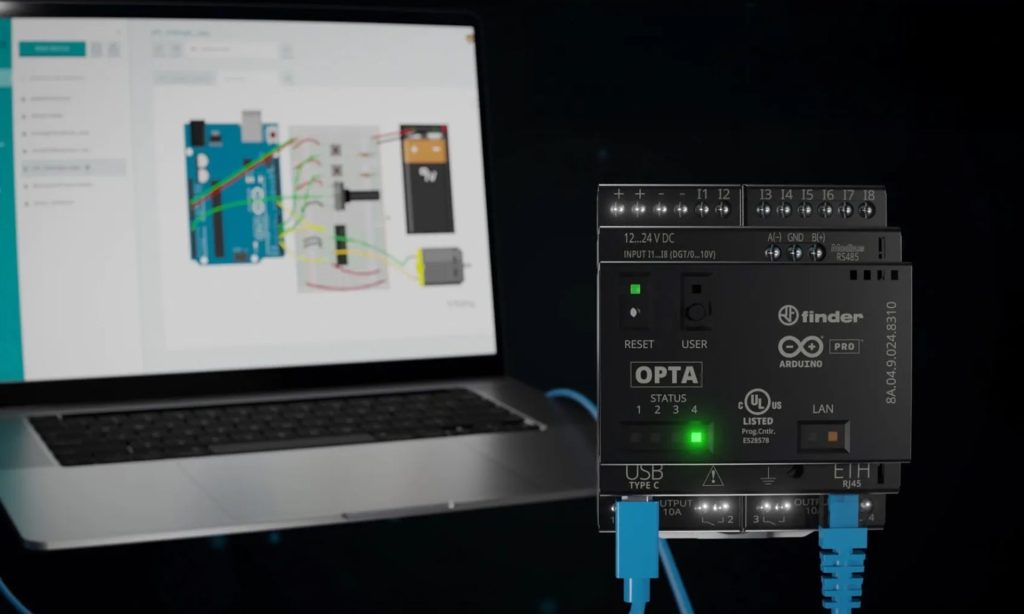
A High-Level Overview: OPTA at a Glance
| Model | Connectivity | Best For |
|---|---|---|
| OPTA LITE | Ethernet (RJ-45), USB-C | Simple Ethernet control and programming |
| OPTA PLUS | Ethernet, USB-C, RS-485 (Modbus RTU) | Serial integration |
| OPTA ADVANCED | Ethernet, USB-C, RS-485, Wi-Fi/BLE | Wireless IoT and Industry 4.0 applications |
All three share the same foundation: 12-24 V DC supply, 8 digital/analog inputs, 4 relay outputs (10A), USB-C for programming/data logging, and RJ-45 for Ethernet/Modbus TCP/IP.
Expandable by Design
Need more I/O? OPTA supports up to five expansion modules, scaling to:
- 80 digital inputs
- 30 analog inputs
- 40 digital outputs
- 30 analog outputs
This flexibility means OPTA can start small and grow with your project.
OPTA: Smart Automation Without the Bloat
So, what makes OPTA stand out? It’s all about balance. You get:
- Flexible programming: Use familiar IEC 61131-3 languages like Ladder or FBD, or dive into Arduino IDE for open-source freedom.
- Scalable models: From the Ethernet-ready Lite, to the RS‑485/Modbus-ready Plus, to the wireless-enabled Advanced.
- Right-sized performance: With 8 inputs and 4 relay outputs (10A), it’s ready for most automation needs without being oversized.
- Expansion on demand: Add more inputs and outputs as your project grows, up to 80 digital or 30 analog inputs.
In short: smart control that doesn’t make you overthink.

Real-World Impact: Who OPTA Works For
Whether you’re an OEM, an industrial automation engineer, or a building automation designer, OPTA helps you stay agile:
- Manufacturing & logistics: Simplify machine control, log data securely, and connect to Industry 4.0 systems without breaking the bank.
- Building management: Optimize energy use, automate security lighting, or improve HVAC efficiency with minimal setup.
- Smart infrastructure: Airports, malls, parking facilities, the OPTA makes it easier to scale automation in dynamic environments.
Finder OPTA: Right-Sized Automation
Full PLCs will always have their place. But if your project doesn’t need all the extras, why overcomplicate it? The Finder OPTA PLR is automation without the overkill, designed to give you just enough control, with the flexibility to grow.