Quebec Study Examines Sector Hazards and Strategies
Wind Energy Health Safety

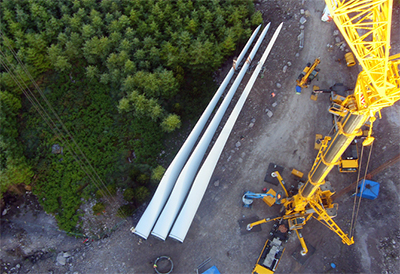
Workers in the wind energy sector face a range of hazards and challenges, according to a new study released by Quebec’s Institut de recherche Robert-Sauvé en santé et en sécurité du travail (IRSST), one of Canada’s leading workplace health and safety research centres. Hazards and challenges include those associated with the mechanical aspects of wind turbines, cardiac risks, and electrical hazards associated with power circuits and control circuits, as well as getting access to company injury prevention plans and timely response from emergency services when performing winter work in isolated locations.

The wind energy sector is an emerging industry across Canada. In Quebec alone, an estimated 1,000 people work full time in the operation and maintenance of Québec wind farms, and another 2,000 are occasionally involved. Work at heights, in confined spaces, isolation, the absence of nearby emergency assistance, the physical requirements to climb towers, work at very low temperatures, and electrocution risks are many of the occupational health and safety challenges in this sector.

This study analyzes the accidents and critical incidents that have occurred in this sector, and injury prevention practices of wind farms located in Quebec and elsewhere in the world. In the process, the researchers created a scientific database on the typical risks to which this sector’s workers are exposed.

To analyze on-site working conditions, the researchers observed technicians performing their operation and maintenance tasks, as well as construction companies and subcontractors during the wind farm construction phase. These observations supplemented the data collection and helped characterize work hazards and procedures.

In many cases, it was noted in the field that only company managers have access toan injury prevention plan.Workers and technicians are aware that a plan exists, and some have read a summary of it, but they have problems getting access to the plan’s detailed guidelines and protocols. In other words, the company can meetgovernment requirements and show that a plan exists, but few workers know its detailed provisions.

The study is believed to be the first to create a health and safety profile of people connected to the industry. Researchers found that injury statistics are fragmentary and injury prevention programs in the industry are “an odd assortment and come in many forms, often simply borrowed from wind turbine manufacturers.” Nor did the researchers find clear, instructive examples of related practices elsewhere in the world. They recommended that companies shift towards implementing adapted prevention plans that comply with Quebec legislation and CSST requirements. In broader terms, the jurisdiction in which the companies are operating.

The project has resulted in a number of changes and advances in workplace accident prevention at several wind energy organizations and companies, the study says.

Find out more: http://www.irsst.qc.ca/en/publications-tools/publication/i/100813/n/wind-sector-safety-risks-prevention-strategies-r-858


 

Related Articles


Latest Articles

  • Guide to the Canadian Electrical Code, Part 1[i], 26th Edition– A Road Map: Section 56

    Guide to the Canadian Electrical Code, Part 1[i], 26th Edition– A Road Map: Section 56

    February 6, 2026 The Code is a comprehensive document. Sometimes it can seem quite daunting to quickly find the information you need. This series of articles provides a guide to help users find their way through this critical document. This is not intended to replace the notes in Appendix B or the explanations of individual Read More…

  • 3D Printing: Inside Lighting’s Next Revolution

    February 5, 2026 While 3D printing in mass production was once a dream, advancements in the technology have moved it more into the mainstream. The technique, which is also referred to as additive manufacturing, has rapidly evolved from a niche prototyping tool into a transformative production method for many sectors, including the lighting industry. As Read More…

  • Microgrids & Power Quality: Designing Resilient, Clean Facility Power

    Microgrids & Power Quality: Designing Resilient, Clean Facility Power

    February 5, 2026 In an era of extreme weather, aging infrastructure, and ever‑rising energy demands, many facility managers are rethinking their relationship with the grid. Microgrids offer a way to take control and operate autonomously when necessary. A microgrid is more than just backup, when designed properly, it becomes a platform for resiliency, efficiency, and Read More…

  • ITC 101: Understanding NEMA Ratings for Electrical Enclosures

    ITC 101: Understanding NEMA Ratings for Electrical Enclosures

    February 5, 2026 Understanding NEMA Ratings for Electrical Enclosures NEMA Ratings are an essential classification system used across North America to define the environmental and mechanical protection provided by electrical enclosures. Developed by the National Electrical Manufacturers Association (NEMA), these ratings help engineers, installers, and specifiers identify the appropriate enclosure type for industrial, commercial, and outdoor Read More…


Changing Scene

  • Lighting What’s Next: Stanpro Celebrates 65 Years

    Lighting What’s Next: Stanpro Celebrates 65 Years

    February 6, 2026 “We didn’t get here by standing still. For 65 years, we’ve shaped how we think, how we design, and what responsibility means,” the company said in a LinkedIn post. “Today, that thinking takes a new form. Not to change who we are, but to express our evolution more clearly. This is Stanpro, Read More…

  • Housing Priorities on Track in New Brunswick, but More Work to do: Hickey

    Housing Priorities on Track in New Brunswick, but More Work to do: Hickey

    February 6, 2026 Efforts to support the creation of new affordable housing and reduce chronic homelessness are on track, but there is still lots of work to do, according to David Hickey, the minister responsible for the New Brunswick Housing Corporation. New data indicates progress has been made on three key government priorities related to Read More…

  • BJ Electric is now Bernie’s Electric Supplies Ltd

    BJ Electric is now Bernie’s Electric Supplies Ltd

    February 6, 2026 BJ Electric has announced the company has rebranded as Bernie’s Electric Supplies Ltd, a nod to their founder. “BJ Electric Supplies is now Bernie’s Electric Supplies—in honor of our founder, Bernard Joseph Thompson, and the values that have guided the company for nearly 50 years. As we grow and evolve, this name Read More…

  • The Government of Canada Introduces the Build Canada Homes Act

    The Government of Canada Introduces the Build Canada Homes Act

    February 6, 2026 The Government of Canada has introduced the Build Canada Homes Act, legislation that will establish Build Canada Homes as a Crown corporation whose mandate will be dedicated to building affordable housing in communities across the country. As Canada’s affordable housing builder, this legislation will equip Build Canada Homes with the necessary tools to Read More…