Heating with Electrical Resistance, Part 2
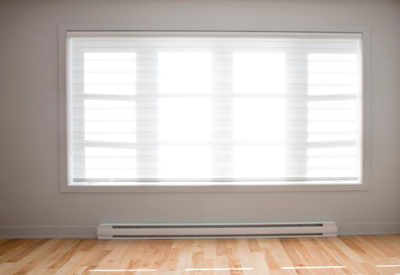
Electric resistance heat (ERH) is a safe and simple solution for many heating needs, and frequently offers meaningful advantages over other sources of heating. In this second part of a two-part NEMA white paper, common attributes of electric resistance heat, including its comfort, efficiency, and flexibility of use. Also, a case study of electric heat used in “green” homes.
Why is electric resistance heat so popular? Over the years, electric resistance heat (ERH) has remained a popular choice in the market for residential and commercial space heating for a variety of reasons.
1. ERH is affordable
One of the most important benefits of electric heat is affordability. The initial purchase, installation, maintenance, and operating costs are typically much less than other heating options. In regard to initial costs, electric baseboard heaters are the least expensive method to warm cold rooms, which may explain their popularity. Electric heat is highly efficient because it’s typically used to heat just the rooms or spaces actually occupied.
Only ERH offers affordability across all these areas. New products, such as micro-zone wireless controls, are taking these benefits even further by allowing multiple heaters to operate independently, even when on a shared circuit.
2. ERH is efficient
Simply stated, electric resistance heaters, whether baseboard, fan-forced, electric thermal storage, radiant, or other form, are nearly 100 percent efficient at converting electricity into useable heat. ERH can also be used with electronic thermostats, which combine a high degree of comfort control (maintains temperature within 0.5°C/0.9°F) with the ability to deliver a proportion of the total wattage of the heater. This means that electric heaters can operate continuously at a lower level, which is more efficient and comfortable than the peaks and valleys experienced with the full-on or full-off mode of most heating systems. When coupled with electric resistance heaters, electronic thermostats have the potential to save customers up to 10 percent when compared with traditional mechanical thermostat control.
3. ERH is comfortable (and controllable)
While comfort is clearly subjective, few will contest that heating the space you are in to the temperature you want is most comforting. ERH does this especially well and without uneven hot/cold blasts of air. Homes and offices heated with ERH have the luxury of individual space control with separate thermostats available for every room. Moreover, ERH doesn’t suffer from the drafty temperature swings often associated with other types of heating systems that start and end with blowing cool air.
ERH provides consistent, warm, even temperature control for maximum comfort.
4. ERH is clean
Anyone who has lived in a home with oil heat is familiar with the smell associated with the combustion of oil in a furnace. With ERH, there are no bi-products of combustion and no unpleasant aromas.
5. ERH is quiet
The fact that ERH is virtually silent is one of the features most valued by customers. Even when fan-forced wall heaters are used, the background noise is only a fraction of the air noise generated by central-ducted systems such as oil or gas furnaces.
6. ERH is scalable
Many homeowners find it easy to warm a new room (i.e., an addition) or a living area in a basement using electric heat. Even homes with central heating have rooms above cold spaces (e.g., garage), areas far from the furnace, and basements. These spaces are often cold and require supplemental heating. ERH’s scalability makes it ideal to solve these challenges and allows homeowners to continually add additional sources of heat, unlike central heating systems, which can be expensive to modify.
7. ERH is safe
When properly installed and operated, electric heat is a very safe way to add complementary heat to homes and offices. There is no combustion, as in gas and oil furnaces, and no poisonous combustion gases to exhaust out of the house.
8. ERH is green (and the future of low carbon heating)
From an environmental perspective, ERH offers consumers an affordable “green” choice. Electric generation in the U.S. is moving toward lower carbon sources—including the increased use of no-carbon options like renewables, hydro, and nuclear energy (together almost 40 percent of U.S. generation). ERH is fully compatible with electricity derived from renewable sources like wind and solar energy.
One of the most exciting developments in the world of ERH is its integration with the growing deployment of grid-scale renewable energy by electric utilities. Only electric heating is compatible with electricity generated using wind or solar. Gas appliances are simply incompatible.[i] With many utilities offering consumers the opportunity to purchase electricity generated from renewable energy, homes heated with ERH can proudly boast of being green.
A relatively new development for ERH is GETS (see earlier discussion). This new product is designed to assist utilities in storing excess renewable energy on their systems by charging a storage medium within space heaters and water heaters. This stored energy can be used later on demand, allowing electrical utilities to maximize the use of renewable energy that would have otherwise been wasted. It also helps them reduce their carbon emissions, sometimes by more than 50 percent.
X. ERH has low maintenance
ERH has very few—often none—moving parts, which translates directly into lower maintenance costs and greater reliability. A simple cleaning once or twice a year is typically sufficient to keep an electric heater running smoothly.

Figure 5.Passivhaus
Passivhaus Case Studies
Most countries are experiencing a “green revolution” where consumers and builders are more sensitive to environmental issues. An excellent case study in the building community is Passivhaus, meaning “passive house” in German. The Passivhaus approach to building is to super-insulate structures to the point that only a minimal amount of heating is required. Overwhelmingly, Passivhaus builders continually choose to use ERH for their heating needs because it can be derived completely from clean, renewable sources.
In one instance, the builder of a Passivhaus stated, “Whitmore’s house has no furnace—a significant up front cost savings. On the coldest days it can be heated with two small baseboard electric heaters.”[ii]
In another, because the Passivhaus’ energy demand for space heating was reduced by 90 percent, “the resulting heat required to keep the building at 70 degrees is very low (2,000 watts at peak demand), which allows a Passivhaus’ traditional heating system to be drastically simplified to a few feet of electric baseboard controlled by a thermostat in each room. The cost to install this simplified heating system is about $500—replacing the standard heating system consisting of a boiler, radiant slab, pumps, fuel tanks, chimney and manifolds—saving around $15,000.”[iii]
Electric resistance heat and green construction clearly go hand-in-hand.
Conclusion
ERH continues to be a popular choice with consumers and commercial users for good reason. It is affordable, efficient, clean, and comfortable. Moreover, ERH is uniquely situated to assist in the deployment of greater amounts of electricity generated from renewable energy sources like wind and solar power. As with the electric car, consumer consciousness surrounding the use of clean electricity is growing exponentially, and it is reasonable to think that favourable attitudes toward electric heating will grow accordingly. It’s easy to see why the future of electric resistance heating is so bright.
In Part 1: a high-level exploration of the different types of electric heating options.
Notes
i Another significant difference is that most fossil fuels, such as propane, fuel oil, wood, coal and other biomass, require the prior purchase, storage and payment of these heating fuels. Electricity is available on an “as needed basis” and consumers generally pay for it several weeks after using it.
ii. http://www.gologic.us/passivhaus/cost-benefit-of-a-passive-house/
iii http://citytank.org/2011/05/05/passivhaus-is-german-for-no-brainer/
Appendix
This white paper was developed by the NEMA Electric Resistance Heating Section of the National Electrical Manufacturers Association. Section approval of the white paper does not necessarily imply that all section members voted for its approval or participated in its development. At the time it was approved, the Electric Resistance Heating Section was composed of the following members:
• Cadet Manufacturing Company Vancouver, WA
• Dimplex North America Ltd. Cambridge, ON
• Emerson Rosemont, IL
• Marley Engineered Products Bennettsville, SC
• Steffes Corporation Dickinson, ND
• Stelpro Design Inc. St. Bruno-de-Montarville, QC
• TPI Corporation Johnson City, TN
(This version of the document was approved on the NEMA website February 27, 2015.)


![Guide to the Canadian Electrical Code, Part 1[i], 26th Edition– A Road Map: Section 56](https://electricalindustry.ca/wp-content/uploads/2022/11/Guide-CE-Code-2-768x432.png)


![Guide to the Canadian Electrical Code, Part 1[i], 26th Edition– A Road Map: Section 56](https://electricalindustry.ca/wp-content/uploads/2022/11/Guide-CE-Code-2.png)