Eaton’s Arc Quenching Switchgear Establishes New Standard for Arc Flash Safety and Equipment Protection in Industrial Applications
April 30, 2018
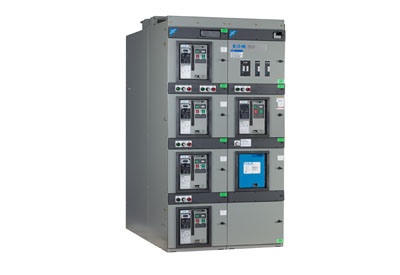
Power management company Eaton today announced a major advancement in arc flash safety for low-voltage applications with its Arc Quenching Magnum DS switchgear. Designed to advance safety and reduce downtime in oil and gas, utility, healthcare, water, wastewater and other industrial applications, Eaton’s innovation in arc mitigating technology reduces incident energy to a level exceeding traditional technology –significantly increasing safety and enabling the switchgear to withstand an arc flash event with minimal or no damage.
Each year there are nearly 30,000 arc flash incidents, which can result in severe burns and life-threatening injuries to personnel, while also causing extensive equipment damage from which it can take months to recover. By extinguishing an arc flash in less than 4 milliseconds, Eaton’s new Arc Quenching Magnum DS switchgear dramatically reduces the incident energy available while minimizing equipment damage and improving safety.
“Eaton’s Arc Quenching Switchgear provides a new and powerful method to advance both safety and equipment protection for low-voltage switchgear applications. This revolutionary technology enables equipment to withstand an arc flash event with little to no damage so that downtime is minimized,” said Brent Henry, a director of marketing at Eaton. “This technology builds on decades of Eaton’s arc flash safety innovation, delivering best-in-class protection to enhance safety through innovations and services such as our Arcflash Reduction Maintenance System technology, arc flash studies and hands-on training programs.”
Unlike traditional arc-resistant switchgear, Eaton’s Arc Quenching system is designed to minimize or completely eliminate damage to switchgear in the event of an arc flash. As a result, the switchgear can be quickly returned to service after an arc flash event to minimize downtime and repair costs. Arc Quenching Switchgear also employs current-limiting technology when it quenches an arc fault to protect upstream equipment.
Eaton’s Arc Quenching Switchgear provides arc-resistant protection without the need for ducts, plenums, venting into the room, or other special construction and additional space requirements. The design also provides arc flash protection if circuit breakers are removed or equipment doors are open.
Unlike other methods for arc energy reduction, Arc Quenching Switchgear is not required to be activated by an operator; the technology is active whenever the system is powered. Additionally, the Arc Quenching system can be used with other arc flash safety solutions to create a layered approach to equipment and personnel protection, including zone selective interlocking, Arcflash Reduction Maintenance System technology or when included in traditional arc-resistant construction.
Eaton’s Arc Quenching Magnum DS switchgear exceeds American National Standards Institute (ANSI), Institute of Electrical and Electronics Engineers (IEEE) C37.20.7 arc-resistant testing requirements by demonstrating acceptance even when breakers are removed, doors are open and covers are removed. The Arc Quenching Device is an UL® recognized component per UL2748. Arc Quenching switchgear can be used to comply with National Electrical Code (NEC®) 240.87 for arc energy reduction.
To learn more, visit www.eaton.com/AQS.